Executive Takeaways
- Capital Expenditure Disruption: DeepSeek-V3 demonstrated that top-tier reasoning capabilities can be achieved at a fraction of the training cost of Western counterparts, triggering a dramatic reassessment of enterprise AI capital allocation and cloud compute architecture.
- Architectural Ingenuity: Unlike traditional dense models that activate all parameters simultaneously, DeepSeek-V3 relies on an advanced Mixture-of-Experts (MoE) framework paired with Multi-head Latent Attention (MLA), fundamentally altering infrastructure scalability paradigms.
- Market Liquidity & Valuation Multiples: The emergence of hyper-efficient models has injected regulatory and competitive risk into legacy tech valuation multiples, forcing hyperscalers to defend their enterprise ROI metrics against lower-cost alternatives.
- The Enterprise Pivot: Chief Information Officers (CIOs) are accelerating risk mitigation strategies by evaluating decentralized, cost-effective deployments that bypass traditional plug-and-play API monopolies.
For the better part of three years, the generative artificial intelligence boom operated on a singular, unshakeable economic law: massive capital outlays yield proportional intelligence gains. Silicon Valley hyperscalers—backed by trillions of dollars in market liquidity and insatiable capital expenditure budgets—poured vast fortunes into clusters of tens of thousands of advanced graphics processing units (GPUs). They operated under the assumption that training frontier large language models (LLMs) was an insurmountable barrier to entry guarded by sheer financial muscle.
That foundational assumption fractured under the weight of a single release. The debut of DeepSeek-V3 fundamentally disrupted the prevailing cloud compute architecture and forced an immediate, painful recalculation across Wall Street trading desks. While many commercial LLMs are engineered primarily as convenient cloud services with plug-and-play APIs—tailored for standard enterprise workflows—DeepSeek-V3 approached the structural engineering of intelligence from an entirely different economic vantage point. By prioritizing algorithmic efficiency over brute-force compute, the model exposed vulnerabilities in legacy infrastructure scalability and sent shockwaves through global technology valuation multiples.
The Architecture of Efficiency: Dissecting the Technical Pillars
Test Our Free AI & Tech Utilities Suite
Calculate LLM API token costs, analyze article dwell-time, or simulate tech DCA returns.
To understand why DeepSeek-V3 provoked such profound anxiety among Western tech executives, one must examine its under-the-hood engineering. Traditional frontier models are typically designed as dense architectures. When a user prompts a dense model, every single parameter within the neural network fires simultaneously to generate a response. This brute-force approach demands staggering amounts of electrical power, cooling infrastructure, and high-end hardware, translating into exorbitant operational expenditure for cloud providers and high token-pricing models for enterprise buyers.
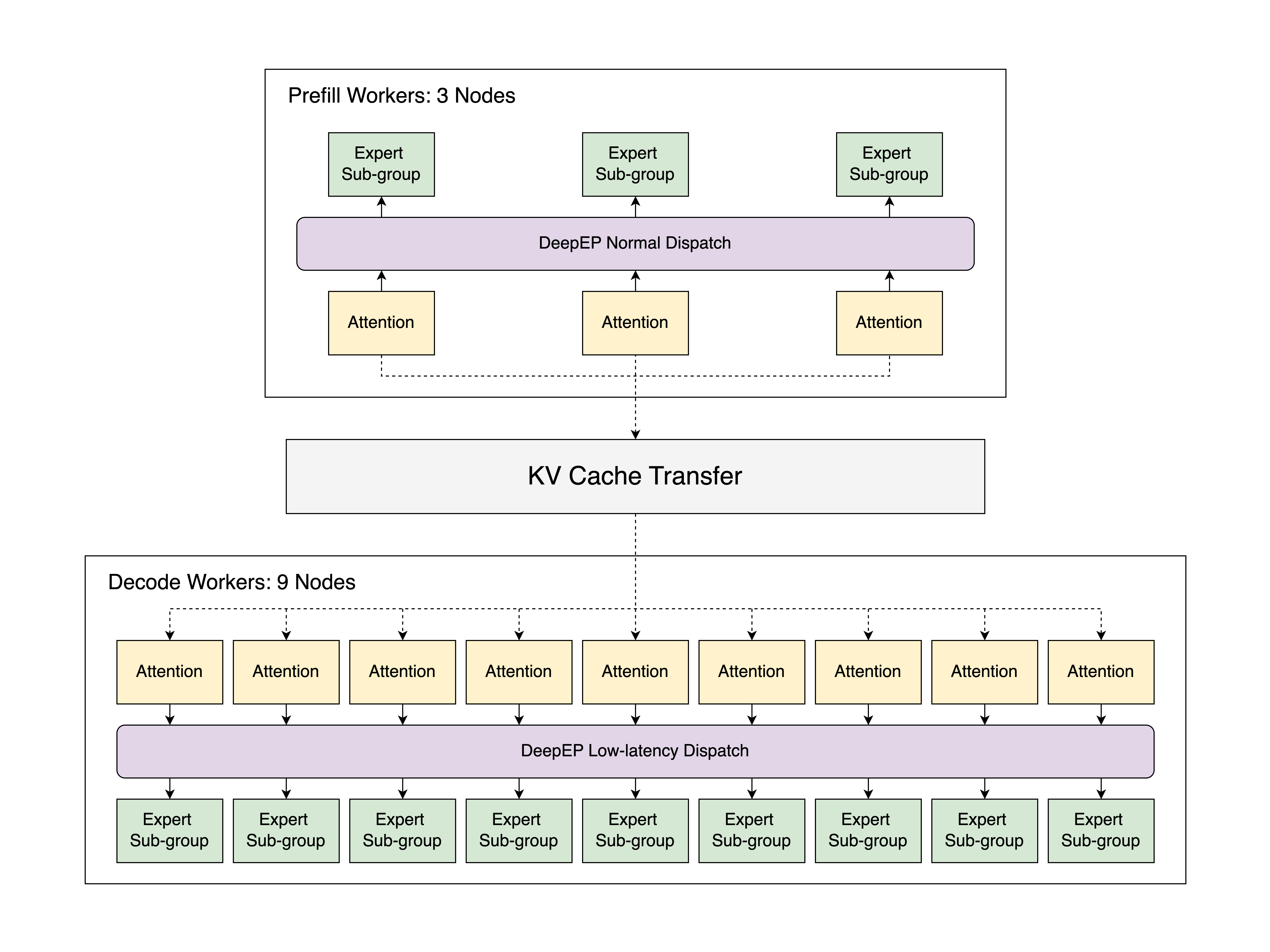
DeepSeek-V3 diverges sharply from this paradigm through two core technical innovations: an optimized Mixture-of-Experts (MoE) topology and Multi-head Latent Attention (MLA).
- Mixture-of-Experts (MoE) Routing: Rather than engaging the entire model for every token, DeepSeek-V3 selectively activates only a small, highly specialized subset of parameters for any given query. This sparse activation dramatically reduces the floating-point operations (FLOPs) required during both training and inference phases.
- Multi-head Latent Attention (MLA): Memory bandwidth has long served as a critical bottleneck during model inference. MLA compresses the key-value cache into a low-dimensional latent space, slashing memory consumption during generation without sacrificing contextual comprehension or reasoning depth.
These architectural refinements allow DeepSeek-V3 to rival or exceed the benchmark performance of established Western models while consuming a fraction of the training compute. For enterprise buyers obsessed with enterprise ROI, the implications are immediate: the cost floor for deploying production-grade AI has plummeted, challenging the pricing power of legacy cloud monopolies.
Comparative Analysis: DeepSeek-V3 vs. Traditional Cloud LLMs

The structural divergence between DeepSeek-V3 and conventional plug-and-play cloud models becomes starkly evident when evaluating core metrics across infrastructure, training economics, and deployment flexibility.
| Metric / Dimension | Traditional Dense LLMs | DeepSeek-V3 (MoE Architecture) |
|---|---|---|
| Parameter Activation | Dense (100% active per token) | Sparse Mixture-of-Experts (Fractional activation) |
| Training Compute Intensity | Extremely high; requires massive, uninterrupted clusters | Highly optimized; achieves high efficiency via algorithmic design |
| Inference Economics | High memory bandwidth demand; elevated per-token API costs | Lowered KV-cache overhead via MLA; highly cost-competitive |
| Deployment Strategy | Primarily managed cloud services and proprietary APIs | Adaptable for optimized on-premise and third-party cloud hosting |
Industry & Market Implications: Who Wins, Who Loses
The commercial shockwaves generated by DeepSeek-V3 extend far beyond academic benchmarks, forcing a wholesale re-evaluation of capital allocation strategies across the global technology sector.
The Losers: Legacy Hyperscalers and Hardware Monopolies. For years, cloud giants justified tens of billions of dollars in quarterly capital expenditures by pointing to the insatiable demand for raw compute. If algorithmic breakthroughs can replicate frontier-level intelligence using significantly fewer resources, the rationale for unchecked infrastructure spending weakens. Furthermore, semiconductor manufacturers face new strategic pressure; while demand for high-end silicon remains robust, efficiency-focused architectures diminish the absolute volume of chips required to achieve comparable cognitive outputs, introducing subtle risks to long-term valuation multiples.
The Winners: Enterprise CIOs and Open-Source Ecosystems. Corporate technology buyers stand to benefit immensely. For chief information officers navigating tight budgets and stringent board-level demands for profitability, lower inference costs remove a major barrier to AI adoption. Risk mitigation strategies can now incorporate agile, highly efficient models without locking organizations into rigid, high-cost cloud ecosystems. Moreover, developers and open-source advocates gain powerful tools to build customized applications without prohibitive operating costs.
Frequently Asked Questions (People Also Ask)
Frequently Asked Questions
What is the primary architectural difference between DeepSeek-V3 and standard cloud LLMs?
While standard cloud LLMs often rely on dense architectures that activate all parameters simultaneously for every query, DeepSeek-V3 utilizes an advanced Mixture-of-Experts (MoE) framework. This framework activates only the most relevant subset of parameters per token, drastically reducing computational overhead and energy consumption.
How does DeepSeek-V3 impact enterprise IT budgets and ROI?
By drastically cutting inference and training costs through innovations like Multi-head Latent Attention (MLA) and efficient MoE routing, DeepSeek-V3 lowers the cost barrier for enterprise deployment. This accelerates time-to-value, allowing organizations to achieve higher enterprise ROI on their artificial intelligence investments.
Does DeepSeek-V3 rely on standard plug-and-play APIs like other commercial models?
Many traditional LLMs are packaged exclusively as managed cloud services with straightforward APIs. DeepSeek-V3 offers greater architectural transparency and deployment flexibility, empowering engineering teams to optimize infrastructure scalability across diverse hosting environments.
What are the broader regulatory and compliance implications of efficient models like DeepSeek-V3?
As high-performance models become cheaper and more accessible, regulatory scrutiny is shifting toward data sovereignty, auditability, and security. Organizations can more easily host efficient models within sovereign cloud environments, aiding compliance with regional data protection mandates.
Future Outlook: What Comes Next
The emergence of DeepSeek-V3 marks a definitive turning point in the evolution of generative artificial intelligence. The industry is transitioning rapidly from an era defined by raw compute accumulation to a sophisticated discipline governed by algorithmic ingenuity and capital efficiency.
Key milestones to watch over the coming quarters include:
- Capital Expenditure Realignment: Expect Wall Street analysts to scrutinize upcoming quarterly earnings reports from major cloud providers for signs of rationalized infrastructure spending and reallocated R&D budgets.
- Next-Wave Architecture Iterations: Competitors across the US, Europe, and Asia will race to refine their own MoE and latent attention mechanisms to match or exceed DeepSeek's cost-to-performance ratio.
- Enterprise Adoption Acceleration: As cost barriers recede, enterprise adoption curves will steepen, moving beyond experimental proofs-of-concept into deeply embedded, mission-critical operational workflows.
Ultimately, DeepSeek-V3 has shattered the illusion that financial supremacy is the sole prerequisite for AI dominance. In doing so, it has ignited a fierce, highly competitive race where clever engineering, efficient cloud compute architecture, and rigorous economic discipline will dictate the true winners of the artificial intelligence revolution.