Executive Takeaways
- Geopolitical Realignment: The IBM-Rapidus partnership, formalized in December 2022, represents a calculated bridge between US intellectual property and Japanese manufacturing prowess to counter Asian supply chain concentration.
- Technological Leap: Rapidus is tasked with commercializing IBM’s pioneering 2-nanometer (nm) gate-all-around (GAA) nanosheet silicon node, targeting mass production by the mid-2020s.
- Massive Capital Deployment: Backed by robust Japanese state subsidies and private enterprise funding, the venture addresses critical enterprise ROI, infrastructure scalability, and supply chain risk mitigation.
- Meticulous regulatory compliance and multi-lateral government coordination underscore this industrial policy milestone, reshaping global semiconductor valuation multiples.
TOKYO AND ARMONK, N.Y. — In the high-stakes theater of global geopolitics and advanced manufacturing, few strategic alliances carry the weight of the pact forged on December 12, 2022. International Business Machines Corporation (IBM) and Rapidus Corporation—a newly minted foundry backed by corporate titans and the Japanese government—announced a definitive strategic partnership to manufacture 2-nanometer (nm) node semiconductors in Japan. This watershed moment is not merely a commercial contract; it is a meticulously engineered industrial counter-offensive designed to rebalance the global semiconductor ecosystem, secure sovereign technological autonomy, and establish a new benchmark for enterprise infrastructure scalability.
The Catalytic Catalyst: Why the IBM-Rapidus Axis Matters Now
Test Our Free AI & Tech Utilities Suite
Calculate LLM API token costs, analyze article dwell-time, or simulate tech DCA returns.
For decades, the epicenter of advanced semiconductor fabrication drifted away from North America and Japan, concentrating heavily in Taiwan and South Korea. While the economic model of centralized foundry fabrication offered optimized capital allocation and high short-term margins, the COVID-19 pandemic and rising geopolitical tensions exposed severe structural vulnerabilities. For enterprise technology buyers, cloud providers, and automotive giants, systemic supply chain shocks translated into billions of dollars in unrealized revenue and disrupted enterprise ROI.
Enter Rapidus. Formed in August 2022 with foundational investments from Japanese blue-chip corporations including Toyota, Sony, NTT, SoftBank, Kioxia, Denso, NEC, and MUFG Bank—alongside substantial initial subsidies from the Ministry of Economy, Trade and Industry (METI)—Rapidus was built with a singular mandate: leapfrog legacy nodes and establish sovereign mass production for sub-2nm logic devices. However, reinventing the wheel of leading-edge lithography and transistor architecture from scratch was an impossible hurdle. Rapidus required foundational intellectual property and proven process integration. IBM, boasting a decades-long legacy of semiconductor R&D breakthroughs—including the historic unveiling of the world’s first 2nm nanosheet technology in May 2021—provided the missing puzzle piece.
Under the terms of the agreement, IBM and Rapidus engineers are collaborating to bring IBM’s groundbreaking 2nm node technology to Rapidus’s planned fabrication facilities in Japan. This technology transfer shifts the paradigm of international tech partnerships, marrying American semiconductor science with Japanese precision engineering, operational discipline, and supply chain resilience.
Deconstructing the 2nm Technological Breakthrough

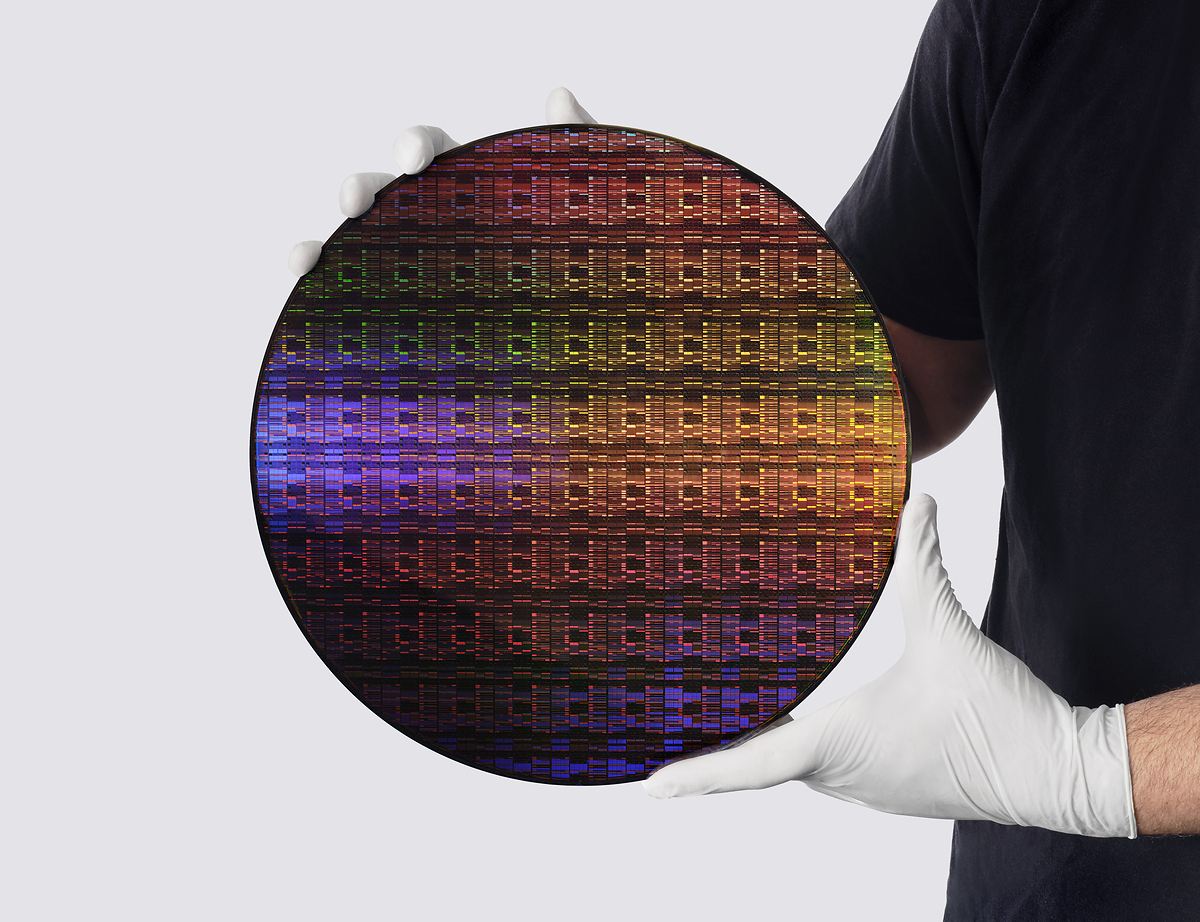
To understand the magnitude of the IBM-Rapidus partnership, one must examine the physics of the silicon wafer. As Moore’s Law encounters severe thermodynamic and quantum-mechanical boundaries, traditional FinFET transistor architectures have run out of steam at advanced nodes. IBM’s 2nm nanosheet technology utilizes a gate-all-around (GAA) architecture that allows current to flow more efficiently through the channel, dramatically reducing power leakage and increasing performance.
According to IBM’s benchmark data, a 2nm chip can achieve:
- Up to 45% higher performance compared to prevailing commercial 7nm node chips at the same power level.
- Up to 75% lower power consumption for identical performance metrics.
- An astonishing integration density that enables up to 50 billion transistors on a fingernail-sized chip.
For enterprise compute architecture, hyper-scale cloud data centers, and artificial intelligence (AI) workloads requiring immense cloud compute architecture, these specifications are transformative. They directly lower Total Cost of Ownership (TCO) while accelerating training times for large language models and complex neural networks. By embedding this capability within a trusted allied jurisdiction like Japan, both partners are offering a vital risk-mitigation pathway for global corporations seeking alternatives to geopolitical flashpoints.
Verified Data & Metrics Breakdown
The strategic scope of the IBM-Rapidus alliance is defined by ambitious timelines, heavy capital injections, and multi-faceted institutional backing. The table below outlines the core metrics governing this industrial initiative.
| Strategic Parameter | IBM & Rapidus Partnership Specifications |
|---|---|
| Announcement Date | December 12, 2022 |
| Target Node Technology | 2-Nanometer (nm) Gate-All-Around (GAA) Nanosheet Architecture |
| Foundry Partner | Rapidus Corporation (Established August 2022) |
| Founding Japanese Corporate Backers | Toyota, Sony, NTT, SoftBank, Kioxia, Denso, NEC, MUFG Bank |
| Government Support | Strategic Subsidies & Policy Alignment via Japan's METI |
| Target Production Window | Mid-2020s (Pilot lines active; mass production slated for 2027) |
| Key R&D Hub | IBM’s Albany Nanotech Complex (New York) paired with Japanese Fab sites |
Industry & Market Implications: Winners, Losers, and Capital Allocation
The formation of this strategic ecosystem sends powerful shockwaves across global capital markets, re-pricing equity valuations and forcing semiconductor foundries, fabless designers, and enterprise buyers to adjust their long-term strategic playbooks.
The Winners
1. Enterprise Tech and Cloud Giants: Organizations demanding advanced AI accelerators and low-latency cloud infrastructure gain a diversified, secure supply chain. This minimizes single-point-of-failure vulnerabilities that previously threatened corporate valuations during geopolitical crises.
2. Japanese Industrial Ecosystem: By anchoring leading-edge semiconductor manufacturing on domestic soil, Japanese manufacturing conglomerates secure preferential access to critical components, rejuvenating their domestic electronics and automotive supply chains.
3. IBM Licensing and IP Division: IBM reinforces its position as a preeminent global arbiter of foundational computing technology, unlocking high-margin monetization streams for its world-class research portfolio.
The Losers & Challengers
1. Legacy Foundry Monopolies: Pure-play foundries that previously enjoyed uncontested dominance over leading-edge nodes now face state-backed, geographically diversified competition designed specifically to erode single-region concentration.
2. Capital-Constrained Competitors: Fabless design startups unable to secure allocation access within diversified foundries may face margin compression as manufacturing capacity is prioritized for state-aligned enterprise partners.
Frequently Asked Questions (People Also Ask)
1. What is the primary objective of the IBM and Rapidus partnership?
The partnership aims to establish advanced semiconductor manufacturing in Japan, specifically focusing on the commercialization and mass production of IBM’s pioneering 2-nanometer (nm) gate-all-around (GAA) nanosheet technology. This collaboration is designed to secure supply chain resilience and sovereign manufacturing capabilities for advanced computing.
2. Who owns and funds Rapidus Corporation?
Rapidus is a Japanese foundry venture established with foundational investments from leading Japanese enterprises—including Toyota, Sony, NTT, SoftBank, Kioxia, Denso, NEC, and MUFG Bank—alongside significant financial backing and policy support from the Japanese government through the Ministry of Economy, Trade and Industry (METI).
3. Why is the 2nm semiconductor node significant for enterprise technology?
The 2nm node represents a massive leap in transistor density and energy efficiency. It delivers up to 45% higher performance or 75% lower power consumption compared to 7nm chips. This allows cloud providers, AI developers, and enterprise IT leaders to scale compute capacity while drastically reducing data center power consumption and operational costs.
4. When is mass production of the 2nm chips expected to begin in Japan?
Following initial joint research, technology transfer, and pilot line development at facilities such as IBM’s Albany Nanotech Complex and new Japanese fabrication sites, Rapidus is targeting commercial mass production by the latter half of the decade (around 2027).
Future Outlook: Milestones and Strategic Imperatives Ahead
As the initial enthusiasm of the December 2022 announcement matures into relentless operational execution, financial analysts and industry observers are monitoring several critical milestones. The path from R&D blueprint to high-yield commercial foundry operations is fraught with execution risk, equipment lead times, and talent acquisition hurdles.
First, successful pilot-line establishment at Rapidus’s designated fabrication site—specifically the IIM (Innovative Integration for Manufacture) facility in Chitose, Hokkaido—serves as the primary operational bellwether. Second, maintaining strict adherence to multi-lateral regulatory compliance frameworks and export control regimes will be essential to ensure uninterrupted access to extreme ultraviolet (EUV) lithography tools and advanced chemical precursors.
Ultimately, the IBM-Rapidus alliance is more than a bilateral industrial pact; it is a blueprint for the future of global technology supply chains. By successfully fusing American fundamental research with Japanese manufacturing excellence, the partnership demonstrates how allied nations can mobilize capital, protect national security, and drive the next multi-trillion-dollar wave of digital transformation.