Executive Takeaways
- Sovereign Scale: India’s Unified Payments Interface (UPI) and Brazil’s Pix have fundamentally dismantled traditional card-network oligopolies, processing billions of transactions monthly at near-zero marginal cost.
- Monetization & Disruption: While transaction fees have evaporated for consumers, legacy financial institutions face severe compression in net interest margins and interchange revenues, forcing aggressive shifts toward enterprise SaaS and credit underwriting.
- Geopolitical Export: Digital Public Infrastructure (DPI) is no longer merely a domestic inclusion tool; it has transformed into a primary instrument of digital diplomacy and export-led soft power for the Global South.
- Infrastructure Resilience: Sustaining hyper-growth requires continuous capital allocation toward cloud compute architecture, edge-security protocols, and real-time fraud mitigation to protect against systemic liquidity shocks.
For decades, the plumbing of global commerce was controlled by a handful of Western legacy institutions, credit card networks, and correspondent banking cartels that levied a heavy toll on every transaction. That paradigm is dissolving. Across the Global South, sovereign-backed Digital Public Infrastructure (DPI) has emerged as an unstoppable force, fundamentally recalibrating market liquidity, financial inclusion, and enterprise ROI.
At the vanguard of this revolution are Brazil’s Pix, launched by the Central Bank of Brazil in November 2020, and India’s Unified Payments Interface (UPI), deployed by the National Payments Corporation of India (NPCI) in 2016. Far from being mere domestic convenience tools, these platforms have proven that state-backed, open-source payment rails can achieve infrastructure scalability that private monopolies cannot match. As global regulators scrutinize capital allocation, systemic risk mitigation, and cross-border settlement speeds, Pix and UPI serve as the definitive blueprint for the future of digital payments.
The Genesis of Sovereign Rails: Catalytic Events and Architecture
To understand the unprecedented velocity of Pix and UPI, one must examine the structural market failures that preceded them. In both India and Brazil, cash dominated retail transactions, financial exclusion carried a massive drag on gross domestic product (GDP), and legacy card acquirers maintained prohibitive merchant discount rates (MDR). Traditional banking systems were siloed, proprietary, and indifferent to the liquidity needs of the unbanked.
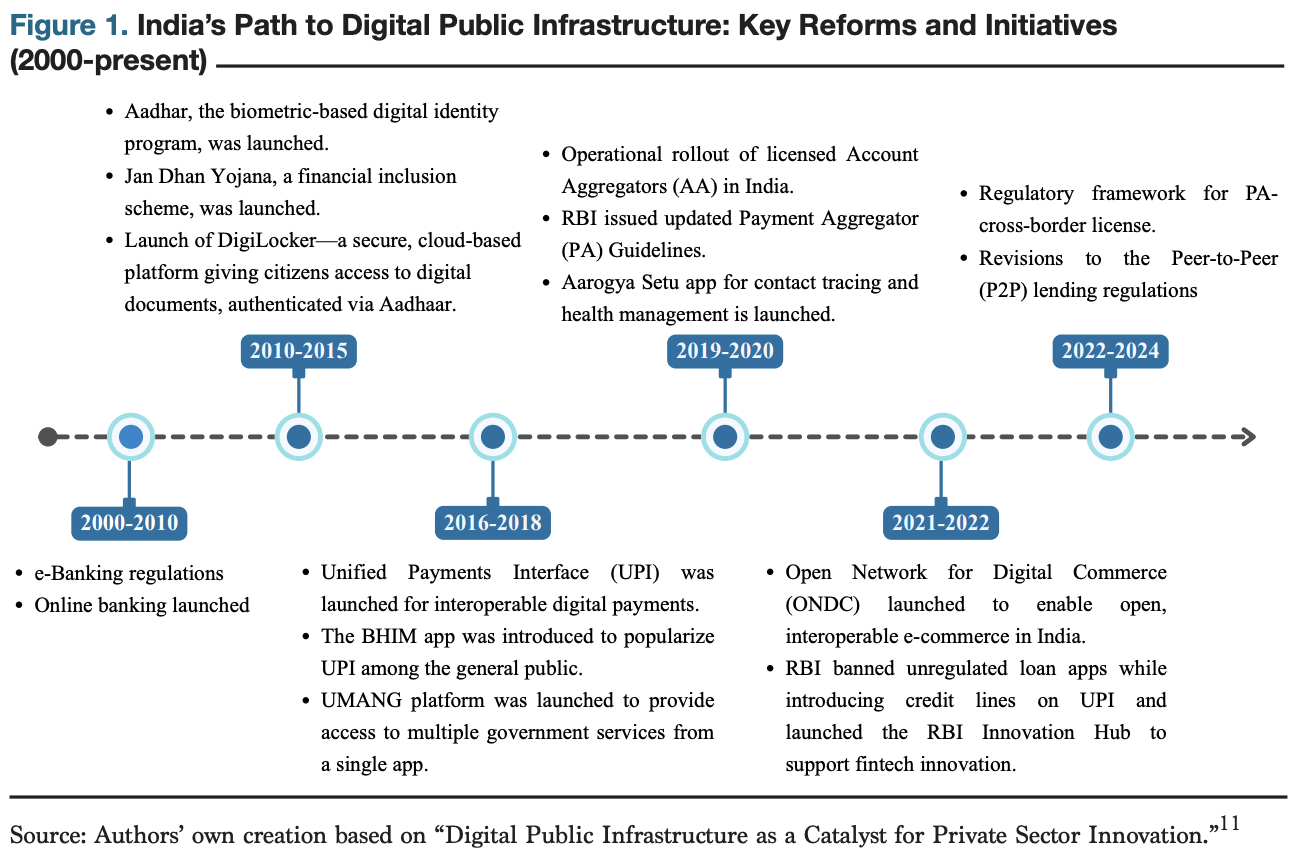
India’s catalytic moment arrived with the "India Stack"—a foundational digital identity (Aadhaar), mobile penetration (JAM trinity), and finally, the UPI protocol. By building a federated, interoperable, instant-payment layer on top of bank accounts, the NPCI eliminated the need for proprietary card hardware. Consumers and merchants interacted through a simple virtual payment address (VPA) or dynamic QR code, bypassing traditional point-of-sale (POS) terminals entirely.
Brazil followed a similar blueprint but optimized it for its unique inflationary history and concentrated banking sector. Pix was engineered not as an optional alternative, but as a mandatory utility for all regulated financial institutions with over 500,000 active accounts. Operating 24/7/365, Pix integrated instant messaging-style usability with robust central bank settlement, achieving near-instantaneous liquidity transfer. Within months of its 2020 launch, Pix converted millions of informal workers and unbanked citizens into the formal financial grid, shattering valuation multiples for legacy payment processors.
Comparative Metrics: Pix vs. UPI at Scale
The operational scale achieved by both systems defies historical precedent. The following metrics illustrate the staggering volume, velocity, and market penetration of these DPI models:
| Metric / Feature | Brazil’s Pix | India’s UPI |
|---|---|---|
| Launch Year | November 2020 | April 2016 |
| Governing Authority | Central Bank of Brazil (Banco Central do Brasil) | National Payments Corporation of India (NPCI) |
| Monthly Transaction Volume | Exceeds 4.5 Billion transactions | Exceeds 13 Billion transactions |
| Core Architecture | Centralized instant payment system (SPI) | Federated, API-driven open architecture |
| Monetization Model | Free for individuals; capped, low fees for merchants | Zero merchant discount rate (MDR) for P2M via basic rails |
| Cross-Border Integration | Expanding via regional Latin American frameworks | Linked with Singapore (PayNow), UAE, France, and Nepal |
Industry & Market Implications: Who Wins and Who Loses?
The rise of sovereign DPI has radically altered the competitive landscape across financial services. The economic fallout is starkly asymmetrical:
The Winners
- Micro, Small, and Medium Enterprises (MSMEs): Small businesses reap immediate benefits from compressed transaction costs and instantaneous working capital settlement, eliminating the 2-to-3-day delays associated with traditional credit card clearinghouses.
- Fintech Innovators & Super-Apps: Nimble technology platforms that integrate seamlessly with UPI and Pix APIs can acquire customers at near-zero marginal cost, leveraging transactional data to build lucrative ancillary product lines.
- Governments & Central Banks: State treasuries gain unprecedented visibility into economic activity, drastically reducing tax evasion, plugging welfare leakages through direct benefit transfers (DBT), and enhancing monetary policy transmission.
The Losers
- Legacy Acquirers and Card Networks: Traditional interchange-dependent business models face an existential squeeze. As consumers shift transactional volume to Pix and UPI, credit card issuers must compensate by inflating interest rates on revolving debt or pivoting entirely to software-as-a-service (SaaS) models.
- Traditional Banks Relying on Fee Income: Domestic banks accustomed to extracting heavy maintenance and transfer fees have watched those revenue streams evaporate, forcing painful internal restructurings and strategic pivots toward higher-margin corporate lending.
Frequently Asked Questions (People Also Ask)
How do Pix and UPI generate revenue if transactions are largely free for consumers?
While consumer-to-consumer (P2C) and consumer-to-merchant (P2M) transactions are typically offered at zero or negligible cost to encourage mass adoption, monetization occurs at the enterprise and institutional layers. Central banks and payment corporations derive revenue through premium API access for corporations, deferred settlement services, value-added data analytics, and regulatory compliance fees levied on participating financial institutions. Furthermore, commercial banks monetize the vast transactional data generated by Pix and UPI to cross-sell profitable credit, insurance, and investment products.
What are the primary cybersecurity and risk mitigation challenges facing DPI systems?
Operating at multi-billion-transaction scales exposes sovereign payment rails to sophisticated threat vectors, including distributed denial-of-service (DDoS) attacks, synthetic identity fraud, and social engineering scams (such as malicious QR code swapping). To maintain systemic stability, operators utilize advanced cloud compute architecture embedded with real-time AI fraud detection engines, mandatory biometric authentication, and strict multi-factor authentication (MFA) protocols at the endpoint level.
Can Pix and UPI be integrated into international cross-border payments?
Yes. Both systems are actively expanding beyond their domestic borders. India’s NPCI International Payments Ltd (NIPL) has forged bilateral agreements linking UPI with instant payment systems in Singapore (PayNow), the United Arab Emirates, France, and Nepal, allowing seamless real-time remittances. Similarly, Brazil is laying the groundwork for regional interoperability across Latin America, positioning Pix as a foundational node for cross-border trade settlement.
Future Outlook: The Next Horizon for Sovereign DPI
As we look toward the remainder of the decade, the trajectory of Digital Public Infrastructure will transition from domestic optimization to global standard-setting. The G20 and multilateral institutions like the International Monetary Fund (IMF) and the World Bank are actively studying Pix and UPI as blueprints for financial sovereignty in developing economies.
Key milestones to monitor include the integration of Central Bank Digital Currencies (CBDCs)—such as India’s Digital Rupee and Brazil’s Drex—directly into existing DPI frameworks. This convergence will enable atomic settlements, smart contracts, and automated regulatory compliance without intermediation.
For institutional investors, fintech operators, and global bankers, the message is unequivocal: sovereign digital public infrastructure is no longer an experimental public policy project. It is the permanent, high-velocity bedrock upon which the future of global capital allocation and retail payments will be built.