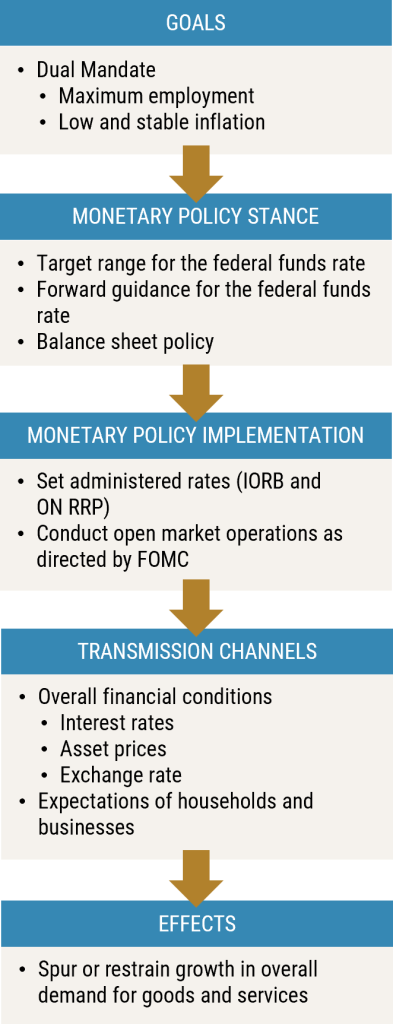
WASHINGTON & ATLANTA — For decades, central bank watchers, institutional portfolio managers, and chief risk officers have relied on a patchwork of market indicators to gauge whether a central bank’s tightening cycle is actually biting. On August 18, 2026, a landmark intervention from the Federal Reserve Bank of Atlanta—authored by senior research economist Nikolay Gospodinov on the institution's flagship Policy Hub: Macroblog—fundamentally upended that traditional framework. By introducing a streamlined, highly responsive monetary policy index, the Atlanta Fed has pierced through the noise of conflicting market signals to map out precisely how monetary policy stance translates into broader financial conditions.
This comprehensive investigative report examines the mechanics behind the Atlanta Fed’s new gauge, analyzes the friction points within current capital markets, and evaluates what tighter—or loosening—financial conditions mean for corporate capital allocation, valuation multiples, and systemic risk mitigation over the coming fiscal quarters.
Executive Takeaways
Test Our Free AI & Tech Utilities Suite
Calculate LLM API token costs, analyze article dwell-time, or simulate tech DCA returns.
- The Atlanta Fed’s New Index: Unveiled on August 18, 2026, by Nikolay Gospodinov, a novel monetary policy index provides an unvarnished look at how policy stances directly filter through to financial conditions.
- The Transmission Disconnect: Traditional models have long assumed a linear relationship between benchmark rate adjustments and corporate borrowing costs; the new data reveals persistent structural bottlenecks in asset-backed credit markets.
- Corporate Capital Allocation Impact: With financial conditions operating on a compressed lag, executive leadership teams must re-evaluate enterprise ROI thresholds, debt-servicing cushions, and infrastructure scalability initiatives.
- Valuation Multiples at Risk: As liquidity conditions tighten unevenly across asset classes, equity markets face renewed pressure, forcing institutional investors toward aggressive risk mitigation strategies.
Comprehensive Narrative: Decoding the Monetary Policy Transmission Engine
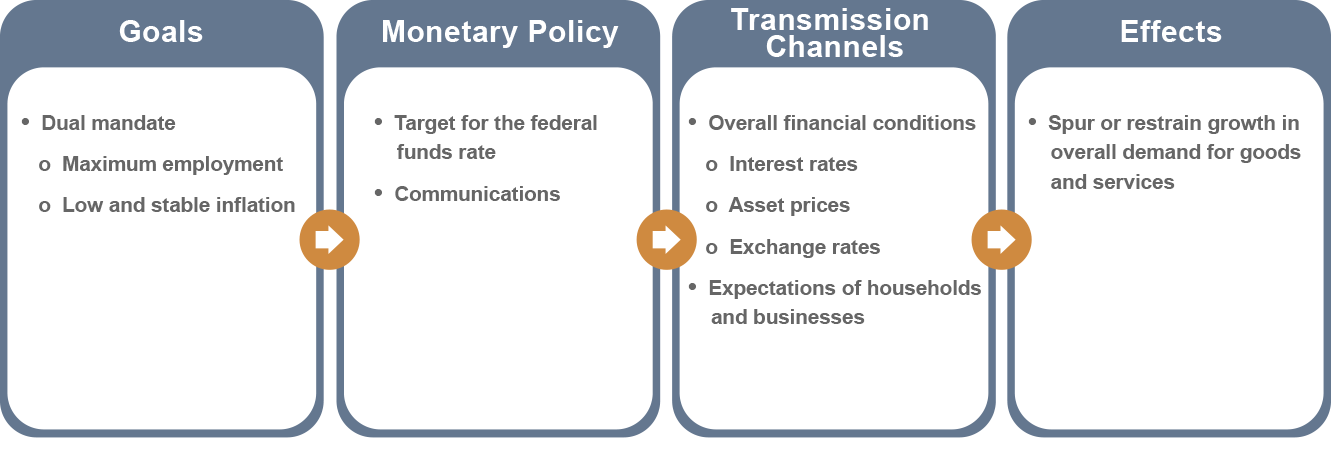
At the heart of modern macroeconomics lies a foundational dilemma: how do policy rates set in closed committee rooms cascade through the trillion-dollar plumbing of global financial markets to influence Main Street hiring, corporate capital expenditures, and consumer spending? For years, economists relied on broad, lagging indicators—such as the Chicago Fed’s National Financial Conditions Index (NFCI) or Bloomberg’s proprietary metrics—to evaluate this transmission. However, these older models often conflate general economic momentum with explicit monetary policy stance, creating blind spots for institutional traders and risk executives.
The August 18, 2026 analysis published by the Federal Reserve Bank of Atlanta cuts through this ambiguity. By constructing a targeted monetary policy index, Gospodinov isolates the exact vectors through which central bank directives alter financial conditions. The empirical findings demonstrate that the traditional 12-to-18-month monetary policy lag is no longer immutable. Driven by algorithmic trading, instantaneous digital banking, and deeply integrated global liquidity pools, the transmission mechanism has accelerated, yet it remains jarringly uneven across sectors.
This unevenness presents severe challenges for corporate financial planning. While short-term wholesale funding markets react instantaneously to policy announcements, long-term commercial real estate credit, consumer loan portfolios, and venture-backed enterprise software liquidity exhibit severe friction. Consequently, chief financial officers (CFOs) navigating this macroeconomic terrain find themselves unable to rely on historical valuation models. The Atlanta Fed’s index serves as a diagnostic tool, revealing that financial conditions can remain restrictive even when headline inflation metrics appear to normalize.
| Index / Metric Component | Primary Focus Area | Transmission Lag | Sensitivity to Policy Shifts |
|---|---|---|---|
| Atlanta Fed Policy Index (Aug 2026) | Direct monetary policy stance & financial conditions linkage | Short to Medium (1–6 months) | High |
| Traditional NFCI Benchmarks | Broad macroeconomic risk, credit, and leverage | Long (12–18 months) | Moderate |
| Corporate Yield Spreads | Investment-grade and high-yield debt issuance costs | Immediate (0–30 days) | Very High |
| Commercial Real Estate Credit | Illiquid property assets and refinancing windows | Delayed (18–24 months) | Low to Moderate |
Industry & Market Implications: Who Wins and Who Loses
The implications of the Atlanta Fed’s findings extend far beyond academic circles, directly impacting balance sheet management, banking regulations, and private equity deal flow. As financial conditions decouple from simple interest rate heuristics, market participants must adapt quickly.
The Winners
- Cash-Rich Enterprise Tech Giants: Corporations possessing robust balance sheets and minimal debt exposure benefit immensely from tighter financial conditions that squeeze cash-burning competitors and suppress inflated wage pressures.
- Agile Fixed-Income Managers: Active asset managers capable of parsing nuanced term structures and credit spreads can exploit market mispricings generated by the lag in monetary transmission.
- Risk-Mitigation & Compliance Vendors: Financial institutions upgrading their predictive analytics infrastructure to track real-time monetary indices drive heavy demand for enterprise-grade risk software.
The Losers
- Highly Leveraged Entities: Firms reliant on continuous debt refinancing face immediate margin compression as financial conditions remain restrictive despite theoretical rate stabilization.
- Commercial Real Estate (CRE) Developers: Property operators facing debt maturities in an environment of constrained credit availability struggle to secure viable refinancing terms.
- Venture Capital & Early-Stage Startups: High-growth tech startups lacking clear paths to profitability face severe valuation corrections as capital allocation priorities shift toward risk-free assets.
Frequently Asked Questions (People Also Ask)
What is the primary objective of the Atlanta Fed’s monetary policy index?
The primary objective is to construct a transparent, simplified metric that tracks how monetary policy stances directly influence broader financial conditions. By isolating these variables, policymakers and market participants can better understand how policy adjustments impact credit availability, asset prices, and economic activity without the noise of unrelated macroeconomic shocks.
How do financial conditions alter corporate capital allocation strategies?
When financial conditions tighten, the cost of capital rises and liquidity contracts. This forces corporate leadership to recalibrate their hurdle rates for capital investments, prioritize internal cash generation over debt-funded expansion, and defer speculative infrastructure scalability projects in favor of core operational efficiency.
Why are traditional economic lag models proving less reliable in current markets?
Historically, monetary policy required 12 to 18 months to fully filter through the banking system and impact the real economy. However, modern electronic trading, algorithmic credit underwriting, and rapid information dissemination have compressed these timelines. Nevertheless, structural disparities remain, causing certain asset classes—such as commercial real estate—to experience prolonged transmission delays.
What does this mean for equity valuation multiples?
As the Atlanta Fed’s framework demonstrates that financial conditions remain restrictive, discount rates applied to future corporate cash flows stay elevated. Consequently, high-growth equity valuation multiples face ongoing compression, compelling institutional investors to demand higher risk premiums.
Future Outlook: Strategic Milestones to Monitor
As we look toward the remainder of 2026 and into the next fiscal cycle, the interaction between monetary policy stance and financial conditions will remain the single most critical variable for global market stability. Institutional stakeholders must monitor several upcoming milestones:
- Quarterly Index Updates: Future iterations of the Atlanta Fed's Policy Hub: Macroblog releases will test whether the newly constructed index can accurately predict credit contraction inflection points ahead of official GDP reports.
- Corporate Refinancing Cliffs: The volume of speculative-grade debt maturing over the next four quarters will serve as a definitive stress test for the resilience of corporate balance sheets under current financial conditions.
- Central Bank Signaling: How Federal Reserve officials interpret these granular financial condition metrics during upcoming policy symposia will dictate forward guidance and shape yield curve pricing across international exchanges.
Ultimately, the Atlanta Fed’s August 2026 intervention marks a critical evolution in macroeconomic surveillance. For executives, investors, and strategists, mastering this updated transmission framework is no longer optional—it is the prerequisite for navigating an increasingly complex and volatile global economy.