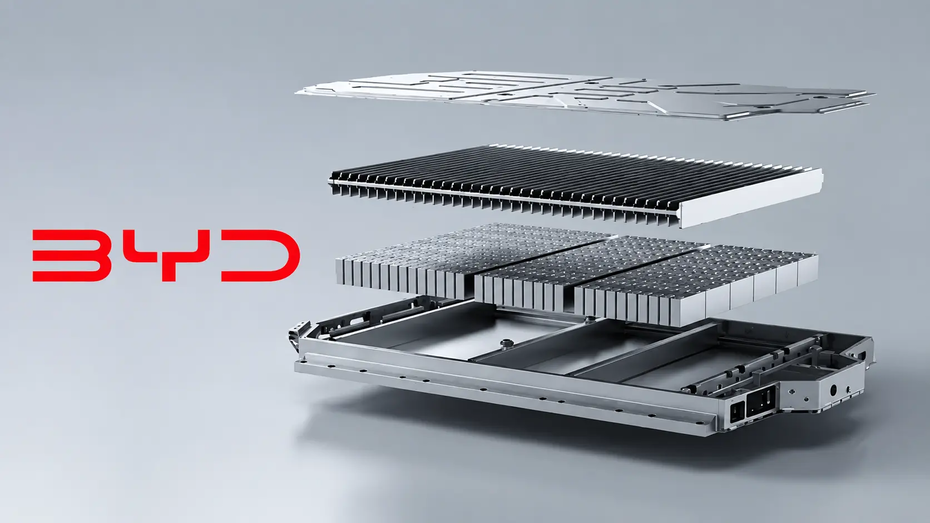
Executive Takeaways
- Commercial Timeline: Build Your Dreams (BYD) has officially locked in 2027 for the initial market deployment of its proprietary solid-state battery architecture, accelerating the timeline for next-generation energy storage.
- Capital Allocation & Infrastructure: The announcement underscores a massive pivot in global R&D capital allocation, threatening legacy supply chains and forcing Western automakers to re-evaluate enterprise ROI and production scaling.
- Technological Leap: BYD’s solid-state initiative aims to bypass traditional liquid electrolyte safety risks while delivering quantum leaps in volumetric energy density, charging speeds, and thermal stability.
- Geopolitical & Market Realignment: As Chinese EV titans secure dominant control over raw material refining and advanced chemistry patents, Western trade bodies face acute pressure regarding regulatory compliance and market liquidity protections.
The global automotive and energy storage landscapes are bracing for a seismic technological realignment. According to proprietary industry disclosures and intelligence reports originating from specialized automotive reporting desks, Chinese electric vehicle juggernaut BYD is slated to launch commercial solid-state batteries by 2027. For institutional investors, supply chain architects, and legacy automotive executives, this date represents a hard deadline. It signals the potential obsolescence of conventional lithium-ion liquid electrolyte systems and threatens to redraw the valuation multiples of the entire clean-tech sector.
For years, skepticism dominated boardrooms regarding the commercial viability of solid-state batteries. Critics pointed to prohibitive manufacturing costs, interfacial resistance challenges, and insurmountable infrastructure scalability hurdles. However, BYD’s aggressive 2027 roadmap—confirmed following intensive industrial testing and strategic supply chain fortification—proves that solid-state chemistry has transitioned from theoretical laboratory physics into an actionable manufacturing reality. This investigative report dissects the technological underpinnings, economic ramifications, and geopolitical chess match triggered by BYD’s impending commercial breakthrough.
The Catalytic Shift: Why 2027 is the Tipping Point
Test Our Free AI & Tech Utilities Suite
Calculate LLM API token costs, analyze article dwell-time, or simulate tech DCA returns.
The race to commercialize solid-state batteries has long been viewed as the holy grail of the energy transition. Traditional lithium-ion batteries, while reliable and increasingly cost-effective, are approaching their theoretical limits in terms of energy density and thermal safety. Dendrite formation—microscopic lithium fibers that pierce separators and cause catastrophic thermal runaways—remains an inherent vulnerability of liquid-based systems, necessitating heavy, complex cooling apparatuses.
BYD’s decision to target 2027 for commercial rollout is not arbitrary; it is the culmination of years of aggressive capital expenditure and vertically integrated R&D. By manufacturing its own semiconductors, battery management systems, and chemical precursors, BYD enjoys structural cost advantages that Western competitors struggle to replicate. As the company transitions its high-end vehicle architectures—and eventually its mass-market fleets—to solid-state cells, the barrier to entry for rival original equipment manufacturers (OEMs) rises exponentially.
This development sends immediate shockwaves through global capital markets. Legacy automotive giants that have anchored their electrification strategies to incremental improvements in traditional chemistry now face intense pressure to accelerate risk mitigation strategies. The ability to offer vehicles with doubled ranges, sub-ten-minute charging times, and absolute thermal immunity will fundamentally reset consumer expectations, rendering non-solid-state fleets uncompetitive in premium segments.
Comparative Industry Metrics: Solid-State vs. Conventional Liquid Lithium-Ion

To understand the disruptive magnitude of BYD’s 2027 target, one must examine the fundamental performance divergence between legacy liquid-electrolyte lithium-ion cells and emerging solid-state architectures. The following matrix outlines the projected operational parameters driving enterprise investment decisions across the sector:
| Performance Metric | Traditional Liquid Lithium-Ion (Current) | BYD Solid-State Architecture (2027 Target) | Strategic Business Impact |
|---|---|---|---|
| Volumetric Energy Density | 250 – 300 Wh/kg | 400 – 500+ Wh/kg | Dramatic vehicle weight reduction; extended driving range exceeding 1,000 km per charge. |
| Thermal Safety Risk | Moderate to High (Flammable organic electrolytes) | Near Zero (Inorganic solid electrolyte) | Elimination of complex liquid cooling systems; lower warranty liabilities and insurance costs. |
| Charging Velocity (10-80%) | 18 – 30 Minutes (High-voltage fast charge) | Under 10 Minutes | Alleviation of public charging congestion; commercial fleet operational efficiency parity with ICE vehicles. |
| Manufacturing CAPEX | Optimized, highly mature scaling | High initial outlay; scaling bottlenecks | Requires massive upfront capital allocation; favors vertically integrated industrial giants. |
Ecosystem Ripple Effects: Winners, Losers, and Supply Chain Realignment
The announcement of a 2027 commercial deployment window forces a brutal bifurcation in the global automotive supply chain. The economic implications ripple outward from battery cell fabricators to raw material refiners, sovereign trade bodies, and institutional portfolios.
The Winners: Vertical Integrators and Advanced Material Specialists
Firms possessing end-to-end manufacturing capabilities—most notably BYD and select domestic battery champions—stand to capture outsized market share. By controlling the intellectual property surrounding solid electrolyte synthesis, cathode compatibility, and interface stabilization, these companies can command premium pricing power. Furthermore, mining conglomerates specializing in high-purity lithium, solid-state precursor chemicals, and advanced ceramics will experience surging demand, directly impacting their valuation multiples and market liquidity.
The Losers: Legacy Liquid Electrolyte Suppliers and Unprepared OEMs
Conversely, suppliers deeply entrenched in conventional liquid electrolyte formulations, separator membranes, and aluminum pouch cell casings face an impending secular decline. Companies slow to adapt their manufacturing lines to dry-room, solid-state assembly standards risk asset impairment charges and diminished enterprise valuations. Similarly, legacy Western and Japanese automakers that delayed their solid-state pivot in favor of short-term hybrid or liquid-battery optimizations find themselves caught in a strategic trap, forced to license technology from Asian rivals or risk total irrelevance.
Frequently Asked Questions (People Also Ask)
Frequently Asked Questions
What makes BYD’s 2027 solid-state battery timeline different from previous announcements?
Unlike academic prototypes or early-stage startup announcements that lack industrial backing, BYD combines massive manufacturing scale, deep vertical integration, and an established supply chain network. Their 2027 target is supported by concrete pilot-line production data and aggressive capital allocation, making it an industrial execution reality rather than a speculative research goal.
How will solid-state batteries impact electric vehicle pricing and consumer adoption?
Initially, solid-state vehicles will be deployed in premium, high-margin vehicle segments to absorb early manufacturing overhead. However, as production processes mature and cloud compute architecture optimizes supply chain efficiency, unit economics are projected to drop. This will eventually drive cost parity with conventional liquid-ion packs, accelerating mass-market adoption by mitigating range anxiety.
What are the primary engineering hurdles BYD must overcome before 2027?
The central challenges involve interfacial resistance—ensuring smooth ion transfer between the solid electrolyte and electrodes—and scaling high-speed manufacturing lines in ultra-dry environments. Overcoming these technical barriers at scale without compromising battery lifespan or driving up unit costs remains the definitive engineering test for BYD’s R&D divisions.
How will Western automakers and regulators respond to BYD’s solid-state dominance?
Western regulatory bodies are anticipated to tighten regulatory compliance standards and scrutinize trade flows, potentially enacting stricter tariff barriers. Simultaneously, Western automotive executives are aggressively forging joint ventures with domestic startups and increasing R&D subsidies to bridge the technological gap before 2027.
Future Outlook: Strategic Milestones to Watch
As the industry marches toward 2027, institutional investors and market analysts must monitor specific leading indicators to gauge the true velocity of BYD’s solid-state rollout. Key milestones include pilot plant commissioning dates, patent filings regarding interface stabilization chemistry, and strategic supply chain partnerships secured for specialized solid electrolyte raw materials.
The commercialization of solid-state batteries by 2027 is not merely a milestone in electrochemical engineering; it is a watershed moment for the global economy. Companies that navigate this transition with disciplined capital allocation and robust risk mitigation will cement market dominance for the coming decades. Those that hesitate risk being relegated to corporate history, outpaced by an unstoppable wave of next-generation energy storage innovation.