
NEW YORK — Wall Street has officially drawn a line in the sand. In one of the most violent rotations and valuation corrections seen in recent trading history, a sudden wave of panic wiped more than $1 trillion in market capitalization from major U.S. stock indices. The catalyst? A profound, growing dissonance between the astronomical capital expenditure commitments funneled into artificial intelligence infrastructure and the actual, near-term enterprise ROI being delivered by the technology.
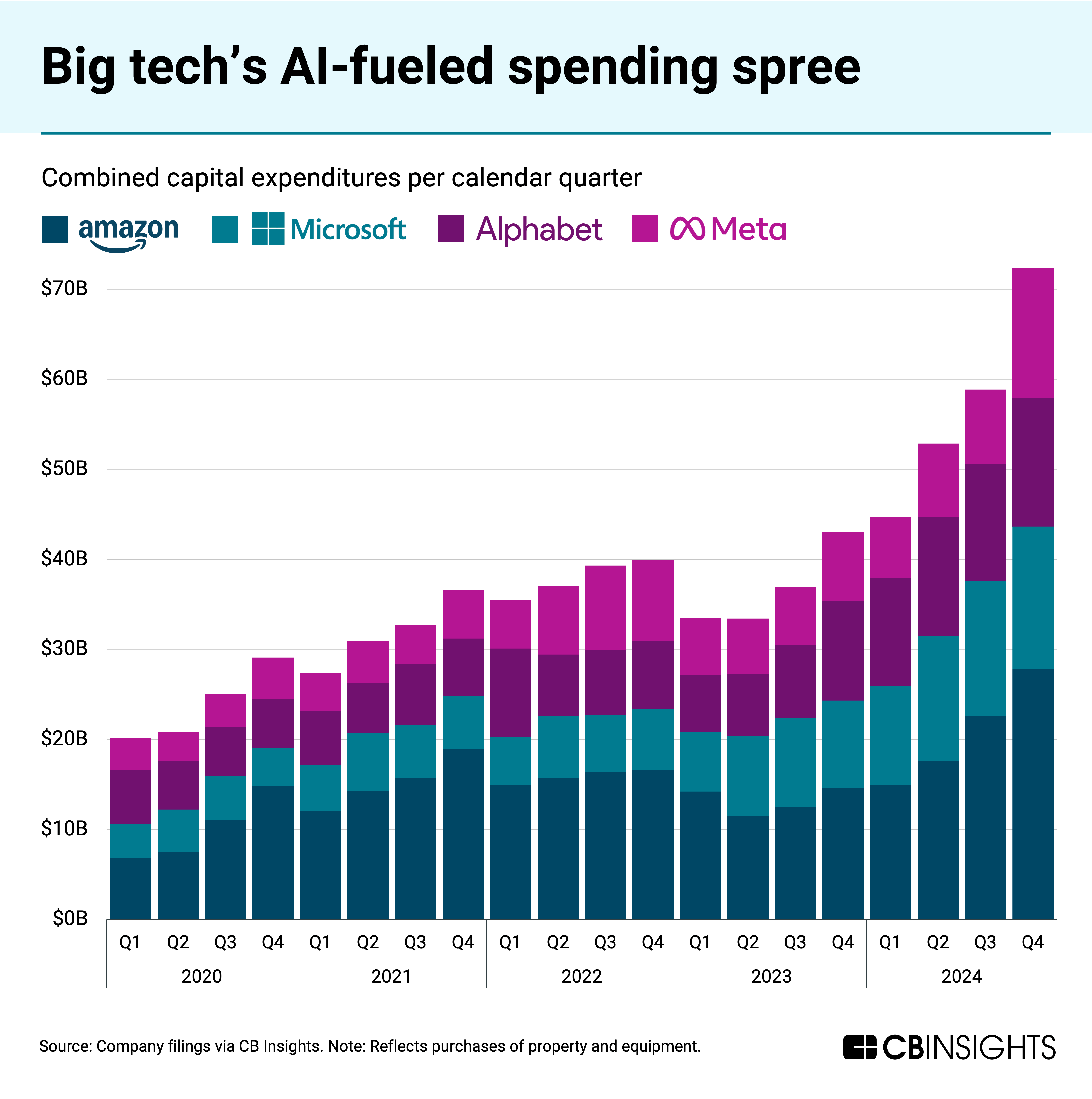
As the market digests an unprecedented $828 billion combined AI spending spree projected across the hyperscaler ecosystem, institutional asset managers, quantitative hedge funds, and conservative pension trustees are reassessing their capital allocation strategies. For nearly two years, the "Magnificent Seven" and adjacent mega-cap technology stalwarts enjoyed carte blanche from equity markets, trading at elevated valuation multiples on the promise of an AI-driven economic revolution. Today, that narrative is facing a severe stress test. The fundamental question dominating boardrooms from lower Manhattan to Silicon Valley is no longer whether generative AI is transformative, but whether the infrastructure scale-up is outstripping monetization by an unsustainable margin.
Executive Takeaways
Test Our Free AI & Tech Utilities Suite
Calculate LLM API token costs, analyze article dwell-time, or simulate tech DCA returns.
- The Trillion-Dollar Wipeout: A synchronized sell-off across semiconductor manufacturers, cloud infrastructure providers, and software leaders erased over $1 trillion in market equity in consecutive trading sessions.
- The $828 Billion Bill: Leading hyperscalers and enterprise software titans have committed an estimated $828 billion toward data center buildouts, high-performance GPUs, and energy grid acquisitions, triggering intense scrutiny over capital allocation efficiency.
- ROI Compression: Wall Street analysts are aggressively downgrading forward-looking earnings estimates as corporate customers push back against high-cost software subscriptions, demanding clear proof of operational cost-reduction.
- Systemic Market Implications: The concentration risk inherent in passive index funds means that tech-led drawdowns are directly impacting broad-market liquidity, bond yields, and retirement accounts globally.
The Anatomy of a Correction: From Euphoria to Exhaustion
To understand the mechanics of the current market correction, one must examine the parabolic trajectory that preceded it. Following the watershed public release of advanced large language models, enterprise technology budgets underwent a structural re-platforming. Chief Information Officers (CIOs) across the Fortune 500 scrambled to secure compute architecture, leading to unprecedented pricing power for foundational semiconductor designers and specialized cloud providers.
However, financial markets operate on a perpetual discounting mechanism looking six to twelve months ahead. As quarterly earnings reports rolled in, sell-side equity research analysts began flagging a widening chasm between capital expenditure (CapEx) growth and operating cash flow generation. While revenue figures from cloud divisions showed strong top-line expansion, the margin profile of AI workloads revealed a stark reality: training and running frontier models requires immense computational overhead, expensive liquid-cooling systems, and continuous power consumption.
The breaking point arrived when several bellwether technology firms reported guidance indicating that their AI investments would accelerate further throughout the fiscal year, with payback periods extending well into the latter half of the decade. Institutional portfolio managers, facing fiduciary mandates regarding risk mitigation and asset liability matching, immediately initiated defensive rebalancing. High-beta growth stocks experienced aggressive block trades, and options markets reflected a sharp spike in downside protection hedging.
Capital Allocation at a Crossroads: Decoding the $828 Billion Ledger
The core of Wall Street’s anxiety lies in the sheer velocity and magnitude of capital deployment. To maintain competitive supremacy, executive boards have authorized aggressive infrastructure scalability programs. These initiatives encompass massive real estate acquisitions for next-generation data centers, multi-billion-dollar supply contracts for advanced silicon accelerators, and direct investments in private energy grids to secure uninterrupted baseload power.
Financial analysts tracking cash conversion cycles note that while previous technology transitions—such as the migration from on-premise servers to enterprise cloud—allowed for predictable amortization schedules, the hardware obsolescence cycle in artificial intelligence is radically compressed. Enterprise AI accelerators risk depreciating far faster than traditional enterprise hardware, forcing technology conglomerates to continuously reinvest massive sums simply to maintain parity.
| Metric / Indicator | Previous Baseline (2022–2023) | Current Projections (2024–2026) | Market Impact & Risk Level |
|---|---|---|---|
| Aggregate Hyperscale CapEx | ~$150B – $180B Annually | $828 Billion Cumulative | High (Severe free cash flow pressure) |
| Valuation Multiples (P/E Forward) | Historical 5-year averages (~25x) | Compressed to 18x–22x for laggards | Moderate (Multiple contraction under way) |
| Enterprise AI Adoption Rate | Exploratory / Proof-of-Concept | Pilot-to-Production Friction | High (Slower monetization realization) |
| Energy Grid Integration | Standard utility procurement | Direct PPA / Nuclear partnerships | High (Regulatory & supply bottlenecks) |
Industry & Market Implications: Winners, Losers, and Structural Shifts
As equity markets reprice risk, the ripple effects extend far beyond Silicon Valley boardrooms, reshaping competitive dynamics across multiple global sectors.
The Hardware and Infrastructure Suppliers
While chipmakers and specialized server manufacturers continue to post staggering top-line revenue growth, the composition of their customer base is facing scrutiny. Any sign of double-ordering or inventory correction by top-tier cloud providers sends immediate shockwaves through the supply chain. Companies demonstrating superior energy efficiency and architectural advantages are retaining investor confidence, while commodity hardware assemblers face aggressive multiple compression.
Enterprise Software and SaaS Providers
Software incumbents are navigating a delicate transition. Corporate buyers are increasingly demanding outcome-based pricing rather than flat-rate user licenses for AI copilots and automated workflows. Software firms that successfully integrate AI to drive tangible headcount efficiencies or revenue acceleration are capturing market share. Conversely, legacy software providers failing to demonstrate distinct AI integration are seeing customer churn spike as enterprise CIOs audit their technology stacks for redundant spending.
Macroeconomic and Liquidity Transmission
Because mega-cap technology stocks have commanded an outsized weight within benchmark indices like the S&P 500 and Nasdaq 100, institutional liquidity dynamics are directly tied to tech sector volatility. When risk-off sentiment prevails, margin calls and forced de-leveraging among quantitative funds can trigger indiscriminate selling across non-tech sectors, influencing corporate debt issuance and cross-asset correlations.
Frequently Asked Questions (People Also Ask)
Why is Wall Street suddenly concerned about Big Tech’s AI spending?
Wall Street's mounting anxiety stems from a growing mismatch between massive capital expenditures—totaling an estimated $828 billion across major technology firms—and the speed at which these investments translate into tangible enterprise revenue and free cash flow. Institutional investors are demanding clearer evidence of enterprise ROI, shorter payback periods, and sustainable profit margins as hardware depreciation and energy costs escalate.
Which sectors were hit hardest during the $1 trillion market wipeout?
The sell-off heavily impacted semiconductor designers, high-performance server manufacturers, cloud service providers, and high-growth enterprise software (SaaS) companies. Index concentration meant that passive funds holding mega-cap growth leaders experienced broad-based liquidation as automated risk-management models triggered defensive rebalancing.
Does this market correction mean the artificial intelligence boom is over?
No. Financial analysts and industry executives emphasize that the current correction represents a healthy transition from speculative euphoria to fundamental operational discipline. While the era of indiscriminate venture funding and unchecked capital expenditure is facing strict market accountability, secular tailwinds for transformative enterprise technology remain intact for companies demonstrating proven monetization models.
How are institutional investors adjusting their portfolios in response to tech volatility?
Portfolio managers are executing rigorous risk mitigation strategies, rotating capital out of high-beta, cash-burning growth equities and reallocating toward defensive sectors, fixed-income instruments with attractive yields, and technology firms with fortress balance sheets, robust operating cash flows, and disciplined capital allocation track records.
Future Outlook: Key Milestones and Critical Watchpoints
The road ahead for global equity markets will be defined by execution. The days of boundless investor enthusiasm for unmonetized technological promise have been replaced by a rigorous, metric-driven accounting standard.
In the coming quarters, institutional investors will closely monitor three critical milestones:
- Verified Enterprise Monetization: Quarterly disclosures must explicitly separate AI-derived revenue from legacy cloud and software streams, proving sustainable margin expansion rather than subsidized user adoption.
- CapEx Discipline and Free Cash Flow Yield: Executive teams that demonstrate disciplined capital allocation—tying infrastructure investments directly to signed enterprise contracts—will command premium valuation multiples.
- Regulatory and Energy Compliance: As data center power requirements strain regional electrical grids, regulatory approvals, environmental compliance, and direct power purchase agreements will become decisive operational differentiators.
Ultimately, the $1 trillion market correction serves as a sobering reminder of economic gravity. While the artificial intelligence revolution remains structurally intact, Wall Street has made its mandate crystal clear: visionary technology must ultimately be anchored by disciplined financial returns.