Executive Takeaways
- The Paradigm Shift: Binance founder Changpeng Zhao (CZ) shattered industry illusions by declaring that absolute security is a statistical impossibility in decentralized finance and enterprise cloud architecture.
- Infrastructure Vulnerability: The historic exploit highlights systemic weaknesses in cross-chain bridge protocols, smart contract execution layers, and distributed ledger validator nodes.
- Capital Allocation Mandate: Institutional asset managers and tier-1 exchanges are aggressively recalibrating their risk mitigation frameworks, driving massive capital expenditure toward advanced cryptography and automated threat detection.
- Regulatory Fallout: Global financial watchdogs are leveraging the breach to accelerate compliance mandates, demanding stringent capital reserves and verifiable infrastructure scalability.
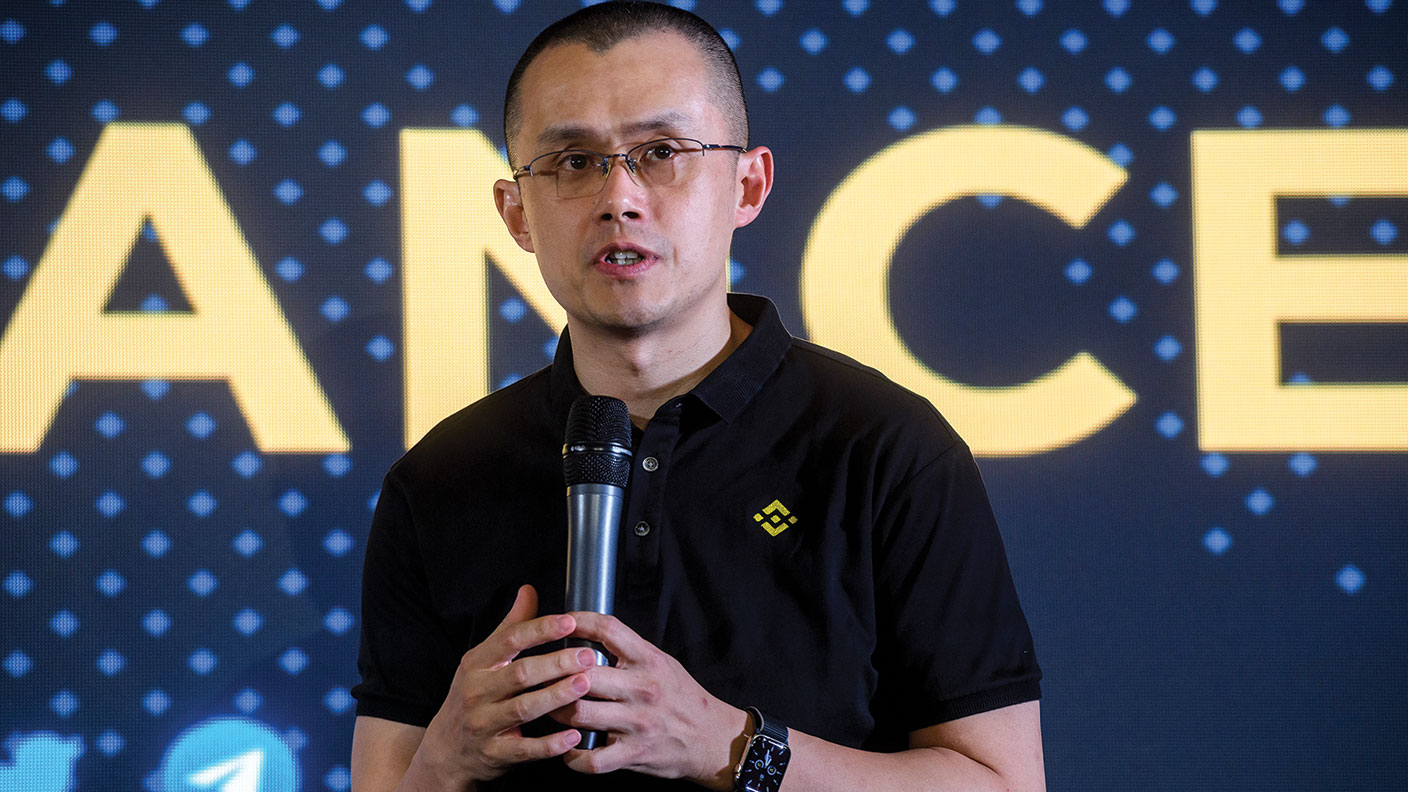
The digital asset ecosystem was forced into a sobering reckoning following a historic security breach that extracted hundreds of millions of dollars in native liquidity, prompting an unprecedented public admission from Binance founder Changpeng Zhao. In an industry built on cryptographic certainty and immutable ledgers, Zhao’s blunt assessment—"There's no 100% security"—sent shockwaves across global trading desks, venture capital boardrooms, and regulatory corridors from Washington to Frankfurt.
For years, the narrative propagated by cryptocurrency evangelists centered on the absolute safety of distributed consensus mechanisms. However, this catastrophic exploit laid bare the complex friction points between decentralized finance (DeFi) protocols, centralized exchange (CEX) infrastructure, and increasingly sophisticated threat actors. As enterprise ROI calculations shift from purely yield-driven metrics to defensive resilience, the crypto industry stands at a definitive crossroads.
The Anatomy of a Historic Breach: Catalytic Events and Systemic Vulnerabilities
Test Our Free AI & Tech Utilities Suite
Calculate LLM API token costs, analyze article dwell-time, or simulate tech DCA returns.
To understand the gravity of Changpeng Zhao’s statements, one must dissect the mechanics of the exploit that triggered them. The attack did not stem from a conventional perimeter breach of cold-storage vaults or routine database infiltrations. Instead, it targeted the intricate web of cross-chain bridges and oracle feeds that facilitate seamless interoperability across disparate blockchain networks.
Modern cloud compute architecture and blockchain nodes rely on millions of lines of interconnected code. When malicious actors identify zero-day vulnerabilities within smart contract logic, the speed of automated execution far outpaces human incident-response capabilities. In this instance, the exploiters leveraged recursive reentrancy attacks and manipulated validation logic to mint unauthorized tokens, draining liquidity pools before automated circuit breakers could engage.
Financial analysts point out that as valuation multiples for Web3 protocols expanded during previous bull cycles, capital allocation toward foundational security lagged behind marketing and speculative tokenomics. Protocol developers frequently prioritized speed-to-market over exhaustive formal verification, leaving systemic blind spots in their codebases. The resulting incident serves as a painful masterclass in risk management, proving that technical complexity scales faster than defensive engineering.
Data & Metrics Breakdown: Evaluating the Impact
| Metric Category | Pre-Incident Baseline | Post-Incident Reality | Strategic Implication |
|---|---|---|---|
| Market Liquidity Impact | High depth across major trading pairs | Temporary contraction; increased slippage | Market makers tightening risk parameters |
| Security Budget Allocation | 2% to 5% of total operating expenditure | Estimated surge to 15% - 22% | Shift toward continuous formal verification |
| Insurance Reserve Pools | Voluntary SAFU funds & decentralized covers | Mandatory third-party underwriting required | Institutional demand for regulated backstops |
| Regulatory Compliance Velocity | Fragmented, regional guidelines | Accelerated cross-border enforcement | Higher operational overhead for exchanges |
Industry & Market Implications: Winners, Losers, and Economic Realities
Changpeng Zhao’s candid acknowledgment has triggered a profound reallocation of power and capital within the global financial technology sector. The immediate market reaction demonstrated clear bifurcations between resilient enterprise-grade operations and fragile, speculative protocols.
Who Wins: Enterprise Cybersecurity and Regulated Custodians
The primary beneficiaries of this structural pivot are specialized cybersecurity firms, formal verification auditors, and institutional-grade digital asset custodians. Venture capital and corporate treasury funds are rapidly rotating capital away from experimental DeFi yield farms and into enterprise software providers specializing in continuous threat intelligence, multi-party computation (MPC), and hardware security modules (HSMs). Firms that can prove robust infrastructure scalability and rigorous regulatory compliance are commanding premium valuations.
Who Loses: Unaudited Protocols and Unbacked Defi Bridges
Conversely, cross-chain bridge operators and decentralized autonomous organizations (DAOs) operating without institutional governance or insurance safety nets face an existential crisis. Liquidity providers are aggressively withdrawing capital from high-yield, low-security pools, starving vulnerable protocols of the capital required to sustain operations. Furthermore, retail-facing platforms with opaque risk-mitigation strategies are experiencing severe user attrition.
Frequently Asked Questions (People Also Ask)
What did Changpeng Zhao specifically mean by "there's no 100% security"?
CZ was highlighting the fundamental law of cybersecurity and computer science: absolute zero-risk does not exist in any complex digital environment. Regardless of how sophisticated a platform's encryption, architecture, or auditing protocols are, human error, zero-day software flaws, and highly coordinated state-sponsored attacks present persistent residual risks that require continuous mitigation rather than passive reliance.
How does this incident affect institutional cryptocurrency adoption?
Far from halting adoption, the incident accelerates a flight to quality. Institutional asset managers are demanding stricter risk mitigation, insured custodial solutions, and transparent smart-contract audits. While it introduces friction for speculative retail products, it establishes a mature, compliance-driven framework necessary for sovereign wealth funds and global banks to enter the asset class.
What measures are exchanges taking to prevent similar historic breaches?
Major centralized exchanges and decentralized protocols are upgrading their infrastructure by implementing real-time anomaly detection powered by machine learning, expanding multi-signature governance, integrating multi-party computation (MPC) for private key management, and establishing dedicated emergency insurance reserves to protect user assets.
Will regulatory bodies impose stricter security mandates on crypto platforms?
Yes. Global financial regulators, including the SEC, ESMA, and international bodies like the FATF, are expected to utilize this high-profile event to codify mandatory security standards, penetration testing requirements, and standardized incident-reporting timelines for all digital asset service providers.
Future Outlook: Navigating the Post-Absolute Security Era
As the digital asset industry absorbs the shockwaves of this historic exploit and Changpeng Zhao’s candid appraisal, the path forward requires a fundamental cultural and architectural evolution. The era of unchecked optimism and rapid, unverified code deployment has officially closed.
Over the next 12 to 36 months, industry leaders will be judged not by their top-line trading volume or token price performance, but by their defensive resilience and operational transparency. Key milestones to watch include the widespread adoption of AI-driven threat intelligence, the standardization of cross-chain security frameworks, and the implementation of binding international regulatory baselines for digital asset infrastructure.
Ultimately, Zhao’s statement is not an admission of defeat, but a call to maturity. By acknowledging that absolute security is an illusion, the cryptocurrency industry can transition from reckless experimentation to enduring, institutional-grade financial architecture.