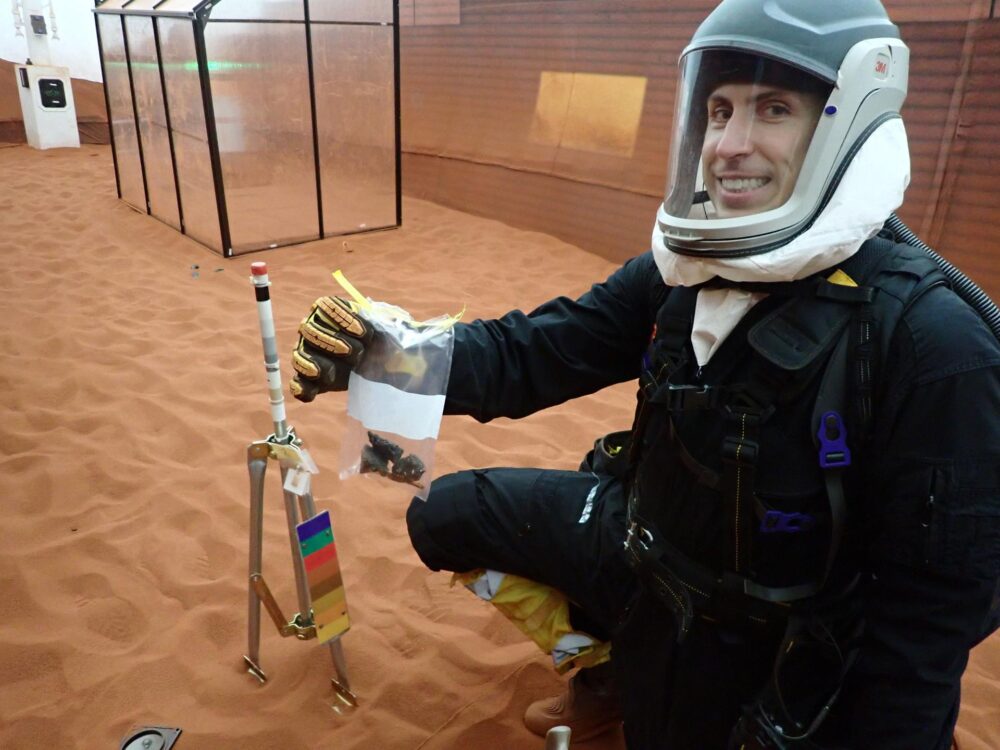
HOUSTON — After exactly 378 days of isolation under simulated Martian conditions inside a specialized 1,700-square-foot habitat at NASA’s Johnson Space Center, four volunteers stepped back into Earth's atmosphere on Saturday evening. The departure of the CHAPEA (Crew Health and Performance Exploration Analog) mission marks a critical milestone not only for human spaceflight research but for the multi-billion-dollar aerospace supply chain, private-equity-backed space tech infrastructure, and long-term capital allocation strategies driving humanity’s push toward interplanetary colonization.
For over a year, the crew—consisting of researcher Kelly Haston, structural engineer Ross Brockwell, emergency physician Nathan Jones, and microbiologist Anca Selariu—lived out a meticulously scripted existence. They faced simulated communication delays of up to 22 minutes with Earth, managed constrained power grids, cultivated crops in a vertical hydroponic farm, and conducted simulated spacewalks in a sandbox dubbed "Mars Dune Alpha." As aerospace corporations, venture capitalists, and sovereign wealth funds pour capital into the commercial space economy, the data harvested from this high-fidelity analog offers invaluable risk-mitigation insights for future commercial and state-sponsored planetary missions.
Executive Takeaways
Test Our Free AI & Tech Utilities Suite
Calculate LLM API token costs, analyze article dwell-time, or simulate tech DCA returns.
- Extended Isolation Milestone: Four crew members successfully concluded a 378-day deployment inside Mars Dune Alpha, completing the first of three planned CHAPEA missions designed to evaluate human physiological and psychological resilience.
- critical Resource Constraints: The habitat operated under strict resource caps, mirroring the strict infrastructure scalability and operational efficiency required for deep-space enterprise viability.
- Commercial & Economic Implications: Data generated by the mission directly informs life-support system investments, enterprise risk mitigation strategies, and supply chain readiness for aerospace contractors and private space ventures.
- Next-Generation Roadmap: NASA’s analog roadmap feeds directly into downstream Artemis lunar operations and eventual crewed Martian transit, shaping valuation multiples and capital allocation across the aerospace and defense sectors.
The Architecture of Isolation: Inside Mars Dune Alpha
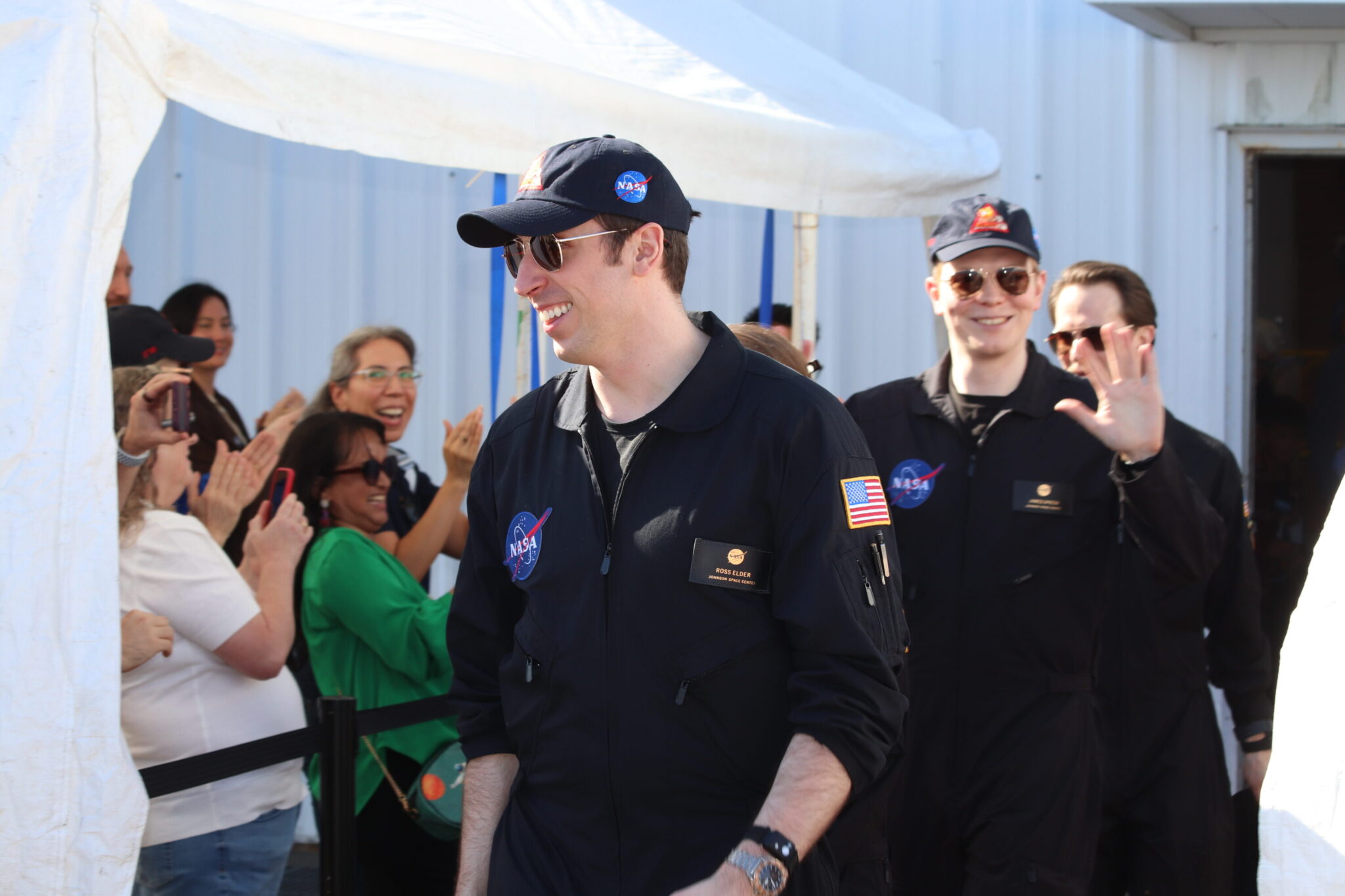
Constructed using 3D-printing technology by ICON, a construction-scale robotics firm, Mars Dune Alpha represents a masterclass in modular infrastructure scalability. Designed to simulate the severe environmental constraints of the Martian surface, the habitat features private crew quarters, a dedicated medical station, food-growing stations, shared communal spaces, and technical workspaces. Every kilowatt of power consumed, every drop of recycled water, and every calorie ingested by the crew was rigorously monitored, logged, and analyzed.
From an operational standpoint, the mission served as a living laboratory for resource optimization. In deep-space exploration, capital expenditure is inextricably linked to payload mass and power efficiency. The CHAPEA deployment tested closed-loop life support systems—technologies that have massive crossover applications for terrestrial sustainability, remote mining operations, and austere-environment infrastructure. Corporations specializing in water purification, advanced solar arrays, and autonomous agricultural automation are already patenting innovations derivative of these analog findings.
Furthermore, the psychological toll of prolonged isolation cannot be understated. Behavioral health specialists at NASA evaluated how extended confinement, artificial lighting cycles, and lack of real-time communication impacted cognitive performance and team cohesion. For enterprise leadership, these insights provide a blueprint for managing high-stress remote workforces, subterranean or arctic mining crews, and long-duration maritime expeditions where regulatory compliance and psychological well-being dictate operational success.
Verified Data & Metrics Breakdown
To understand the scale and parameters of the CHAPEA Mission 1 deployment, the following comparative matrix outlines key operational metrics:
| Metric / Parameter | Mission Specification | Operational Impact |
|---|---|---|
| Mission Duration | 378 Days (June 2023 – July 2024) | Tests long-term circadian rhythm disruption and psychological fatigue. |
| Habitat Footprint | 1,700 Square Feet (Mars Dune Alpha) | Validates space-efficient architectural design and modular layouts. |
| Communication Latency | Up to 22 Minutes (One-Way) | Forces autonomous decision-making, removing reliance on Earth-based mission control. |
| Crew Complement | 4 Volunteers (Haston, Brockwell, Jones, Selariu) | Maintains multidisciplinary expertise (medical, engineering, biological). |
| Simulated Environment | Ares Dune Alpha Sandbox / Martian Atmosphere | Evaluates spacesuit ergonomics and EVA (Extravehicular Activity) efficiency. |
Industry & Market Implications: Who Wins, Who Loses
The conclusion of CHAPEA Mission 1 is more than a scientific triumph; it is a significant catalyst for market liquidity and corporate valuation within the aerospace sector. As national space agencies increasingly outsource habitat development, life-support hardware, and supply chain logistics to private enterprises, data from analogs like CHAPEA dictates where institutional capital flows.
Winners: Private space infrastructure providers, advanced agricultural tech firms, and closed-loop recycling innovators stand to gain immense market share. Companies that can demonstrate high system reliability and low mass overhead under simulated Martian constraints are prime targets for venture capital deployment, government procurement contracts, and strategic acquisitions by defense primes.
Losers: Legacy aerospace contractors slow to adopt autonomous life-support systems and modular 3D-construction techniques risk margin compression. As mission parameters demand higher capital efficiency, traditional, high-overhead engineering methodologies are losing favor to agile, tech-forward startups capable of rapid infrastructure scalability.
On a macroeconomic level, the commercialization of space-adjacent technologies creates robust spillover effects. Innovations perfected for Mars Dune Alpha—such as predictive health analytics algorithms and ultra-efficient hydroponic yields—find immediate monetization pathways in terrestrial markets, boosting enterprise ROI for early-stage investors.
Frequently Asked Questions (People Also Ask)
What was the primary objective of NASA's CHAPEA mission?
The Crew Health and Performance Exploration Analog (CHAPEA) aims to evaluate human behavior, health, and operational performance during extended stays in simulated Martian environments. By studying how a four-person crew handles isolation, resource scarcity, and communication delays, NASA can mitigate physiological and psychological risks ahead of actual crewed missions to Mars.
How did the crew experience "Mars" while remaining in Houston?
The volunteers lived inside Mars Dune Alpha, a 3D-printed habitat located at the Johnson Space Center. To replicate planetary conditions, the habitat enforced strict limits on water and food consumption, required crew members to wear simulated spacesuits during "Marswalks" in an enclosed outdoor sandbox, and artificially imposed up to a 22-minute communication delay to mimic orbital signal transit times.
Are there subsequent missions planned following CHAPEA Mission 1?
Yes. CHAPEA is a series of three planned analog deployments. Following the successful completion of Mission 1, NASA is already preparing for subsequent crews to enter the habitat to gather longitudinal data, refine habitat engineering specifications, and test updated life-support technologies.
How do analog missions impact commercial space investments?
Analog missions offer critical risk mitigation data for private corporations investing in space exploration infrastructure. By proving out technologies related to closed-loop recycling, autonomous habitat maintenance, and crew health monitoring, these simulations reduce regulatory and operational uncertainties, making space-tech startups more attractive for institutional capital allocation and public-private partnerships.
Future Outlook and Strategic Milestones
As the hatch swings open on the first CHAPEA deployment, the focus immediately shifts to the broader Artemis campaign and the eventual horizon goal of human footsteps on Mars. The data collected over the past 378 days will undergo exhaustive peer review by NASA’s Human Research Program, feeding directly into hardware design specifications for lunar surface habitats and transit vehicles.
Investors and aerospace executives should monitor several key milestones over the next 24 to 36 months:
- CHAPEA Mission 2 Launch: The recruitment and deployment of the next analog crew, testing iterative hardware and software upgrades.
- Artemis Base Camp Developments: Integration of closed-loop life-support learnings into permanent lunar south pole infrastructure plans.
- Commercial Procurement Shifts: Increased NASA reliance on commercial service contracts for deep-space habitat resupply and environmental control systems.
Ultimately, the successful exit of the CHAPEA crew proves that human endurance can withstand the psychological pressures of Martian isolation. The challenge for the market and the scientific community is now scaling the infrastructure required to support them when the simulation finally becomes reality.