Executive Summary: The Asymmetric Cloud Engine
Test Our Free AI & Tech Utilities Suite
Calculate LLM API token costs, analyze article dwell-time, or simulate tech DCA returns.
- Venture Liquidity vs. Hyperscale Dominance: Tier-one venture capital firms including Menlo Ventures and Spark Capital are positioned for historic paper distributions of 10x to 40x on Anthropic’s impending public debut. However, Amazon’s strategic $4 billion capital allocation is engineered to capture vastly superior long-term economic value through paired equity upside and high-margin infrastructure capture.
- The Compute Recirculation Loop: A majority of Anthropic’s capital expenditures are contractually bound to Amazon Web Services (AWS) infrastructure. This arrangement creates a synthetic cash-flow feedback loop that de-risks Amazon’s primary investment while guaranteeing multi-billion-dollar annual AWS utilization.
- Bedrock Monetization Engine: Through its exclusive cloud provider agreements and native integration into Amazon Bedrock, AWS extracts platform transaction fees, enterprise seat expansions, and hardware margin offsets (via custom Trainium and Inferentia silicon) that transcend fixed venture return caps.
- Regulatory Architecture & Structuring: By leveraging non-voting equity equivalents, convertible debt instruments, and strategic commercial supply agreements, Amazon successfully side-stepped immediate antitrust blocking actions by regulatory bodies while locking in operational integration unmatched by traditional VC board seats.
The Math Behind the Moat: Why Amazon Wins Even When VCs Win Big
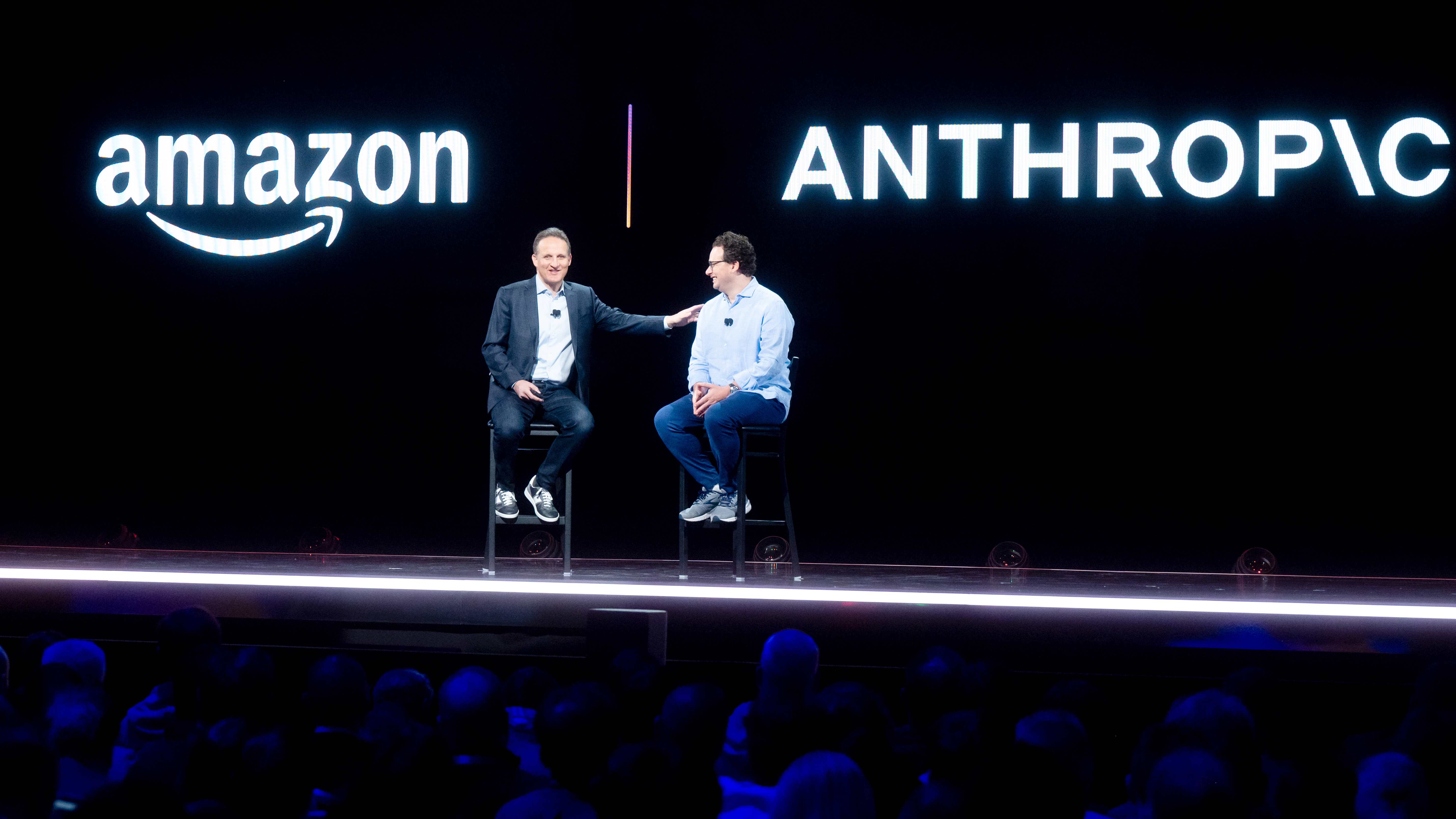
The impending initial public offering of Anthropic—the artificial intelligence research organization founded by former OpenAI executives Dario and Daniela Amodei—is slated to be one of the largest technology liquidity events of the decade. Private market valuations for the creator of the Claude 3.5 model family have climbed toward the $40 billion to $60 billion corridor. On paper, early venture capital backers are preparing to report generational internal rates of return (IRR).
Firms like Menlo Ventures, which spearheaded Anthropic’s $750 million Series C round, along with early backers Spark Capital, Salesforce Ventures, and Sound Ventures, stand to mark up their funds by tens of billions of dollars. Yet, an analysis of the deal architecture reveals an acute asymmetry: venture capitalists are playing a zero-sum game of equity appreciation, whereas Amazon Web Services (AWS) has constructed an economic engine that extracts non-dilutive, high-margin, perpetual commercial value regardless of post-IPO public market volatility.
Amazon’s total $4 billion commitment—executed in multi-tranche convertible structures throughout late 2023 and 2024—was fundamentally mischaracterized by retail markets as a standard corporate venture capital (CVC) bet. In reality, the transaction represents a masterclass in capital recycling, balance sheet optimization, and enterprise infrastructure lock-in. While VCs will distribute single-event cash dividends to limited partners, Amazon is positioned to extract compounded terminal value across three distinct financial vectors: equity asset expansion, AWS infrastructure compute revenue, and custom silicon supply-chain dominance.
Deconstructing the Deal Architecture: Compute-for-Equity & AWS Distribution
To understand why Amazon’s net take-rate eclipses traditional venture dynamics, one must examine the structural flow of capital within the AI infrastructure stack. Traditional venture capital firms deploy cash in exchange for preferred equity. That cash is subsequently converted into operational expenditure—primarily compute capacity purchased from third-party hyperscalers. Consequently, VC dollars suffer structural leakage as cash leaves the start-up balance sheet to pay third-party cloud infrastructure margins.
Amazon inverted this paradigm through a tightly coupled commercial and financial agreement:
- Synthetic Capital Recirculation: When Amazon deployed $4 billion into Anthropic, a substantial percentage of those funds were contractually committed back to AWS over a multi-year window. Anthropic designated AWS as its primary cloud provider for mission-critical workloads, including safety research and future foundation model training.
- Platform Tollbooth Economics: Through Amazon Bedrock, AWS serves as the primary managed enterprise service distributing Claude models to Fortune 500 corporations. Every time an enterprise customer runs an API call or deploys an agentic workflow using Claude 3.5 Sonnet within AWS, Amazon extracts a platform margin. This revenue accrues directly to AWS’s top line, carrying gross margins vastly superior to standard pass-through software reselling.
- Hardware Arbitrage (Trainium & Inferentia): As part of the strategic alliance, Anthropic agreed to co-design and run complex training and inference workloads on Amazon’s proprietary custom AI chips, Trainium and Inferentia. By shifting compute allocation away from Nvidia’s margin-heavy H100/B200 GPUs toward native AWS silicon, Amazon captures higher hardware gross margins while establishing direct market validation for its proprietary semiconductor lineup.
This dynamic creates an unprecedented financial offset. Even if Anthropic’s equity valuation were to contract during a broader public software multiple compression, Amazon’s base revenue generation via compute consumption and Bedrock API toll-taking continues unabated. Venture capitalists possess no such downside protection; their capital is fully exposed to equity drawdowns and post-lockup sell-offs.
Comparative Capital Architecture: Venture Returns vs. Hyperscale Realization
The operational and financial divergence between traditional institutional investors and Amazon highlights the structural advantage held by cloud hyperscalers in the generative AI era.
| Investor / Entity | Primary Capital Deployed | Estimated Equity Ownership (%) | Primary Return Vector | Non-Equity Commercial Upside | Downside Protection Mechanism |
|---|---|---|---|---|---|
| Amazon (AWS) | $4.0 Billion (Convertible Notes/Equity) | 15.0% - 20.0% (Non-Voting Equivalent) | Dual: Equity Appreciation + AWS Revenue Recirculation | High-margin Bedrock transaction fees; Trainium/Inferentia enterprise adoption; long-term cloud lock-in. | Contractual spend commitments; infrastructure revenue offsets capital deployment. |
| Tier-1 VCs (Menlo, Spark, etc.) | $1.5B - $2.5B (Combined Tranches) | 25.0% - 35.0% (Aggregate Pool) | Single: Capital Gains on IPO / Secondary Sales | Fund LP branding; follow-on deal flow rights; pro-rata investment participation. | Liquidation preferences (1x preferred standard); zero commercial operational offset. |
| Google (Alphabet) | $2.0 Billion ($500M cash + $1.5B debt/cloud) | 8.0% - 12.0% | Dual: Strategic Compute Alignment + Secondary Cloud Growth | Google Cloud Platform (GCP) compute utilization; secondary API distribution. | Multi-cloud fallback clause; non-voting minority balance sheet protection. |
Industry Shakeout: The Death of Pure VC Dominance in AI Infrastructure
The scale of the Anthropic financing model underscores a permanent shift in how early-stage technology companies scale frontier models. The capital requirements for training next-generation large language models (LLMs) have scaled exponentially, moving from tens of millions of dollars during the GPT-3 era to multi-billion-dollar compute runs for enterprise-grade models. Private venture capital funds, constrained by traditional $1 billion to $3 billion fund sizes, can no longer unilaterally underwrite these capital expenditures without incurring unacceptable portfolio concentration risk.
This structural reality was mirrored across the enterprise software sector, such as Guidewire’s recent $1.7 billion cash acquisition of Hyperexponential. Enterprise platforms are rapidly acquiring or deeply integrating specialized vertical AI engines to defend their core workflows. However, while traditional software acquisitions involve outright buyouts, the frontier AI market has birthed "sovereignty alliances"—structured investments where hyperscalers buy economic participation without triggering full corporate takeover thresholds.
This strategic approach effectively neutralizes traditional VC power dynamics. In early-stage venture rounds, venture partners dictate terms, seat appointments, and strategic direction. In the case of Anthropic, Amazon structured its investment as a non-voting equity holder to prevent regulatory enforcement actions from the Federal Trade Commission (FTC) and the European Commission. Yet, despite holding no formal board seat, Amazon exercises unmatched operational influence over Anthropic’s infrastructure strategy simply by controlling the cloud server racks, custom silicon pipelines, and enterprise distribution nodes.
Frequently Asked Questions (People Also Ask)
How much equity does Amazon hold in Anthropic ahead of its expected IPO?
Amazon has deployed $4 billion into Anthropic through structured convertible notes and minority equity investments. While exact cap-table percentages remain confidential, market estimates place Amazon’s non-voting ownership stake between 15% and 20% prior to IPO dilution, subject to conversion caps established during the 2023 and 2024 funding rounds.
Why is Amazon’s return profile superior to early-stage venture capital firms?
While venture capital firms rely entirely on terminal equity valuations and stock price performance post-lockup, Amazon captures economic value across two fronts. First, it participates in equity appreciation. Second, it contractually captures Anthropic's multi-billion-dollar compute expenditure back through AWS infrastructure margins, API platform fees via Amazon Bedrock, and hardware monetization via Trainium silicon.
How did Amazon structure its investment to avoid antitrust and FTC intervention?
Amazon structured its $4 billion position primarily through non-voting shares and convertible debt instruments, refraining from taking a formal seat on Anthropic’s Board of Directors. This minority strategic structure was designed to comply with regulatory standards and avoid triggering forced divestiture under FTC and DOJ scrutiny regarding Big Tech investments in frontier AI startups.
What role does AWS Bedrock play in Anthropic’s commercial enterprise strategy?
Amazon Bedrock acts as the primary managed enterprise cloud environment for deploying Anthropic's Claude model family. It allows corporate clients to access Claude models within their existing AWS security and compliance boundaries, enabling Amazon to collect platform management fees and drive broader AWS ecosystem reliance.
Strategic Horizon: Milestones Driving Anthropic's IPO Liquidity Event
As Anthropic moves toward its public listing, institutional investors will be monitoring several operational milestones to evaluate the sustainability of its business model and the durability of its enterprise agreements:
- Compute Efficiency Multiples: The rate at which Anthropic transitions its base workloads from standard GPU clusters to AWS Trainium2 chips will determine its operating margin trajectory and compute cost structures.
- Enterprise Revenue Concentration: The ratio of direct API consumption via Anthropic’s native platform versus enterprise consumption routed through Amazon Bedrock will indicate how much pricing power Anthropic retains relative to its chief distribution partner.
- Regulatory Oversight of Hyperscaler Deals: Ongoing inquiries by the FTC and the UK Competition and Markets Authority (CMA) into compute-for-equity structures could force adjustments to existing cloud spend commitments, altering the capital flow between AWS and Anthropic.
- Public Market Valuation Benchmarks: As the public markets price pure-play AI foundation model builders, multiples will adjust based on net retention rates, gross margins, and customer acquisition costs relative to legacy enterprise software benchmarks.
Ultimately, while venture capitalists will rightfully celebrate one of the most lucrative software exit cycles in history when Anthropic lists publicly, the underlying economics confirm a broader secular trend: in the AI era, the ultimate economic leverage sits with the owners of the compute infrastructure. Venture capital may capture the financial upside of the equity, but Amazon has secured the structural engine of the underlying platform economy.