
Wall Street Bloodbath: Alphabet’s Revenue Miss and a $100 Oil Shock Ignite Fears of an AI Capex Bubble
Test Our Free AI & Tech Utilities Suite
Calculate LLM API token costs, analyze article dwell-time, or simulate tech DCA returns.
Executive Takeaways
- The CapEx Tsunami: Alphabet’s staggering capital expenditure surge—driven by custom tensor processing units (TPUs) and aggressive Nvidia GPU procurement—has triggered intense institutional scrutiny over enterprise ROI and cash flow compression.
- Macro Crosscurrents: Simultaneous shocks in the commodities complex, notably West Texas Intermediate (WTI) breaching the critical $100-per-barrel psychological ceiling alongside surging industrial aluminum, are supercharging stagflation anxieties.
- Valuation Multiples Under Siege: Wall Street desks are aggressively repricing mega-cap tech equities as the timeline for monetizing generative AI infrastructure stretches further than anticipated, forcing portfolio managers to reevaluate risk mitigation.
- The Infrastructure Pivot: While cloud sales acceleration demonstrates robust enterprise demand, the capital intensity required to maintain competitive parity is beginning to weigh heavily on free cash flow generation across the Magnificent Seven.
NEW YORK — Wall Street surrendered early gains in a volatile trading session as an unexpected revenue divergence in Alphabet Inc.’s latest earnings report collided with a vicious macroeconomic shockwave. WTI crude oil decisively broke above $100 a barrel, and industrial aluminum prices surged, laying bare the twin vulnerabilities confronting global markets: hyper-expensive artificial intelligence infrastructure buildouts intersecting with persistent, energy-driven cost pressures.
The definitive catalyst for the equity pullback was Alphabet’s top-line miss, which laid bare the profound economic friction underlying the tech sector’s historic gold rush. While Google Cloud registered impressive acceleration—fueled in large part by proprietary Google silicon challenging Nvidia’s near-monopoly on high-performance compute architecture—the staggering cash burn required to sustain this momentum shocked institutional investors. For months, buy-side analysts have debated the capital allocation strategies of hyperscalers. Today, those theoretical debates hardened into immediate valuation adjustments, dragging major benchmarks lower and prompting a broad-based flight to safety.
The Anatomy of the Alphabet Revenue Miss: Scale Versus Cash Flow
To understand the structural anxiety gripping trading floors from Lower Manhattan to Mayfair, one must examine the fundamental mechanics of modern cloud compute architecture. Alphabet’s aggressive deployment of data center capital expenditures is not merely a line-item accounting anomaly; it represents an existential race for dominance in enterprise generative AI. To challenge Nvidia’s dominance and service surging client demand for Large Language Model (LLM) training and inference, Google accelerated its deployment of custom Tensor Processing Units (TPUs) alongside massive clusters of enterprise GPUs.
However, the financial friction of this strategy has become impossible to ignore. Operating margins experienced localized compression as depreciation schedules shortened and power consumption costs scaled exponentially. Institutional portfolio managers, previously willing to look past ballooning capital intensity in pursuit of top-line hyper-growth, balked when Alphabet’s core advertising revenue failed to offset the sheer velocity of cash deployment. This divergence between capital outlays and immediate revenue conversion has revived haunting memories of historical tech infrastructure overbuilds, forcing a painful reassessment of equity valuation multiples across the entire NASDAQ and S&P 500 information technology sectors.
Furthermore, enterprise customers are demanding immediate, quantifiable enterprise ROI before committing to multi-year software contracts. While cloud infrastructure sales beat consensus estimates due to robust migration trends, the unit economics of serving energy-hungry AI workloads remain structurally unproven over a multi-year amortization cycle. The market’s verdict was swift: stellar cloud sales growth can no longer mask deteriorating free cash flow metrics.
Commodity Shockwaves: The $100 Oil Breach and Aluminum Surges
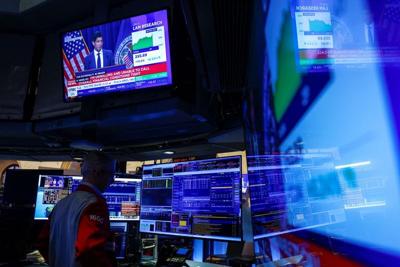
Compounding the tech sector's woes, the commodities complex delivered a punishing reminder of inflationary reality. WTI crude oil decisively breached the $100-per-barrel threshold, driven by tightening global supply chains, geopolitical risk premiums, and robust physical demand. Simultaneously, industrial aluminum experienced a violent upward surge, driven by smelting energy constraints and supply deficits.
This commodity price action fundamentally alters the macroeconomic calculus for central bankers and corporate treasurers alike. Higher energy inputs directly inflate data center operational expenditures, as cooling massive server farms requires immense baseline power. When combined with surging raw material costs for semiconductor packaging, hardware manufacturing, and physical infrastructure buildout, the thesis of disinflationary tech-led growth faces a severe stress test. Bond yields spiked in response, compressing equity risk premiums and accelerating the rotation out of high-beta growth stocks into defensive asset classes.
| Market Indicator / Asset | Current Session Status | Primary Driver | Macro & Valuation Impact |
|---|---|---|---|
| Alphabet (GOOGL) | Lower on Revenue Miss | Massive AI CapEx vs. Top-Line Growth | Triggers tech sector multiple compression; questions on enterprise ROI. |
| WTI Crude Oil | Breached $100 / Barrel | Supply constraints & geopolitical risk | Ignites stagflation fears; increases data center power costs. |
| Industrial Aluminum | Sharp Surge | Smelting power limits & physical deficits | Drives up hardware manufacturing and datacenter construction costs. |
| Google Cloud Sales | Strong Beat / Accelerated | Custom TPU adoption & AI workloads | Validates cloud demand but highlights heavy cash burn trade-off. |
Industry & Market Implications: Winners, Losers, and Systemic Risk
The convergence of Alphabet’s earnings report and the commodity shock creates a clear bifurcation across global equity markets. Understanding the systemic repercussions requires analyzing how capital flows are shifting across sectors:
- The Hyperscale Silicon Providers: While Nvidia and custom silicon developers continue to record formidable top-line revenue, their downstream customers are demanding proof of sustainability. Companies that successfully monetize AI via high-margin enterprise software subscriptions will outperform those relying purely on infrastructure leasing.
- Energy and Industrial Commodities: Traditional energy producers, oilfield services providers, and industrial metal extractors are experiencing a massive resurgence in institutional interest. As inflation expectations reset higher, capital is aggressively flowing back into tangible asset classes capable of hedging margin erosion.
- Software and Application Layer (SaaS): Enterprise software providers face a complex environment. While they benefit from lower cloud compute costs if hyperscalers pass through efficiency gains, they simultaneously face tighter corporate IT budgets as CFOs rein in discretionary spending to absorb higher energy and operational expenses.
Frequently Asked Questions (People Also Ask)
Why did Alphabet’s revenue miss trigger such a violent reaction across Wall Street?
Alphabet’s revenue miss directly challenged the core market narrative that tech giants could effortlessly fund massive generative AI infrastructure without sacrificing profitability or cash flow. Because Alphabet serves as a bellwether for digital advertising and cloud computing, its struggles with capital expenditure efficiency forced institutional investors to re-evaluate valuation multiples across the entire artificial intelligence ecosystem.
How do rising oil prices ($100+ WTI) impact technology and AI infrastructure stocks?
Modern data centers housing thousands of AI chips consume immense amounts of electrical power. Surging crude oil and energy prices directly drive up utility and operational expenses for these facilities. Furthermore, higher energy costs fuel macroeconomic inflation, prompting central banks to maintain higher interest rates, which directly depresses the present value of future tech earnings.
Are Google’s custom TPU chips successfully competing against Nvidia?
Yes. Google’s custom Tensor Processing Units (TPUs) have proven highly effective at accelerating specific machine learning workloads, significantly boosting Google Cloud sales by offering enterprise clients an alternative to scarce Nvidia GPUs. However, designing, manufacturing, and deploying these custom silicon architectures requires staggering upfront capital outlays, which temporarily depresses free cash flow.
What strategies are institutional portfolio managers using for risk mitigation amid these market shifts?
Asset managers are aggressively hedging their portfolios by trimming high-multiple growth equities with unproven cash-flow timelines. They are reallocating capital toward cash-generative value stocks, energy assets protected against commodity inflation, and companies with rock-solid balance sheets and disciplined capital allocation frameworks.
Future Outlook: Critical Milestones and What to Watch Next
As Wall Street digests the dual shocks of Alphabet’s cash burn and a $100 oil environment, market participants must monitor several pivotal operational milestones over the coming quarters. First, hyperscalers must provide greater transparency regarding their capital allocation frameworks and return-on-invested-capital (ROIC) metrics for generative AI projects. Vague promises of long-term transformation will no longer suffice for skeptical buy-side analysts.
Second, macroeconomic indicators will dictate whether WTI crude sustains its breach above $100. If energy prices remain elevated, corporate profit margins across both technology and traditional industrials will face severe downward revision cycles. Ultimately, the market is entering a more mature, disciplined phase of the AI revolution—one where raw computational ambition must be rigorously balanced against balance sheet resilience, regulatory compliance, and tangible enterprise profitability.