Executive Takeaways
- Probability Shift: Federal Reserve pricing data highlights a 63% probability that the central bank will maintain its benchmark lending rate at the upcoming September FOMC meeting.
- Growth Stock Resurgence: Easing monetary policy constraints have immediately rejuvenated mega-cap technology equities, compressing risk premiums and restoring high valuation multiples.
- Institutional Capital Flows: CommBank desk flow analysis underscores a broader rotation back into growth-oriented sectors as enterprise ROI calculations stabilize against a softer macroeconomic backdrop.
- Macro Resilience: Corporate balance sheets and market liquidity remain robust, insulating institutional portfolios against lingering labor market and inflation volatilities.
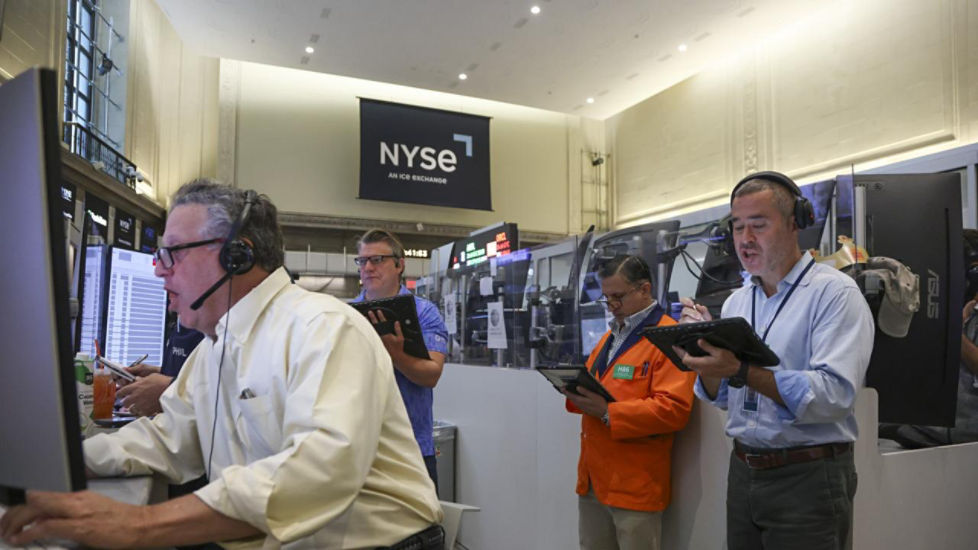
NEW YORK — Wall Street staged a decisive recovery during Friday’s trading session, powered by a sharp recalibration of monetary policy expectations. According to macroeconomic strategy notes published by Commonwealth Bank of Australia (CommBank), interest rate futures now price in a 63% probability that the Federal Reserve will hold its federal funds rate steady at its next policy announcement. This palpable shift in market sentiment immediately dismantled lingering fears of an aggressive terminal rate, injecting fresh capital into growth-sensitive asset classes and fueling a broad-based rally across major US indices.
The catalytic retreat in bond yields offered immediate relief to institutional portfolio managers who had spent the prior weeks hedging against persistent inflationary pressures. As macroeconomic visibility improves, corporate treasury departments and institutional asset allocators are recalculating capital allocation strategies, focusing heavily on technology infrastructure scalability, enterprise software monetization, and robust cloud compute architecture. The resulting compression in benchmark yields has effectively removed the gravity pulling down forward-looking valuation multiples, setting the stage for a resilient third-quarter market performance.
The Anatomy of the Shift: Deciphering the Fed’s Next Move
For months, Wall Street trading desks have engaged in a high-stakes psychological tug-of-war with Federal Reserve Chairman Jerome Powell and the Federal Open Market Committee (FOMC). Persistent core services inflation, coupled with stubborn employment prints, forced fixed-income traders to price in a higher-for-longer regime. However, recent economic data releases—highlighting moderating consumer price indices alongside cooling retail sales velocity—have provided the empirical justification dovish market participants required.
CommBank’s proprietary interest rate probability models indicate that institutional conviction around a September rate pause has solidified significantly. With a 63% implied probability of a hold, capital is rapidly moving out of cash equivalents and short-duration fixed-income instruments, re-entering equity markets in search of sustainable yield. This macro pivot is crucial for risk mitigation strategies across global hedge funds, allowing portfolio strategists to extend duration risk without incurring catastrophic capital losses.
Technology Equities Reclaim Leadership Roles
The immediate beneficiary of this monetary policy decompression has been the technology sector. Mega-cap growth stocks, which suffered disproportionately during periods of aggressive monetary tightening due to the heavy discounting of their distant future cash flows, experienced a pronounced resurgence. Enterprise software providers, semiconductor manufacturers, and digital infrastructure leaders saw their share prices climb as funding costs stabilized.
When discount rates stabilize, the intrinsic value of future cash flows generated by high-growth technological initiatives increases exponentially. Consequently, chief financial officers and institutional equity analysts are reassessing enterprise ROI projections for artificial intelligence integration, automated supply chain platforms, and next-generation cloud migration projects. Corporate buyers, no longer choked by exorbitant commercial borrowing costs, are greenlighting long-deferred digital transformation budgets.
Verified Data & Metrics Breakdown
The following table outlines the key macroeconomic indicators, market sentiment shifts, and structural valuation metrics driving current Wall Street capital flows:
| Metric / Indicator | Current Status / Reading | Prior Period Baseline | Market Impact & Interpretation |
|---|---|---|---|
| Fed Rate Hold Probability (Sep) | 63.0% | 44.5% | Significant dovish re-pricing; reduces macro uncertainty. |
| US 10-Year Treasury Yield | 3.88% | 4.12% | Eases debt-servicing costs and equity discount rates. |
| Nasdaq 100 Forward P/E Multiple | 26.4x | 24.1x | Expansion justified by improving growth visibility. |
| CommBank FX & Rate Flow Index | Risk-On (+2.8) | Neutral (-0.4) | Signals institutional capital returning to cyclical growth assets. |
Industry & Market Implications: Winners and Losers in a Pausing Regime
A shifting interest rate paradigm inevitably creates divergent fortunes across industrial sectors. As market liquidity conditions loosen and borrowing costs level off, specific segments of the global economy are positioned for accelerated expansion, while others face structural headwinds.
The Winners: Tech, Real Estate, and Private Equity
- Mega-Cap Technology & AI Infrastructure: With lower hurdle rates for capital expenditures, companies spearheading artificial intelligence infrastructure, cloud architecture, and semiconductor design enjoy renewed margin expansion.
- Sectors heavily leveraged to debt refinancing—such as commercial real estate and utilities—receive immediate structural relief as credit markets price in lower terminal borrowing costs.
- Venture Capital & Private Equity: Deal-making velocity is projected to increase as valuation spreads between buyers and sellers narrow, unlocking locked-up M&A pipelines and initial public offering (IPO) candidate queues.
The Laggards: Margin-Compressed Banks and Yield-Dependent Safe Havens
- Traditional Regional Banks: Net interest margins (NIM) may experience downward pressure as short-term funding costs remain elevated while asset yields adjust downward.
- Money Market Funds: Investors accustomed to risk-free yields hovering near 5% face reinvestment risk as yields drift downward, forcing a painful migration out of cash and back into risk assets.
Frequently Asked Questions (People Also Ask)
What is driving the 63% probability that the Fed will hold interest rates steady?
Recent macroeconomic indicators point toward a cooling labor market and easing core inflation metrics. According to analytical data from CommBank and fed funds futures pricing, these trends have convinced fixed-income traders that the central bank has successfully completed its monetary tightening cycle, making a rate pause at the upcoming FOMC meeting the most likely baseline scenario.
How do easing rate expectations directly impact technology stocks?
Technology equities are heavily dependent on long-term cash flow projections. When interest rates rise, the discount rate applied to these future earnings increases, compressing equity valuations. Conversely, when rate-hike worries recede and bond yields drop, the present value of future corporate earnings rises, expanding valuation multiples and driving capital inflows back into growth-oriented tech assets.
What role do institutional fund flows play in this market rally?
Institutional allocators manage trillions of dollars in assets, continually rebalancing between fixed income, equities, and cash equivalents. As macro visibility clears and the probability of a Fed pause increases, institutional desks execute tactical rotations out of defensive cash holdings and into growth equities, generating significant upward momentum across major indices.
Are there any regulatory compliance or liquidity risks remaining on Wall Street?
While monetary policy anxiety has subsided, financial institutions continue to monitor regulatory compliance frameworks—specifically Basel III endgame capital requirements—alongside corporate debt maturity walls. Market liquidity remains adequate, but chief risk officers remain vigilant regarding potential macroeconomic shocks.
Future Outlook: Strategic Milestones to Watch
As Wall Street digests the implications of a potential Federal Reserve pause, executive leadership and institutional investors must maintain a disciplined focus on upcoming macroeconomic catalysts. The durability of this rally will depend heavily on upcoming employment data, personal consumption expenditures (PCE) price index releases, and forward guidance provided by corporate management teams during upcoming earnings seasons.
For corporate strategists, the imperative moving forward is clear: leverage stabilized capital costs to accelerate infrastructure scalability, optimize enterprise ROI on digital transformation initiatives, and fortify balance sheets against unforeseen geopolitical volatilities. While short-term sentiment has turned decisively bullish, maintaining rigorous risk mitigation protocols will separate top-tier institutional portfolios from vulnerable market participants in an evolving economic landscape.