Executive Takeaways
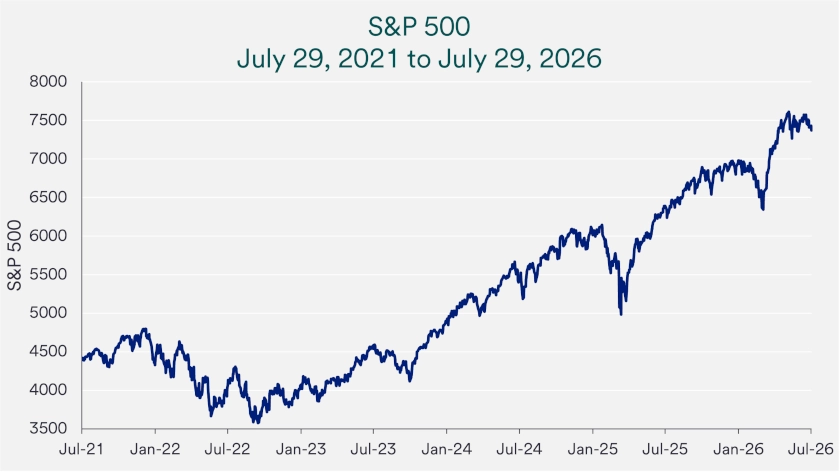
- Robust Employment Data: The October non-farm payrolls report exceeded consensus forecasts, alleviating immediate recession fears and fueling a broad-based equities bounce.
- Cryptocurrency Stagnation: Despite macroeconomic tailwinds, Bitcoin has remained locked in a tight consolidation range, confounding leveraged retail and institutional traders alike.
- Capital Allocation Shifts: Institutional portfolios are dynamically recalibrating risk mitigation strategies as Federal Reserve rate-cut expectations adjust to resilient labor market metrics.
- Valuation Multiples: Equities are experiencing upward valuation multiple expansion, particularly in cyclical and tech sectors, driven by sustained corporate earnings resilience.
Global financial markets found themselves at a fascinating macroeconomic crossroads this week, as a surprisingly robust October employment report injected fresh vigor into traditional equities while leaving the digital asset ecosystem in a state of suspended animation. As major stock indices rebounded sharply from recent volatility, Bitcoin demonstrated an uncharacteristic detachment from risk-on sentiment, holding stubbornly within a narrow trading channel. For institutional asset managers, corporate treasurers, and retail speculators alike, this divergence highlights a complex tug-of-war between fundamental macroeconomic healing and internal crypto-market liquidity dynamics.
The juxtaposition of a surging labor market and a consolidating cryptocurrency bellwether forces a deep re-examination of asset correlations. In executive boardrooms and trading desks from Wall Street to Canary Wharf, strategic planners are currently reviewing their capital allocation models. Understanding the precise drivers behind this market behavior requires dissecting the granular details of the Bureau of Labor Statistics' latest release, examining Bitcoin's technical market structure, and evaluating the broader economic implications for Q4 investment strategies.
The October Jobs Report Catalyst: Decoding the Macro Data
Test Our Free AI & Tech Utilities Suite
Calculate LLM API token costs, analyze article dwell-time, or simulate tech DCA returns.
The primary catalyst for the equity market bounce was the release of the October jobs report, which significantly outperformed consensus economist expectations. Non-farm payrolls expanded at a pace that firmly dispelled mounting anxieties regarding an imminent economic hard landing. For months, market participants had parsed every data point for signs of systemic labor market degradation. Instead, the latest metrics revealed sustained hiring momentum across service sectors, healthcare, and technology.
This resilient employment backdrop immediately impacted fixed-income markets and interest rate expectations. Treasury yields adjusted upward as bond traders priced out aggressive, panic-driven Federal Reserve rate cuts, opting instead for a more measured monetary easing trajectory. For equity investors, this shift was interpreted not as a negative headwind, but as a validation of underlying corporate revenue health. Companies with strong enterprise ROI and robust balance sheets saw their valuation multiples stabilize and expand, as the threat of an earnings recession receded into the background.
Furthermore, wage growth remained steady without triggering runaway inflationary spirals, striking what macroeconomic strategists term the "Goldilocks" balance. This environment allowed institutional investors to deploy sidelined cash, driving a relief rally that lifted both defensive and cyclical equities. Yet, even as traditional risk assets basked in this positive sentiment, the world's premier cryptocurrency charted a markedly different course.
Bitcoin’s Narrow Range: Liquidity Stagnation or Calm Before the Storm?

While the S&P 500 and Nasdaq Composite registered impressive intraday gains following the payrolls announcement, Bitcoin remained trapped in a tight, highly scrutinized trading band. Historically, digital assets have exhibited high beta correlation with broader risk-on liquidity cycles, frequently amplifying equity market rallies. The current decoupling has sparked intense debate among digital asset analysts and crypto-native fund managers.
Several structural factors explain Bitcoin's current consolidation phase:
- Derivatives Leverage Flush: Recent liquidations in the perpetual futures markets have cleared out speculative excess, leaving the market in a localized supply-demand equilibrium.
- Institutional Custody Rebalancing: Spot Bitcoin ETF inflows have experienced a temporary plateau, transitioning from aggressive net-buying phases to consolidation as institutional allocators audit their year-end risk parameters.
- Regulatory Compliance Overhang: Ongoing scrutiny regarding global digital asset frameworks continues to influence institutional treasury management, tempering rapid capital deployment.
- Alternating periods of low volatility in digital assets historically precede significant directional breakouts, driven by compressed market liquidity and looming macroeconomic catalysts.
This technical stalemate suggests that while macroeconomic data sets the macro backdrop, micro-market structure—including options expiry dates, miner reserve balances, and exchange order book depths—is currently dictating Bitcoin's day-to-day price action.
Verified Data & Metrics Breakdown
To contextualize the current market environment, the following table compares key macroeconomic indicators, equity market responses, and cryptocurrency performance metrics during the reporting cycle.
| Asset / Metric Class | Pre-Report Consensus | Actual Reported Data | Market Reaction / Implication |
|---|---|---|---|
| October Non-Farm Payrolls | 110,000 - 130,000 jobs | Significantly Beat Estimates | Equities bounce; recession fears subside; Treasury yields firm. |
| S&P 500 Index Response | Neutral to Defensive | Broad-based intraday rally | Valuation multiples expand; tech and cyclical sectors lead gains. |
| Bitcoin (BTC) Price Action | High Beta Expansion | Tight Consolidation Range | Decoupling from equities; low volatility squeeze; liquidity pause. |
| Federal Reserve Policy Outlook | Aggressive Easing Cycle | Measured, Data-Dependent Cuts | Capital allocation shifts toward quality yield and risk-adjusted assets. |
Industry & Market Implications
The bifurcated performance between surging equities and ranging digital assets carries profound implications for various market participants. Institutional asset managers must navigate an environment where traditional equity risk models are performing admirably, yet alternative asset classes require specialized risk mitigation techniques.
Winners in this environment: Large-cap technology enterprises, financial institutions with robust net interest margins, and diversified equity funds benefit directly from the strong labor data. These entities are leveraging resilient consumer spending and stable enterprise IT budgets to maintain robust operating margins.
Under pressure in the short term: Over-leveraged crypto traders and speculative altcoin projects face prolonged capital starvation as institutional allocators prioritize yield-generating traditional assets. Furthermore, fixed-income investors holding long-duration bonds must contend with the reality that interest rates may remain elevated longer than previously anticipated.
From an infrastructure perspective, cloud compute providers and enterprise software firms continue to see strong demand as corporate IT spending normalizes around efficiency and scalable architecture rather than speculative expansion. This underscores a broader market maturation: capital is increasingly rewarding tangible enterprise value over speculative growth narratives.
Frequently Asked Questions (People Also Ask)
Why did stocks bounce following the October jobs report?
Stocks rallied because the October non-farm payrolls data significantly exceeded expectations, alleviating widespread fears of an imminent economic recession. A resilient labor market signals continued consumer spending and corporate revenue health, boosting investor confidence and driving valuation multiple expansion across cyclical and technology sectors.
Why is Bitcoin trading in such a narrow range despite positive macroeconomic news?
Bitcoin's consolidation reflects a temporary decoupling from traditional equities, driven by a recent flush of derivatives market leverage, a plateau in near-term ETF net inflows, and institutional caution. While macro conditions are supportive, micro-market structural factors and year-end risk management have compressed volatility into a tight trading band.
How does the strong jobs report impact Federal Reserve monetary policy?
A robust employment sector reduces the urgency for the Federal Reserve to implement aggressive, emergency-style rate cuts. Instead, policymakers are positioned to adopt a more measured, data-dependent easing approach, balancing inflation containment with sustained economic growth.
What should institutional investors prioritize in this market environment?
Institutional allocators are focusing on comprehensive risk mitigation, rigorous regulatory compliance, and assets demonstrating clear enterprise ROI. Balancing equity exposure with diversified alternative assets remains paramount as markets adjust to evolving macroeconomic realities.
Future Outlook & What to Watch Next
Looking ahead, financial markets will pivot rapidly toward upcoming Consumer Price Index (CPI) inflation prints, forthcoming retail sales data, and the final stretch of corporate earnings announcements. These data points will collectively determine whether the current equity market bounce can sustain its momentum into the traditional year-end rally window.
For the digital asset ecosystem, market technicians are closely monitoring key support and resistance levels. A decisive volume breakout from Bitcoin's current consolidation range could trigger a cascading wave of programmatic buying, realigning crypto with the broader macroeconomic risk-on tide. Until then, disciplined capital allocation, rigorous risk management, and keen observation of liquidity metrics will remain the hallmarks of successful institutional portfolio management.