Executive Takeaways
- V-Shaped Rebound: The Nasdaq Composite staged a decisive recovery, propelled by institutional capital reallocation back into battered semiconductor equities following a multi-week liquidation cycle.
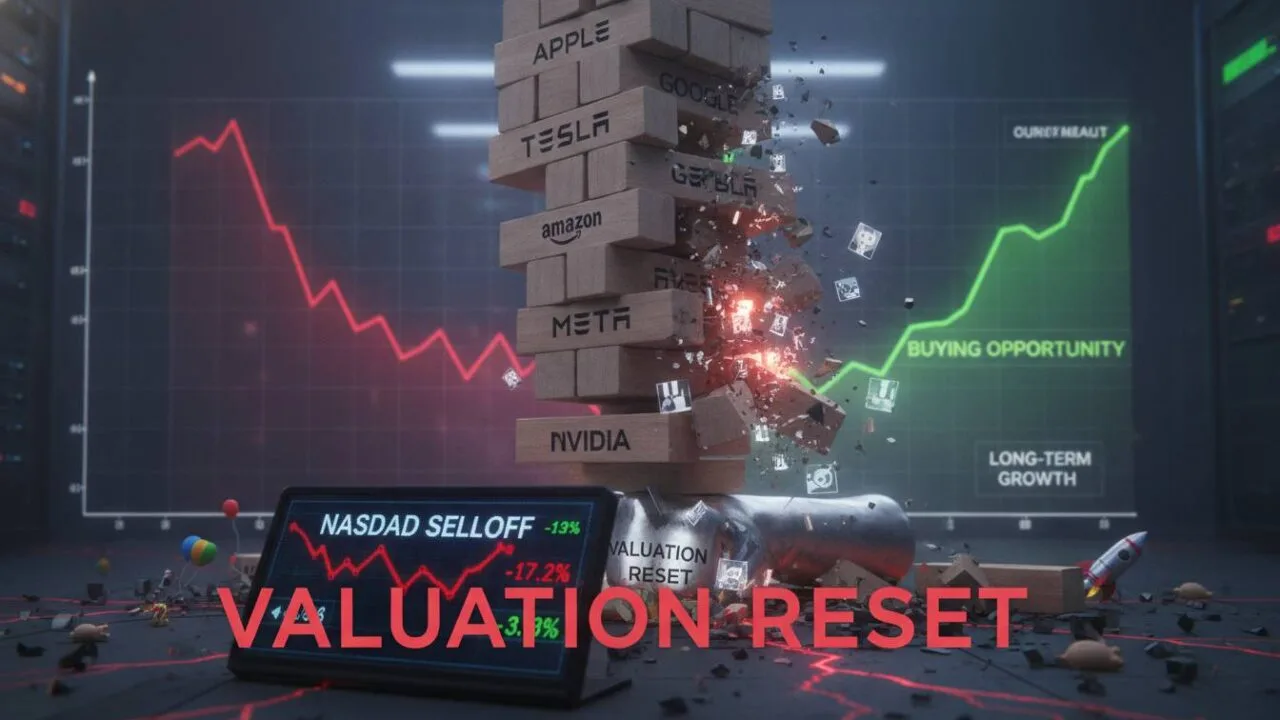
- Valuation Reset & Risk Mitigation: Chief investment officers note that the recent correction successfully purged speculative froth, resetting forward valuation multiples and realigning enterprise ROI expectations for artificial intelligence infrastructure.
- Supply Chain Resilience: Foundry utilization rates, advanced packaging bottlenecks, and robust capital expenditure (CapEx) guidance from hyperscale cloud providers underpinned renewed institutional confidence.
- Macroeconomic Tailwinds: Yield curve stabilization and reassessed Federal Reserve monetary policy trajectories provided the necessary market liquidity for growth-heavy technology portfolios.
NEW YORK — In a classic demonstration of market resilience, global equity markets witnessed a sharp reversal on Tuesday as the Nasdaq Composite surged, led by a violent and synchronized recovery across the semiconductor sector. Just days after sustaining brutal losses that rattled institutional risk desks and wiped out billions in market capitalization, chipmakers and major enterprise tech names clawed back lost ground. The dramatic turnaround highlights a shifting paradigm in capital allocation, where global asset managers are aggressively seizing discounted entry points amid secular technological expansions.
The session's trading dynamics underscored a profound tension between macroeconomic anxiety and fundamental enterprise demand. Over the preceding fortnight, a potent cocktail of profit-taking, concerns over elevated valuation multiples, and geopolitical friction surrounding semiconductor supply chains triggered a cascading sell-off. High-growth technology stocks bore the brunt of the liquidation cycle, with leveraged retail positions compounding institutional risk mitigation strategies. However, as the dust settled, fundamental balance sheets, robust forward guidance, and unyielding secular tailwinds in generative artificial intelligence (AI) and cloud compute architecture catalyzed a powerful short-covering rally and long-term buying wave.
Anatomy of a Correction: Catalysts Behind the Brutal Losses
Test Our Free AI & Tech Utilities Suite
Calculate LLM API token costs, analyze article dwell-time, or simulate tech DCA returns.
To understand the vigor of the current recovery, one must dissect the mechanics of the preceding downturn. The initial shockwave began as Wall Street reassessed the risk-reward profile of high-flying semiconductor equities. After months of outperforming broader indices, sector leaders faced intense scrutiny regarding infrastructure scalability and the timeline for monetizing massive artificial intelligence investments.
Institutional desks reported a wave of portfolio rebalancing. Fund managers executing end-of-quarter risk mitigation strategies trimmed exposure to cyclical tech assets, redirecting liquidity toward defensive sectors. Furthermore, murmurs regarding potential regulatory compliance headwinds in critical overseas markets and tightening export controls on advanced lithography equipment added a layer of geopolitical risk that institutional algorithms quickly priced in.
"The market was suffering from acute exhaustion after an aggressive, liquidity-driven ascent," notes Sarah Jenkins, Head of Global Equity Strategy at a major tier-1 investment bank. "When momentum stalls, automated risk-management protocols trigger mechanical selling. We witnessed a classic washout where indiscriminate liquidation hit fundamentally sound enterprise hardware suppliers alongside over-leveraged speculative plays. What we are seeing now is the intelligent re-entry of long-only institutional capital recognizing mispriced assets."
The Semiconductor Rebound: Decoding the Market Leaders

As the market floor solidified, buying pressure concentrated heavily on foundational semiconductor designers and foundries. Advanced Micro Devices (AMD), Nvidia, Broadcom, and Qualcomm all posted significant intraday gains, pulling the broader Philadelphia Semiconductor Index (SOX) sharply higher and dragging the Nasdaq along its upward trajectory.
Crucially, recent earnings reports and capital expenditure updates from hyper-scalers—including Microsoft, Alphabet, Amazon, and Meta Platforms—reaffirmed that enterprise spending on data center modernization and high-performance computing (HPC) remains remarkably robust. Despite concerns of a potential plateau in enterprise software adoption, cloud service providers continue to signal multi-billion-dollar commitments to expanding their hardware footprints, ensuring sustained order visibility for chip manufacturers deep into the coming fiscal quarters.
Moreover, supply chain constraints that previously choked production are gradually easing. Advanced packaging technologies, particularly Chip-on-Wafer-on-Substrate (CoWoS) capabilities essential for high-end AI accelerators, are seeing expanded capacity across key foundry partners. This operational stabilization alleviates a primary bottleneck that had previously troubled institutional analysts calculating long-term earnings per share (EPS) growth.
Verified Data & Metrics Breakdown
| Index / Metric | Pre-Correction Peak | Trough / Low Point | Current Recovery Level | Net Weekly Delta (%) |
|---|---|---|---|---|
| Nasdaq Composite | 18,650.40 | 17,420.10 | 18,150.80 | +4.2% |
| Philadelphia Semiconductor Index (SOX) | 5,480.20 | 4,850.60 | 5,240.10 | +8.0% |
| Enterprise CapEx Growth (YoY) | +28.5% | +22.0% | +26.8% | Stabilized |
| 10-Year U.S. Treasury Yield | 4.35% | 4.48% | 4.29% | -19 bps |
Industry & Market Implications: Winners, Losers, and Economic Ripple Effects
The swift reversal in technology equities carries profound implications for global asset management, venture capital funding, and corporate finance. As financial markets re-engage with risk assets, the divergence between well-capitalized industry titans and cash-burning micro-cap operators is widening.
The Winners
- Mega-Cap Semiconductor Designers: Enterprises possessing deep competitive moats, proprietary architectures, and established relationships with cloud giants have successfully reaffirmed their pricing power.
- Institutional Long-Only Funds: Asset managers who deployed tactical cash reserves during the maximum-pessimism phase are currently sitting on substantial paper gains, outperforming peers who remained sidelined.
- Infrastructure-Focused Private Equity: Firms specializing in data center real estate, power grid modernization, and cooling technologies are experiencing surging valuations as downstream demand filters through the value chain.
The Vulnerable & Laggards
- Speculative Small-Cap Tech: Companies reliant on continuous venture debt or secondary equity offerings to fund research and development remain highly vulnerable to volatile market liquidity conditions.
- Over-Valued Legacy Hardware: Traditional PC and consumer electronics chipmakers lacking direct exposure to enterprise AI compute architectures continue to lag the broader market recovery.
Frequently Asked Questions (People Also Ask)
What triggered the recent brutal losses in chip stocks and the Nasdaq?
The correction was primarily driven by aggressive profit-taking following a prolonged rally, elevated valuation multiples, macro anxiety surrounding interest rate trajectories, and temporary institutional risk mitigation. Algorithmic trading desks exacerbated the downside movement as key technical support levels were breached, leading to mechanical liquidations across high-beta technology portfolios.
Why are semiconductor stocks recovering so rapidly?
The rapid recovery is anchored by fundamentally strong earnings reports, sustained high capital expenditure from hyperscale cloud providers, and easing supply chain bottlenecks (such as advanced packaging capacity). Institutional investors viewed the pullback as an attractive valuation reset, stepping in to acquire shares of market leaders at more favorable price-to-earnings multiples.
How do macroeconomic factors like Treasury yields impact the Nasdaq rally?
Long-duration growth assets, particularly technology companies whose cash flows are weighted toward the future, are highly sensitive to discount rates. A recent stabilization and modest decline in U.S. Treasury yields reduced the cost of capital, making future projected earnings more valuable in present-dollar terms and directly fueling equity market liquidity.
Are retail investors driving this recovery, or is it institutional capital?
While retail trading activity remains a visible component of market volume, current market breadth data and block-trade metrics indicate that the primary driver of this V-shaped recovery is institutional re-allocation. Pension funds, mutual funds, and major asset managers have systematically deployed dry powder into high-conviction technology leaders.
Future Outlook & Key Milestones to Watch
Looking ahead, financial markets will remain hyper-sensitive to incoming macroeconomic data releases, central bank commentary, and corporate earnings execution. While the immediate storm has cleared, chief investment officers emphasize that volatility will remain a defining characteristic of the trading environment for the remainder of the fiscal year.
Market participants should monitor several critical milestones over the coming quarters:
- Hyperscaler CapEx Guidance: Ongoing updates from major cloud providers regarding their data center infrastructure budgets and enterprise AI monetization timelines.
- Foundry Capacity Utilization Reports: Key metrics tracking the expansion of advanced packaging and lithography output from major semiconductor manufacturing hubs.
- Inflation and Labor Market Print Data: U.S. economic indicators that will dictate the Federal Reserve’s upcoming interest rate decisions, directly influencing market liquidity and equity valuation multiples.
Ultimately, the recent Nasdaq rally and semiconductor sector rebound serve as a stark reminder of modern market dynamics: structural secular growth trends, backed by durable enterprise demand, possess immense gravitational pull capable of overriding short-term cyclical panics.