Skyroot’s Orbital Leap: Inside the Vikram-1 Triumph and the Multi-Billion-Dollar Race for Commercial Space Flight
Test Our Free AI & Tech Utilities Suite
Calculate LLM API token costs, analyze article dwell-time, or simulate tech DCA returns.
Executive Takeaways
- Commercial Pivot: Following the successful qualification and flight of the Vikram-1 rocket, CEO Pawan Chandana confirmed that Skyroot Aerospace is aggressively scaling capital allocation to enter the lucrative crewed commercial spaceflight market.
- Disrupting Unit Economics: Skyroot is engineering significant risk mitigation and infrastructure scalability into its manufacturing pipeline, challenging legacy launch providers with hyper-competitive payload pricing per kilogram.
- Private Capital Influx: The technological validation of Vikram-1 is expected to trigger a massive re-rating of valuation multiples across the South Asian aerospace sector, drawing institutional liquidity and sovereign-backed venture capital.
- Regulatory Compliance Horizon: As India’s IN-SPACe framework evolves, Skyroot is setting new benchmarks for aerospace safety certification, paving the way for human-rated orbital missions by the end of the decade.
NEW DELHI / BENGALURU — In the high-stakes arena of commercial aerospace, inflection points are measured not merely in successful telemetry readouts, but in the structural realignment of entire global markets. When Skyroot Aerospace successfully executed the maiden flight sequence of its flagship carbon-composite launch vehicle, Vikram-1, it did more than validate India's burgeoning private space industry—it fired a definitive warning shot across the bows of entrenched Western and Asian legacy launch providers.
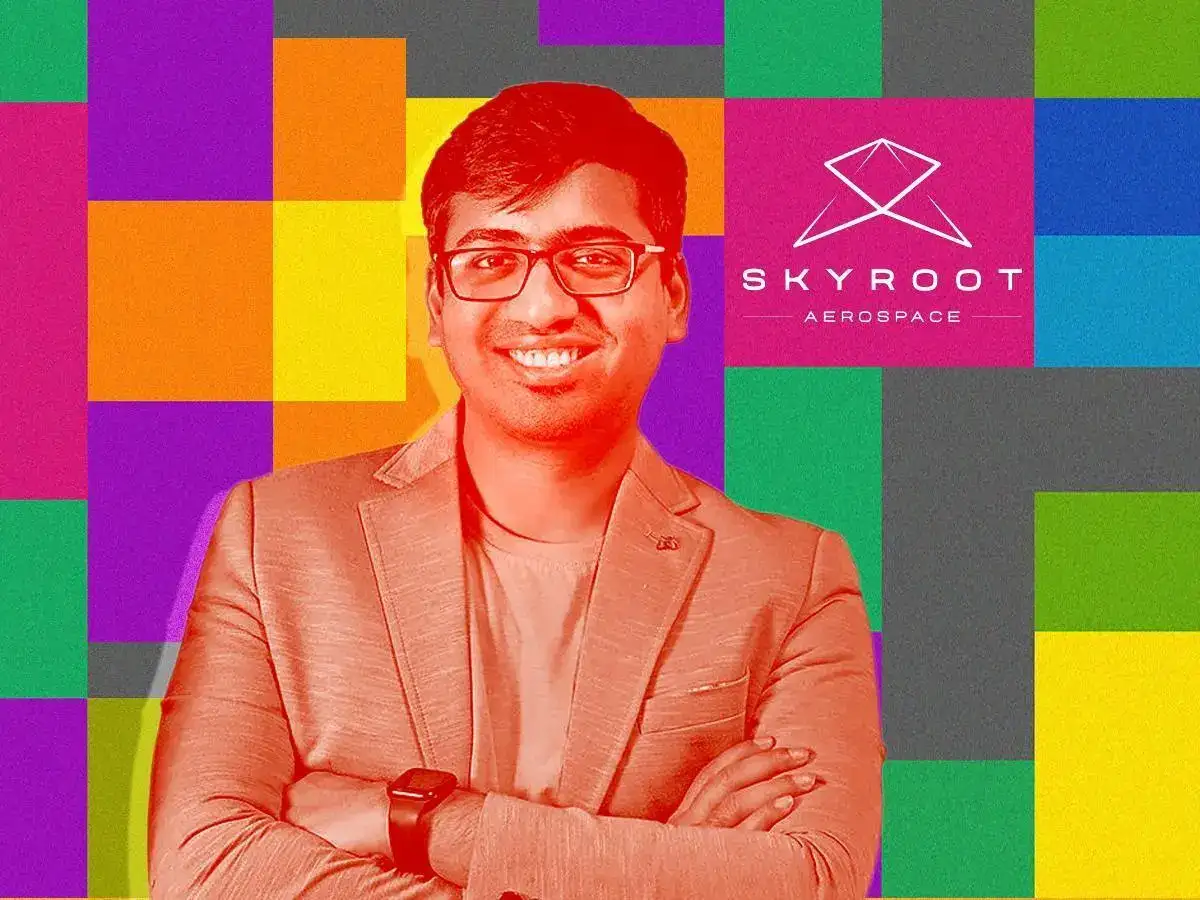
In an exclusive post-launch debrief with financial and industry analysts, Skyroot CEO and co-founder Pawan Chandana articulated a vision that pushes the enterprise far beyond small-satellite deployment. "We've proven our propulsion architecture and structural integrity with Vikram-1," Chandana stated. "The natural trajectory, backed by rigorous market demand and investor alignment, is clear: we will be getting into commercial human flights."
This declaration marks a watershed moment in the democratization of near-Earth orbit. For decades, crewed orbital spaceflight remained the exclusive purview of state-sponsored superpowers and a handful of heavily capitalized Western billionaires. Today, driven by aggressive capital allocation, advancements in advanced manufacturing, and a relentless focus on enterprise ROI, Hyderabad-headquartered Skyroot is positioning itself as a formidable global contender in the multi-billion-dollar space tourism and orbital transit economy.
The Catalytic Ascent: Deconstructing the Vikram-1 Architecture

To understand the gravity of Chandana’s commercial pivot, one must examine the engineering and financial discipline underpinning the Vikram series. Named after Dr. Vikram Sarabhai, the founding father of the Indian space program, Vikram-1 was conceived from the ground up to solve the aerospace industry’s most persistent bottleneck: high cost-per-kilogram-to-orbit combined with sluggish manufacturing turnaround times.
Traditional launch service providers have long been hamstrung by bureaucratic supply chains, heavy metallic structures, and exorbitant overhead. Skyroot countered these friction points by utilizing advanced carbon-composite structures, 3D-printed liquid propulsion engines, and modular avionics. This approach has drastically compressed production cycles, allowing the firm to achieve remarkable infrastructure scalability.
From a financial perspective, the successful flight of Vikram-1 represents a massive derisking event. Institutional investors and private equity funds tracking the aerospace sector have long demanded proof of execution before committing deep-tier liquidity to emerging launch startups. With Vikram-1 demonstrating precise orbital insertion capabilities and fault-tolerant cloud-compute ground control architectures, Skyroot has effectively fortified its balance sheet narrative, opening the floodgates for upcoming late-stage venture rounds and potential public market listings.
Market Dynamics and Financial Implications
The global addressable market for commercial spaceflight—encompassing microgravity research, satellite constellation maintenance, and suborbital/orbital space tourism—is projected to surpass $100 billion by the early 2030s. However, legacy players have struggled to optimize their cost structures, leaving a massive vacuum for nimble, high-efficiency operators.
Skyroot’s strategic entry into commercial human flights introduces profound competitive pressures:
- Capital Efficiency: By leveraging India's highly skilled engineering talent pool and lower cost base, Skyroot achieves research, development, and manufacturing margins that legacy Western firms find difficult to replicate.
- Supply Chain Resilience: The company’s vertically integrated manufacturing ecosystem minimizes external vulnerabilities, ensuring predictable delivery schedules for enterprise clients and commercial passengers alike.
- Insurance and Risk Mitigation: As regulatory frameworks under the Indian National Space Promotion and Authorization Centre (IN-SPACe) mature, Skyroot is establishing institutional-grade safety protocols that satisfy global aerospace underwriters.
Financial analysts note that this operational agility will likely force a global repricing of launch services. Enterprises seeking reliable orbital access can no longer rely on monopolistic pricing models when agile disruptors like Skyroot are scaling rapidly on lean balance sheets.
Verified Technical Specifications & Flight Metrics
| Parameter / Specification | Vikram-1 (Current Milestone) | Commercial Human Flight Roadmap |
|---|---|---|
| Primary Payload Capacity | Up to 480 kg to Low Earth Orbit (LEO) | Human-rated capsule integration (1–3 passengers) |
| Propulsion Technology | Solid propulsion stages + 3D-printed liquid upper stage (Kalam-100) | High-reliability staged combustion liquid engines with abort capabilities |
| Manufacturing Innovation | All-carbon-composite motor cases | Advanced thermal protection systems and life support integration |
| Target Market Segment | Small-satellite constellations, earth observation, IoT | Suborbital/Orbital commercial tourism and microgravity industrial R&D |
People Also Ask (FAQ)
What is the primary significance of Skyroot’s Vikram-1 success?
Vikram-1’s successful flight qualification validates Skyroot’s proprietary carbon-composite rocket architecture and advanced propulsion systems. It proves that private aerospace entities in emerging markets can successfully design, build, and launch orbital-class vehicles with exceptional capital efficiency, establishing a strong foundation for future commercial human spaceflight initiatives.
How does Skyroot plan to fund its expansion into commercial human flights?
The company intends to leverage its growing commercial revenues from small-satellite launches, combined with targeted capital allocation from upcoming institutional venture rounds, strategic partnerships with global aerospace funds, and potential backing from sovereign wealth and tech-focused private equity investors.
What regulatory hurdles must Skyroot clear to begin commercial human flights?
Skyroot operates in close coordination with IN-SPACe (Indian National Space Promotion and Authorization Centre) and the Indian Space Research Organisation (ISRO). Transitioning to crewed flights requires rigorous life-support system testing, emergency abort system verification, and adherence to international aerospace safety standards to secure comprehensive flight insurance and operational licenses.
How will Skyroot's pricing model impact global competitors?
By leveraging lower domestic engineering overhead and highly automated, modular manufacturing techniques, Skyroot can offer launch services at significantly lower price points per kilogram than traditional Western providers, driving industry-wide margin compression and forcing competitors to re-engineer their cost structures.
Future Outlook: Navigating the Horizon to Human Spaceflight
As the applause settles following the Vikram-1 milestone, executive leadership at Skyroot Aerospace is already charting the next operational phase. The roadmap to commercial human spaceflight is fraught with intricate engineering challenges, particularly regarding life-support redundancy, atmospheric re-entry dynamics, and stringent passenger safety certifications.
However, the macroeconomic tailwinds are firmly in Skyroot's favor. Global demand for orbital access continues to outpace available capacity, and institutional capital is increasingly gravitating toward proven operators who can deliver reliable execution without bloated budgets. By bridging cutting-edge propulsion engineering with disciplined financial management, Pawan Chandana and his team are not merely building rockets—they are architecting the commercial infrastructure of the space-faring century.
For global investors, corporate strategists, and industry observers, the message is unequivocal: the commercial space frontier is no longer a localized monopoly. It is a hyper-competitive, globalized marketplace where execution, agility, and cost-discipline dictate the ultimate winners.