The 2,000°C Breakthrough: Why Scientists Are Superheating Decaying Wind Turbine Blades to Solve Green Energy's Dirtiest Secret
Test Our Free AI & Tech Utilities Suite
Calculate LLM API token costs, analyze article dwell-time, or simulate tech DCA returns.
As thousands of first-generation wind farms reach their end-of-life cycle, a high-temperature pyrolysis revolution promises to transform hazardous glass-fiber composite waste into high-value carbon nanotubes—reshaping capital allocation and ESG risk mitigation across the global energy sector.
Executive Takeaways
- The Looming Infrastructure Crisis: Over 50,000 aging wind turbine blades will be decommissioned across North America and Europe by 2030, presenting severe ESG compliance and landfill capacity risks.
- The 2,000°C Pyrolysis Solution: Materials scientists are deploying ultra-high-temperature thermal decomposition to break down resilient thermoset epoxy matrices, bypassing traditional destructive mechanical shredding.
- Monetizing the Waste Stream: Advanced recovery techniques convert erstwhile landfill-bound composite materials into high-purity carbon nanotubes and reusable glass fibers, fundamentally altering enterprise ROI models for asset owners.
- Regulatory Shifts: With tightening European landfill bans on composite materials, energy conglomerates are reallocating capital toward closed-loop circular economy technologies to protect corporate valuation multiples.
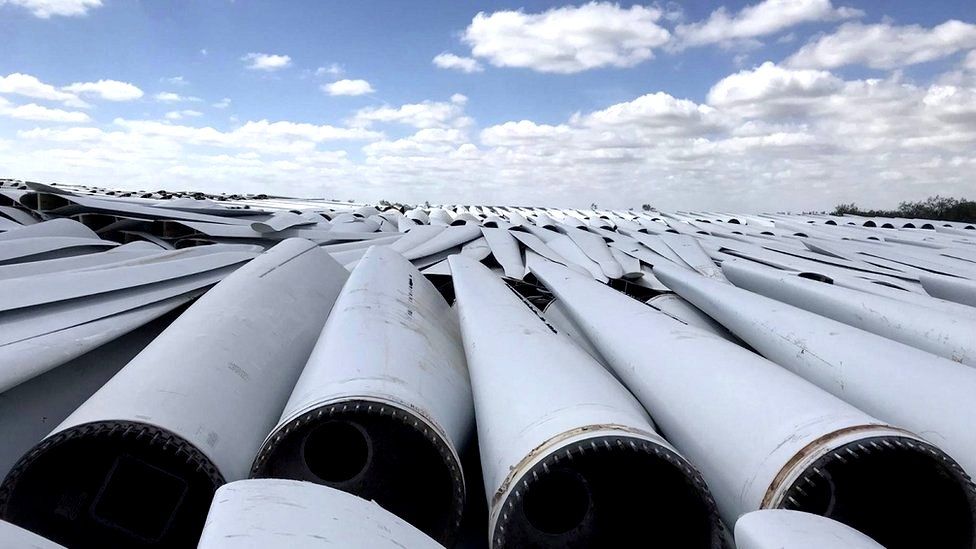
For decades, the wind energy sector has marketed itself as the pristine vanguard of the global green transition. Yet, hidden beneath the towering white monoliths spinning across rural plains and offshore horizons lies a stubborn physical paradox: the very materials that make wind turbine blades resilient enough to withstand decades of punishing gales also render them virtually indestructible once decommissioned. Built from complex thermoset polymer composites—typically a matrix of glass or carbon fibers bound together by epoxy resins—these blades cannot be melted down like steel or easily recycled like thermoplastics.
Now, a coalition of materials scientists, chemical engineers, and industrial conglomerates is executing a radical pivot. By heating these colossal fiberglass and epoxy structures to a blistering 2,000°C in oxygen-deprived environments, researchers are successfully cracking the chemical bonds of the thermoset matrix. This high-temperature thermal processing is not merely a waste disposal mechanism; it is a sophisticated chemical alchemy designed to salvage high-value nanomaterials, promising to convert an environmental liability into a lucrative balance-sheet asset.
The Anatomy of an Impending Infrastructure Crisis
To understand the economic urgency driving the 2,000°C research initiatives, one must examine the raw demographics of global wind infrastructure. The modern wind energy boom, kickstarted by aggressive government subsidies and falling capital costs in the early 2000s, is reaching a critical inflection point. Wind turbines operate on a standard design life of 20 to 25 years. As a result, the first generation of utility-scale turbines installed during the renewable energy expansion of the Bush and Obama administrations—and their European equivalents—are rapidly reaching operational exhaustion.
Industry estimates compiled by BloombergNEF indicate that by 2030, tens of thousands of blades will be pulled from service globally, totaling millions of metric tons of composite waste. Historically, the path of least resistance has been burial. In the United States, defunct blades are frequently hauled to specialized landfills in states like Wyoming and Texas, where they are sliced into manageable segments and buried.
However, this linear "take-make-dispose" model is encountering severe headwinds. Regulatory compliance frameworks are shifting rapidly, particularly in the European Union, where nations like Germany and the Netherlands have enacted stringent landfill bans on composite materials. Asset owners face mounting liabilities, threatening their ESG ratings and exposing them to long-term environmental remediation costs. For enterprise-level utilities and independent power producers (IPPs), finding a scalable, circular solution is no longer a corporate social responsibility checkbox—it is a critical imperative for risk mitigation and market liquidity.
Inside the 2,000°C Thermal Reactor: Science Meets Metallurgy

Traditional mechanical recycling—shredding blades into aggregate used for cement kiln co-processing or low-grade road fill—has long been criticized as "downcycling." It destroys the structural integrity of the fibers and yields a low-value commodity that barely covers transportation logistics, let alone processing costs.
Enter high-temperature pyrolysis and graphitization operating at up to 2,000°C. Unlike conventional incineration, which burns materials in the presence of oxygen and releases toxic flue gases and greenhouse emissions, advanced thermal reactors use inert atmospheres (such as nitrogen or argon) to thermally dismantle the molecular architecture of the epoxy resin without combusting it.
At moderate thermal ranges (400°C to 600°C), researchers can vaporize the polymer resin to recover clean glass or carbon fibers with up to 90% of their original tensile strength intact. But pushing the thermal threshold to 2,000°C unlocks an entirely different chemical paradigm. At this extreme temperature, the carbon and organic residues undergo rapid structural rearrangement, triggering graphitization. This process transforms amorphous carbon waste into high-purity carbon nanotubes (CNTs) and graphene-like structures—materials commanding premium valuation multiples in advanced electronics, aerospace manufacturing, and energy storage sectors.
Comparative Metrics: End-of-Life Management Strategies
| Recycling Methodology | Operating Temperature | Primary Output | Enterprise ROI Potential | Regulatory Risk |
|---|---|---|---|---|
| Landfill Burial | Ambient (25°C) | None (Buried waste) | Negative (Cost center) | Critical (Increasing Bans) |
| Mechanical Shredding | Ambient (25°C) | Low-grade filler / Cement additive | Low / Marginal | Moderate |
| Standard Pyrolysis | 400°C – 600°C | Recovered glass/carbon fibers | Moderate / Positive | Low |
| Ultra-High Thermal (2,000°C) | Up to 2,000°C | Carbon Nanotubes / Graphene | High / High-Margin | Minimal (Closed-loop) |
Industry & Market Implications: Who Wins and Who Loses?
The commercialization of 2,000°C thermal processing technologies introduces profound shifts in market dynamics across the renewable energy and specialty chemicals sectors. As institutional investors increasingly tie capital allocation to rigorous ESG governance, companies pioneering circular supply chains will command valuation premiums.
Winners: Specialized clean-tech engineering firms holding intellectual property in high-temperature plasma and induction furnaces stand to capture immense market share. Furthermore, turbine manufacturers who design future blades with thermoplastic resins—which can be melted and reshaped without extreme thermal cracking—will dominate original equipment manufacturer (OEM) procurement contracts. Advanced materials firms utilizing recovered carbon nanotubes will also benefit from low-cost feedstock inputs.
Losers: Traditional waste management operators reliant on tipping fees from landfill disposal face long-term headwinds as regulatory bodies phase out composite dumping. Additionally, wind farm asset owners who fail to budget for decommissioning and advanced recycling liabilities risk write-downs on aging portfolios as local communities push back against blade graveyards.
Frequently Asked Questions (People Also Ask)
Why can't wind turbine blades simply be melted down like metal?
Wind turbine blades are constructed from thermoset polymer composites. Unlike thermoplastics, which melt when heated and can be reshaped repeatedly, thermoset resins undergo a permanent chemical curing process. Heating them does not melt them; it causes them to char and degrade, requiring advanced chemical or high-temperature thermal cracking (pyrolysis) to break down their molecular structure.
How does heating blades to 2,000°C generate carbon nanotubes?
At temperatures reaching 2,000°C in an oxygen-free environment, the carbon and organic polymer chains within the epoxy resin undergo extreme thermal rearrangement and graphitization. This process forces amorphous carbon molecules to realign into cylindrical nanostructures, yielding high-purity carbon nanotubes (CNTs) that can be harvested for industrial applications.
What are the primary economic hurdles for scaling ultra-high-temperature recycling?
The primary barriers include high energy input costs required to maintain 2,000°C reactor environments, the logistical expense of transporting massive, cumbersome blades from rural wind farms to centralized processing facilities, and the capital expenditure (CapEx) needed to build industrial-scale plasma or induction pyrolysis plants.
Are regulatory bodies forcing wind farm operators to adopt these technologies?
Yes. Jurisdictions across the European Union have implemented strict bans on landfilling composite materials. While North American regulations remain more fragmented, federal and state environmental agencies are facing mounting pressure to introduce extended producer responsibility (EPR) laws, compelling operators to secure verified recycling pathways before permits are granted.
Future Outlook & Key Milestones to Watch
The transition of 2,000°C thermal processing from laboratory-scale reactors to commercial-grade infrastructure represents a defining engineering challenge of this decade. Over the next 24 to 36 months, industry analysts will monitor several critical milestones to gauge commercial viability:
- Pilot Plant Throughput Metrics: Verification that continuous-feed high-temperature furnaces can process industrial tonnage without prohibitive refractory degradation or excessive energy draw.
- Offtake Agreements: Announcements of commercial supply contracts between advanced recycling facilities and high-end manufacturers purchasing the recovered carbon nanotubes and reinforced fibers.
- Regulatory Enforcement: The potential expansion of European-style landfill bans on composite materials into North American legislative frameworks, which would instantly compress payback periods for high-temperature recycling infrastructure.
- OEM Material Redesigns: Shifts by major turbine manufacturers—such as Vestas, Siemens Gamesa, and GE Vernova—toward fully recyclable thermoplastic resin systems that reduce the necessity for energy-intensive pyrolytic interventions altogether.
Ultimately, the race to superheat old wind turbine blades to 2,000°C underscores a broader industrial reality: the green energy transition cannot rely on temporary shortcuts. As the mountain of retired infrastructure grows, solving the materials puzzle is no longer optional. For the executives and investors navigating this space, mastering the economics of high-temperature circularity will dictate who profits from the next era of sustainable industrial development.