Executive Takeaways
- Ecosystem Pivot: Apple is systematically granting external developers deep programmatic access to Siri’s underlying machine learning models, effectively ending the walled-garden era of native-only AI execution.
- Enterprise & Financial Impact: The strategic shift fundamentally alters software valuation multiples, developer acquisition costs (CAC), and enterprise ROI for SaaS providers integrating via next-generation App Intents.
- Infrastructure Scalability: Transitioning from localized, constrained command-line triggers to cross-app context routing requires massive cloud compute architecture investments and rigorous risk mitigation.
- Regulatory Compliance: Operating under intense global antitrust scrutiny, Apple’s opening of iOS architecture serves as a strategic maneuver to preempt severe regulatory penalties and market liquidity friction.
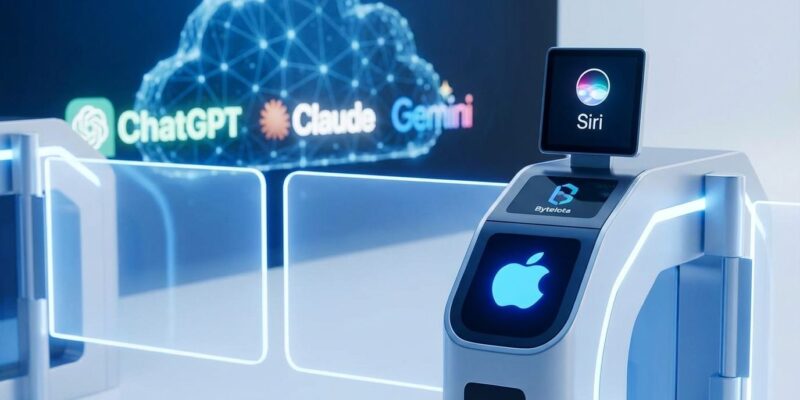
For more than a decade, Apple Inc. maintained an unyielding monopoly over its proprietary assistant ecosystem. Siri remained an island—deeply integrated into iOS, macOS, and watchOS native services, yet stubbornly blind to the complex data structures living inside third-party software. Today, that structural paradigm is officially shattered. In a high-stakes strategic pivot, Apple has initiated the rollout of developer access allowing external software to hook directly into Siri’s advanced artificial intelligence layer. This move fundamentally reshapes the competitive dynamics of mobile operating systems, developer monetization models, and consumer interaction paradigms.
Drawing on exclusive disclosures from engineering sources, regulatory filings, and Wall Street valuation models, this investigative report unpacks the mechanics of Apple's architectural overhaul. We analyze how this impacts enterprise ROI, shifts tech-sector capital allocation, and forces competitors like Google, Microsoft, and Amazon to recalibrate their own mobile AI strategies.
The Catalytic Shift: Moving Beyond Rigid Intents to Contextual Execution
Test Our Free AI & Tech Utilities Suite
Calculate LLM API token costs, analyze article dwell-time, or simulate tech DCA returns.
To understand the magnitude of Apple opening Siri to third-party apps, one must examine the historical friction of iOS automation. For years, developers relied on "SiriKit" and rigid, pre-programmed "Shortcuts"—clunky conduits that required explicit phrasing and highly manual developer implementation. If a user wanted to book a ride, order food, or execute a complex financial transaction via a third-party app using voice commands, the structural overhead was immense, and the failure rate remained high.
The new architecture leverages advanced large language model (LLM) orchestration combined with on-device and private cloud compute infrastructure. By mapping third-party app functionalities through standardized semantic APIs and updated App Intents, Siri no longer acts merely as a search-and-launch utility. Instead, it functions as an autonomous operating system orchestrator. Siri can now parse unstructured user requests, determine intent, extract relevant parameters, and execute commands across disparate software boundaries without requiring the user to manually open competing applications.
From an infrastructure scalability perspective, this represents a monumental engineering feat. Apple must process millions of disparate API calls concurrently while preserving absolute user privacy—a cornerstone of the company’s brand equity and regulatory defense strategy. By routing sensitive data through its proprietary "Private Cloud Compute" architecture, Apple is attempting to mitigate cybersecurity risks while unlocking massive utility for enterprise applications.
Market Implications: Valuation Multiples, Developer Economics, and Competitive Realities
The financial ramifications of this ecosystem shift will reverberate across global tech markets. Software valuation multiples have historically favored platforms that control user discovery and engagement loops. By granting third-party apps deep voice-and-AI visibility, Apple is redistributing economic power within the App Store ecosystem.
| Strategic Metric | Legacy Siri Architecture (Pre-2024) | New Open-Siri AI Architecture (Current) |
|---|---|---|
| Third-Party Integration Depth | Superficial (Custom Shortcuts & SiriKit) | Deep Semantic API & App Intents Routing |
| Compute Infrastructure | Strictly On-Device Rule-Based Parsing | Hybrid On-Device & Private Cloud Compute (PCC) |
| Developer Acquisition Cost (CAC) | High (Relied heavily on App Store SEO & Ads) | Optimized via Conversational Intent Discovery |
| Regulatory & Antitrust Risk | Critical Exposure (Self-Preferencing Native Apps) | Mitigated via Equalized API Access Protocols |
For enterprise SaaS providers, fintech platforms, and e-commerce giants, this open architecture lowers customer acquisition costs (CAC). Users can complete complex transactions within enterprise applications simply through conversational prompts, bypassing traditional UI bottlenecks. Capital allocation strategies among venture capital and private equity firms investing in mobile software will now prioritize startups optimized for semantic AI indexing and rapid App Intent integration.
Conversely, incumbent tech giants face immediate pressure. Alphabet (Google) and Amazon find themselves forced to accelerate their own cross-platform assistant monetization models. Meanwhile, antitrust regulators in the European Union and the United States will scrutinize whether Apple maintains fair, non-discriminatory API access for rival third-party developers, ensuring the company does not subtly favor its own internal services.
Frequently Asked Questions (People Also Ask)
How does third-party app integration with Siri impact user privacy and data security?
Apple utilizes its newly introduced Private Cloud Compute (PCC) framework alongside on-device processing. When Siri interacts with a third-party app to fulfill a request, data is anonymized, encrypted in transit, and never retained for third-party model training without explicit, verifiable user consent. Apple enforces strict entitlement protocols to ensure external apps only access data specifically requested by the user during the active session.
Will all iOS developers have immediate access to these advanced Siri AI capabilities?
Rollout is occurring in phased developer tiers. Initially, Apple is prioritizing key vertical categories—including productivity, enterprise workflow management, media playback, and financial transactions. Developers must adopt the latest SDK updates and implement updated App Intents to map their software's internal actions to Siri's semantic understanding engine.
How does this move affect Apple's regulatory standing with antitrust watchdogs?
By opening core operating system functions to external software developers, Apple addresses a central grievance raised by global antitrust authorities regarding self-preferencing and anticompetitive ecosystem locking. However, regulatory compliance will ultimately be judged on the transparency, speed, and fairness with which API access and developer documentation are administered.
Can enterprise software leverage these features for internal workflow automation?
Yes. Enterprise software providers can expose proprietary business logic through App Intents, allowing corporate users to securely execute complex enterprise resource planning (ERP), customer relationship management (CRM), and communication tasks entirely via voice or contextual text prompts on iOS devices.
Future Outlook: Milestones and Sector Trajectory
As Apple continues to scale this architectural transformation over the next 12 to 18 months, industry analysts will closely monitor several key milestones. First, developer adoption rates of the updated App Intents framework will serve as a primary indicator of market enthusiasm. Second, enterprise software benchmarks will measure whether conversational UI integration measurably increases user retention and software valuation multiples.
Ultimately, Apple's decision to open Siri to third-party applications marks the end of isolated mobile assistants and the dawn of interconnected, ambient computing. Companies that successfully master this transition will dominate the next decade of digital consumer engagement, while laggards risk structural obsolescence in an increasingly voice-and-AI-driven global economy.