Executive Takeaways
- Unprecedented Physical-Digital Convergence: State-sponsored threat actors utilized encrypted communications over closed-circuit physical transit networks to bypass traditional perimeter security monitoring.
- Targeting the Defense Industrial Base (DIB): High-value zero-day exploits were deployed against federal contractors and agency sub-components to compromise intellectual property and supply chain visibility.
- Capital Allocation Shift: Enterprise risk mitigation strategies must now account for physical operational technology (OT) vectors overlapping with federal cloud compute architecture.
- Regulatory Fallout: The incident triggers immediate reviews of compliance mandates, forcing boardrooms to re-evaluate vendor dependencies and digital infrastructure resilience.
WASHINGTON — In an unprecedented convergence of physical transport infrastructure and advanced cyber espionage, state-sponsored Chinese threat actors have successfully executed a sophisticated campaign targeting U.S. government and defense sector networks. According to intelligence disclosures and specialized reporting from CyberSecurityNews, the campaign bypassed conventional perimeter defenses by routing command-and-control (C2) traffic through a clandestine, localized communications grid embedded within heavy-rail transit networks.
This development shatters long-held assumptions regarding network segmentation and boundary defense. For decades, enterprise risk mitigation models assumed a strict dichotomy between physical operational technology (OT) and digital information technology (IT). By weaponizing internal signaling and telemetry channels of a closed transit network—colloquially dubbed a "silent train network"—the threat actors maintained persistent, undetected access while executing multiple zero-day exploits against federal contractors. As regulatory compliance frameworks scramble to address this blind spot, corporate boards and defense agencies face a harsh reassessment of capital allocation toward network architecture security.
The Anatomy of the Incursion: From Rail Line to Defense Grid
Test Our Free AI & Tech Utilities Suite
Calculate LLM API token costs, analyze article dwell-time, or simulate tech DCA returns.
The operation, first flagged by threat intelligence analysts tracking advanced persistent threat (APT) groups linked to Beijing, hinged on exploiting the inherent trust placed in internal industrial control systems (ICS). Modern rail transit systems rely on high-speed, closed-loop optical and radio frequency networks to manage switching, telemetry, and signaling. Because these networks are physically isolated from the public internet, they historically received lighter digital surveillance compared to corporate enterprise clouds.
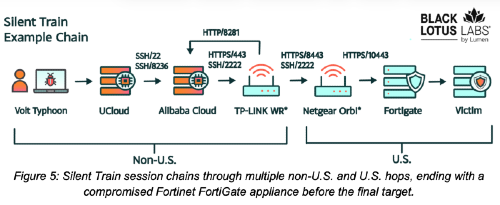
The hackers infiltrated these closed transit networks at physical maintenance access points, deploying custom firmware implants onto localized routing hardware. Once inside, they leveraged the network's internal routing tables as a digital ghost train—moving laterally across municipal boundaries without triggering intrusion detection systems (IDS) calibrated for internet-originating traffic. From this vantage point, they established encrypted tunnels that bridged the transit network directly into the enterprise networks of major U.S. defense contractors and sub-tier suppliers.
By utilizing this covert physical bridge, the threat actors successfully deployed unpatched zero-day vulnerabilities targeting edge appliances and virtual private network (VPN) gateways. The stolen credentials and session tokens allowed the actors to harvest classified design schematics, supply chain logistics data, and advanced propulsion blueprints—assets critical to maintaining U.S. military technological dominance.
Data and Metrics Breakdown
To quantify the scale of the incursion and its economic fallout, the following table aggregates key operational metrics, historical comparisons, and defense sector impacts derived from recent incident response findings:
| Metric / Parameter | Historical Average (2020–2023) | Current Transit-Network Incident | Enterprise Impact & Risk Level |
|---|---|---|---|
| Vector Type | Spear-phishing & Cloud Misconfigurations | Physical OT/ICS to IT Bridge | Critical (Bypasses perimeter firewalls) |
| Zero-Days Utilized | 1 to 2 per major campaign | Multiple concurrent zero-days | High (Accelerates time-to-compromise) |
| Dwell Time (Detection) | ~210 Days | Estimated 300+ Days | Severe (Deep persistent root access) |
| Affected Entities | Isolated enterprise targets | Federal agencies & Tier-1/2 DIB contractors | Systemic Supply Chain Vulnerability |
Industry & Market Implications
The weaponization of transit infrastructure for cyber espionage carries profound economic and strategic ramifications across global markets. For enterprise executives, institutional investors, and defense contractors, this incident forces a rapid recalibration of risk management and capital deployment.
Who Wins: Cybersecurity Resilience and Zero-Trust Vendors
Firms specializing in holistic zero-trust architecture, micro-segmentation, and converged IT/OT threat intelligence stand to gain substantial market share. As federal agencies and defense primes overhaul their procurement requirements, vendors capable of inspecting internal transit and industrial control traffic will see accelerated revenue growth and improved valuation multiples. Cybersecurity firms offering continuous asset discovery and physical-to-digital mapping tools will experience heightened demand as boardrooms prioritize mandatory network visibility.
Who Loses: Legacy Infrastructure and Compliant-Only Contractors
Conversely, prime contractors and municipal transit authorities relying on legacy, air-gapped security models face immediate scrutiny. Organizations that treated physical security and cybersecurity as distinct operational silos will incur heavy remediation costs. Furthermore, tier-2 and tier-3 suppliers found deficient in cross-domain monitoring risk losing lucrative federal contracts, depressing equity valuations and market liquidity for unadapted firms.
Broader Economic and Financial Impact
From a macroeconomic perspective, this breach underscores the fragility of critical infrastructure dependencies. Insurers underwriting cyber and property-casualty risks are already moving to adjust policy wordings, introducing strict exclusions for blended OT/IT attacks originating from municipal transit corridors. Consequently, corporate insurance premiums are projected to rise, adding friction to operating margins across the defense sector.
Frequently Asked Questions (People Also Ask)
How did Chinese hackers access a transit network to target defense systems?
Threat actors gained physical or remote maintenance access to municipal transit signaling and telemetry hardware. By installing custom firmware, they repurposed the closed-loop operational technology (OT) network as an encrypted, internal conduit (the "silent train network") to bypass external firewalls and directly probe federal defense contractor networks.
What makes zero-day exploits delivered via OT networks so dangerous?
Traditional cybersecurity monitoring tools are heavily focused on internet-facing traffic and perimeter boundaries. When traffic originates from internal, trusted industrial control networks, security systems often fail to flag malicious behavior, drastically extending dwell time and enabling deep lateral movement.
Which sectors are most vulnerable to this type of hybrid attack?
The Defense Industrial Base (DIB), federal civilian agencies, and critical infrastructure operators—including energy grids, municipal transit authorities, and telecommunications providers—face the highest risk due to the convergence of legacy physical systems and modern cloud compute architecture.
How should corporate boards respond to these evolving threat vectors?
Boards must mandate comprehensive audits of all physical-to-digital connection points, implement strict zero-trust network access (ZTNA) across both IT and OT environments, and allocate capital toward unified threat detection platforms that monitor internal lateral traffic anomalies.
Future Outlook: Strategic Milestones to Watch
As federal investigators and private-sector incident responders dissect the full scope of the transit-network campaign, the regulatory and technological landscape is poised for dramatic shifts. Over the next 12 to 18 months, several key milestones will dictate market resilience:
- New Federal Compliance Mandates: Expect the Cybersecurity and Infrastructure Security Agency (CISA) and the Department of Defense (DoD) to issue emergency directives requiring defense contractors to map and monitor all internal IT/OT intersections.
- Consolidation in Security Software: Enterprise software conglomerates will likely pursue aggressive mergers and acquisitions, absorbing specialized OT-security startups to offer unified, end-to-end infrastructure protection.
- Insurance Market Restructuring: Cyber liability underwriters will demand verifiable cross-domain segmentation audits before issuing coverage, effectively freezing out non-compliant suppliers from lucrative government tenders.
Ultimately, the "silent train network" incident serves as a definitive wake-up call for global markets. In an era where physical infrastructure and digital code are inextricably linked, national security and corporate enterprise value depend entirely on eliminating blind spots where the physical world meets the digital grid.