A series of high-resolution geophysical surveys and isotopic gas analyses has confirmed what volcanologists have long feared: one of Earth’s most hazardous volcanic systems is experiencing an active influx of juvenile, mantle-derived magma into its shallow crustal reservoirs. Recent data collected across the Campi Flegrei caldera—a densely populated volcanic structure nested along the Bay of Naples—alongside corroborating subsurface imaging at North America’s Yellowstone and South America’s Laguna del Maule, reveals that deep thermal recharge is accelerating uplift rates and destabilizing upper-crustal caprock.
The findings, validated through synthetic aperture radar interferometry (InSAR), continuous global navigation satellite systems (GNSS), and noble gas spectrometry, present a profound challenge not only to geological science but to global capital markets, sovereign debt stability, and infrastructure resilience. As subterranean pressures mount, international reinsurance syndicates and enterprise risk officers are being forced to recalculate exposure models that had previously treated caldera-scale cataclysms as million-to-one outliers.
Executive Takeaways
- Empirical Confirmation of Magmatic Recharge: Advanced 4D seismic velocity tomography and carbon-to-helium isotope ratios ($^3\text{He}/^4\text{He}$) confirm that juvenile, mantle-derived basaltic melts are ascending into shallow silicic reservoirs, driving significant crustal dilation and rock-mass fatigue.
- Asymmetric Sovereign & Municipal Exposure: Over 500,000 residents live directly inside the red hazard zone of the active caldera system in Southern Europe alone, presenting an existential capital preservation crisis for regional infrastructure, asset valuations, and state-backed insurance backstops.
- Reinsurance and Capital Markets Contagion: Catastrophe bond spreads and property-casualty reinsurance pricing are recalibrating to factor in non-linear volcanic risk, placing downward pressure on regional debt valuation multiples and municipal credit ratings.
- Cloud-Scale Geophysical Compute: Institutional monitoring teams are shifting toward high-performance cloud compute architectures and distributed acoustic sensing (DAS) across fiber-optic networks to process petabytes of real-time ground strain data for early-warning predictive analytics.
The Subterranean Ledger: Deciphering the Magmatic Influx
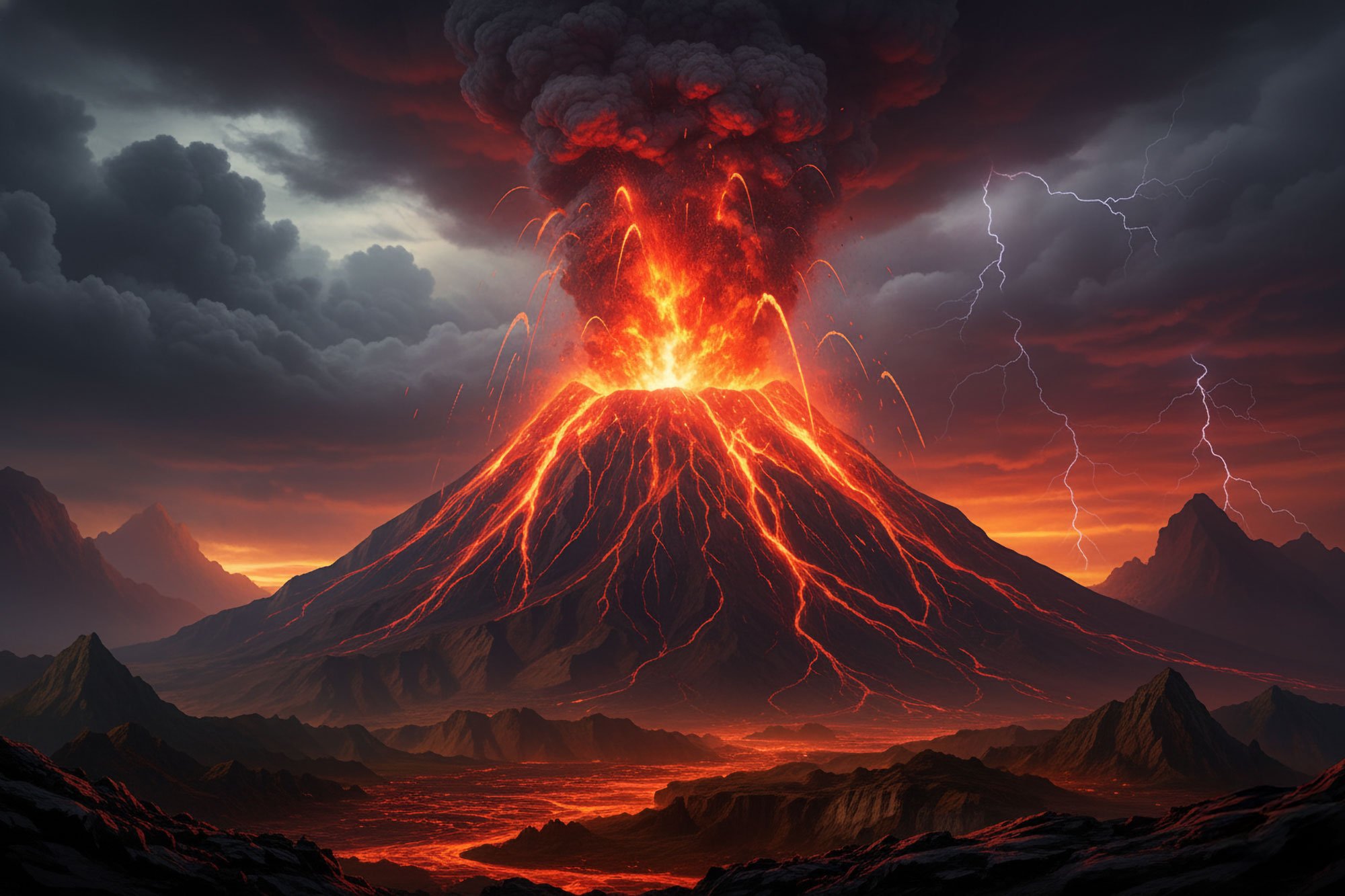
The prevailing scientific consensus previously suggested that the ongoing ground deformation (bradyseism) observed across complex calderas was largely hydrothermal—driven by the boiling and expansion of trapped subsurface fluids and supercritical water tables. However, recent peer-reviewed investigations published across major geophysical journals demonstrate an undeniable magmatic fingerprint.
By interrogating the shear-wave velocity ($V_s$) structures beneath the crust, geophysicists have identified a persistent low-velocity zone between 3 and 5 kilometers depth that cannot be reconciled solely with hydrothermal fluid dynamics. Instead, the data tracks the continuous migration of new melt from a deeper primary reservoir situated at 8 to 10 kilometers. This injection of fresh, volatile-rich magma into partially crystallized silicic mushes triggers thermal rejuvenation, releasing extraordinary quantities of carbon dioxide and sulfur compounds that systematically corrode the structural integrity of the overlying rock strata.
The economic stakes of these subsurface physics are vast. Unlike typical stratovolcanoes characterized by conical vents and localized fallout footprints, calderas release energy across massive territorial depressions. An uncontrolled breach in a pressurized caldera does not produce a singular lava flow; it threatens catastrophic collapse, ultra-plinian ash columns capable of disrupting global aviation corridors, and atmospheric sulfur loading with the potential to trigger multi-year agricultural depressions across the Northern Hemisphere.
Geophysical Mechanics: Crustal Fatigue and the Rupture Threshold
The primary concern among geophysicists is not necessarily an immediate, super-scale eruption tomorrow, but rather the cumulative mechanical degradation of the Earth's brittle upper crust. Ground elevation within the focal monitoring zones has trended upward at an unprecedented rate over the past two years, with cumulative vertical displacement eclipsing historical baselines recorded over the last century.
Every millimeter of vertical uplift represents millions of tons of hydrostatic and lithostatic strain. As the magma chamber refills, it subjects the overlying caprock to cyclical flexure, creating tensile faulting and high-frequency microseismicity. In densely urbanized and industrially integrated corridors, this continuous mechanical shaking degrades subterranean infrastructure, compromises municipal gas and water transport lines, and introduces severe business interruption costs for enterprise manufacturing operations.
Furthermore, geochemical degassing networks have recorded a steady escalation in the ratio of carbon dioxide to water vapor ($CO_2/H_2O$), alongside shifts in nitrogen-to-argon signatures. This precise chemical combination is the standard diagnostic baseline for deep-seated degassing, providing empirical proof that magma is decompressing as it works its way toward shallower crustal storage.
Comparative Metrics: Active Volcanic Calderas Under Pressure
The following table synthesizes the latest structural and economic parameters across three of the world’s most critical monitored caldera networks, reflecting recent instrumentation data, seismic escalation, and enterprise exposure profiles.
| Volcanic System & Location | Primary Deformation Driver | Annual Uplift / Strain Rate | Shallow Reservoir Depth | Direct Asset & Infrastructure Value at Risk |
|---|---|---|---|---|
| Campi Flegrei Campania, Italy |
Magmatic Recharge & Hyper-pressurized Hydrothermal Fluids | 12 to 15 mm / month (Peak intervals) | 3.0 – 4.2 km | > $120 Billion (Real estate, transit, commercial ports) |
| Yellowstone Caldera Wyoming/Montana, USA |
Deep Basaltic Intrusion into Rhyolitic Mush Reservoir | 15 to 30 mm / year (Variable episodic cycles) | 5.0 – 8.0 km | > $35 Billion (Regional agricultural, energy grid assets) |
| Laguna del Maule Andean Volcanic Arc, Chile |
Rapid Silicic Magma Accumulation & Sill Injection | 180 to 220 mm / year (Ultra-rapid category) | 4.5 – 6.0 km | > $15 Billion (Hydroelectric facilities, transport corridors) |
| Long Valley Caldera California, USA |
Hydrothermal Overpressure & Residual Crystallization Strain | 2 to 5 mm / year (Localized subsidence/uplift) | 6.0 – 8.5 km | > $22 Billion (Tourism infrastructure, municipal utilities) |
Macroeconomic Fallout: Capital Allocation, Reinsurance, and Sovereign Debt
The realization that a major volcanic system is actively recharging introduces immediate volatility into the alternative risk transfer and institutional insurance sectors. Historically, natural catastrophe (NatCat) pricing models have heavily favored seismic and meteorological risks—earthquakes, hurricanes, and floods—which operate on predictable historical return periods and actuarial tables. Supervolcanic calderas, characterized by long recurrence intervals and extreme-tail loss severity, break traditional risk mitigation paradigms.
Within the multi-billion-dollar Catastrophe Bond (Cat Bond) market, institutional investors are demanding higher risk premiums. The possibility of prolonged civil evacuations—even in the absence of a catastrophic explosive eruption—represents an operational nightmare for primary insurers. Business interruption, loss of municipal tax revenue, and the wholesale abandonment of commercial real estate portfolios create complex systemic liabilities that state treasuries cannot easily underwrite without sovereign balance-sheet intervention.
Sovereign debt markets are also taking notice. For countries operating under elevated debt-to-GDP ratios, the fiscal obligation of financing long-term resettlement initiatives, retrofitting civic infrastructure against bradyseismic shearing, and providing emergency liquidity facilities directly impacts sovereign credit spreads. If secondary debt markets begin pricing in the geological risk of high-density calderas, municipal valuation multiples will compress, limiting local governments' capacity to raise long-term capital for infrastructure scalability and renewal.
Technological Interventions: Cloud Compute, DAS, and Predictive Modeling
In response to escalating subterranean indicators, an unprecedented mobilization of deep technology is underway. Geological surveys are teaming up with sovereign research institutions and cloud hyperscalers to migrate monitoring workloads to resilient cloud compute architectures capable of running petabyte-scale simulation models in near real-time.
The most consequential technological deployment is Distributed Acoustic Sensing (DAS). By sending pulsed laser interrogations through existing commercial subsea and terrestrial fiber-optic telecom backbones, geoscientists turn standard communications fiber into arrays containing thousands of virtual seismic sensors. This technique allows researchers to capture subtle strain rate fluctuations across urbanized and marine zones where deploying physical seismometers is logistically impossible.
These optical data streams are processed through machine-learning algorithms trained on rock fracture mechanics. These predictive models simulate hundreds of millions of stress permutations to map exactly where the crustal rupture point lies. This high-performance computational framework transforms raw scientific data into actionable enterprise intelligence, granting civil authorities and financial stakeholders an extended runway for regulatory compliance, risk mitigation, and proactive capital preservation strategies.
Frequently Asked Questions (People Also Ask)
Does fresh magma entering a caldera mean an explosive eruption is imminent?
No. Magmatic recharge is an essential pre-condition for volcanic activity, but it does not guarantee an immediate or violent eruption. Magma can stall, cool, and solidify at shallow depths as an intrusive sill or pluton without breaching the surface. The critical metric is the rate of pressurization versus the mechanical tensile strength of the overlying crust. Scientists monitor continuous seismic swarms, ground deformation acceleration, and geochemical gas compositions to determine whether the magma is approaching a critical rupture state or stabilizing.
How would a supervolcano eruption impact global supply chains and financial markets?
The economic impact of a major caldera unrest event is structural and far-reaching. A high-VEI (Volcanic Explosivity Index) event injects colossal volumes of ash and sulfur aerosols into the stratosphere, shutting down commercial aviation across entire hemispheres for weeks. Crop yields decline due to volcanic winter cooling effects, triggering agricultural commodity price spikes. Reinsurance syndicates face unprecedented solvency pressures, and sovereign bond markets absorb billions in emergency relief expenditures, driving down global equity valuation multiples and freezing short-term commercial paper liquidity.
What is the difference between an ordinary volcano and a supervolcano caldera?
Ordinary stratovolcanoes (such as Mount St. Helens or Mount Fuji) typically form around a central vent where successive lava flows and pyroclastic deposits build an elevated cone. A supervolcano or caldera system forms when an immense volume of magma accumulates in an expansive crustal chamber. When it erupts, the sheer volume of evacuated material causes the overlying ground to collapse into the emptied space, leaving behind an enormous crater-like depression often spanning tens of kilometers across. The volume of erupted material from a true supervolcano exceeds 1,000 cubic kilometers (VEI 8).
Can modern civil infrastructure be fortified against caldera ground uplift?
Engineering resilience against volcanic bradyseism is exceptionally difficult. Unlike typical horizontal earthquake shaking, which can be mitigated with base isolators and tuned mass dampers, caldera ground deformation exerts continuous vertical and differential shear strain over months or years. Mitigating this risk requires flexible utility piping, distributed structural monitoring via fiber-optic sensors, localized load-bearing soil stabilization, and rigorous zoning regulations that restrict high-density enterprise infrastructure investments within vulnerable red zones.
Strategic Outlook & Key Milestones to Watch
The realization that juvenile magma is actively recharging high-consequence caldera reservoirs shifts the global narrative from historical curiosity to active risk management. Over the coming 12 to 24 months, institutional observers and enterprise risk executives must track three decisive geophysical milestones:
- Deformation Acceleration Trajectories: Any sudden transition from steady linear ground uplift to an exponential deformation curve indicates that the brittle caprock is yielding to magmatic overpressure, drastically shortening the evacuation and asset reallocation timeline.
- Volatile Degassing Transitions: Persistent spikes in deep-mantle isotopic signatures—particularly sudden increases in carbon monoxide and unoxidized sulfur species—will confirm that ascending melt has breached the ductile-brittle crustal transition zone.
- Seismic Centroid Migration: The spatial clustering and upward migration of micro-earthquake hypocenters toward shallow depths (under 2 kilometers) will serve as the final diagnostic alert that structural failure of the crust is underway.
As scientists deepen their subterranean tomography, the intersection of earth sciences, enterprise finance, and sovereign balance-sheet resilience will dictate how modern civilization confronts the planet's most unpredictable geological engines. The magma chambers beneath our feet are refilling; the window to construct the monitoring frameworks, financial firewalls, and institutional contingencies to withstand their awakening is open now.