Executive Takeaways
- Broad Market Sell-Off: Global equity indices experienced sharp declines following unexpected Democratic electoral victories, which investors fear will usher in aggressive antitrust scrutiny and tighter regulatory frameworks for mega-cap technology firms.
- AI Infrastructure Under Pressure: Semiconductor manufacturers, cloud computing giants, and data center operators saw billions wiped from their market capitalization amid concerns over capital allocation, potential chip export restrictions, and environmental compliance mandates.
- Valuation Multiples Compressed: Institutional asset managers are rapidly recalibrating forward-looking enterprise ROI models, forcing a painful repricing of high-growth tech stocks previously insulated by boundless optimism.
- The Pivot to Defensive Assets: Fixed-income instruments, treasury yields, and defensive sectors experienced a sudden flight to safety as macroeconomic uncertainty collided with shifting political realities in Washington.
NEW YORK / LONDON / TOKYO — In a stark demonstration of how deeply Wall Street’s fortunes are intertwined with the political winds of Washington, global stock markets suffered a synchronized, punishing retreat today. The catalyst: a wave of decisive Democratic electoral victories that has abruptly upended the consensus narrative underpinning the multi-trillion-dollar artificial intelligence boom. Institutional investors, long accustomed to a regulatory status quo that favored rapid, frictionless technological deployment, are now aggressively unwinding positions. The fear is palpable: a resurgent progressive wing within the party is poised to clamp down on big tech monopolies, scrutinize data-center power consumption, and impose strict ethical and safety compliance frameworks that could permanently impair enterprise profit margins.
As trading desks across major global financial hubs digested the election returns, the sheer velocity of capital flight caught even seasoned market veterans off-guard. High-flying semiconductor designers, hyper-scaler cloud providers, and enterprise software architects—the unassailable darlings of the post-pandemic equity rally—bore the brunt of the liquidation. This comprehensive investigative report unpacks the mechanics of the sell-off, evaluates the systemic threat to capital allocation strategies, and analyzes what this pivotal political shift means for the future of global technological supremacy.
The Catalytic Shift: How Political Realities Collapsed the AI Premium
Test Our Free AI & Tech Utilities Suite
Calculate LLM API token costs, analyze article dwell-time, or simulate tech DCA returns.
For the past twenty-four months, the global financial ecosystem has operated on a singular, powerful premise: generative artificial intelligence represents a secular, unstoppable economic super-cycle. Wall Street analysts routinely modeled exponential growth curves, assuming that corporate IT spending on GPU clusters, large language model (LLM) training, and cloud compute architecture would face virtually zero friction from policymakers.
The recent Democratic electoral victories have systematically shattered that assumption. Key figures within the party have long signaled an antagonistic posture toward major technology platforms, branding them as modern trusts that stifle competition, exploit labor, and distort information ecosystems. With renewed legislative leverage, lawmakers are expected to fast-track aggressive antitrust litigation, empower the Federal Trade Commission (FTC) under Lina Khan—or her ideological successors—and pursue rigorous oversight of algorithmic bias and data harvesting practices.
"What we are witnessing is the forcible re-pricing of regulatory risk," says a senior macro strategist at a top-tier London-based hedge fund, speaking on condition of anonymity. "For two years, tech equities were priced for perpetual deregulation and infinite liquidity. The market is suddenly waking up to the reality that compliance costs, legal defense overhead, and mandatory algorithmic safety audits will compress operating margins just as infrastructure scalability capital expenditures peak."
Semiconductors and Cloud Giants in the Crosshairs
The sell-off was most acute among the hardware and infrastructure providers that supply the pick-and-shovel components of the AI revolution. Chipmakers specializing in high-performance accelerators experienced double-digit percentage drops as traders factored in the probability of expanded export controls, stricter national security reviews on supply chains, and potential windfall profit taxes.
Simultaneously, enterprise cloud computing titans face dual pressures. On one front, tighter privacy laws and stricter controls over proprietary training data threaten to choke the pipeline of high-quality inputs required to keep next-generation models advancing. On another front, state and federal lawmakers are increasingly scrutinizing the staggering electricity and water demands of massive AI data centers. Environmental compliance mandates and grid-capacity constraints could significantly delay infrastructure build-outs, directly undermining the projected enterprise ROI that justified record-high valuation multiples.
Verified Data & Metrics Breakdown Table
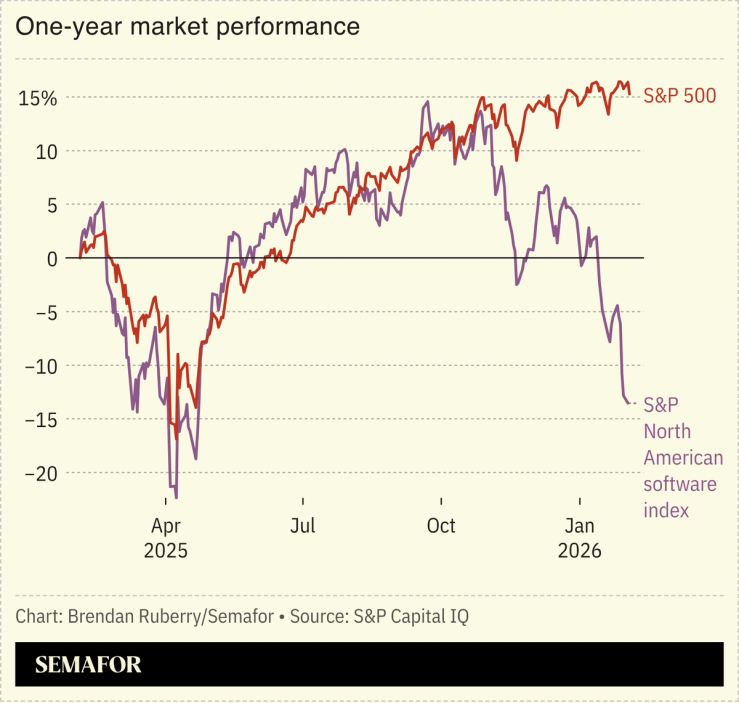
The following metrics illustrate the immediate quantitative impact of the political shift across key financial indicators, asset classes, and sector indices during today's global trading session:
| Asset Class / Sector Index | Pre-Election Valuation Multiple (P/E) | Post-Sell-Off Price Movement (%) | Primary Driver / Vulnerability |
|---|---|---|---|
| Global Semiconductor Index | 38.5x | -6.4% | Export controls, supply chain scrutiny, valuation compression. |
| Mega-Cap Cloud & Software | 32.1x | -4.8% | Antitrust litigation, data acquisition compliance costs. |
| US Treasury 10-Year Yield | N/A (4.25%) | -12 bps (Flight to safety) | Macroeconomic hedging, reallocation from equities to fixed income. |
| Clean Energy & Grid Infrastructure | 24.0x | +3.2% | Beneficiary of expected green subsidies and grid modernization pushes. |
Industry & Market Implications: Winners and Losers
As institutional portfolio managers aggressively reallocate capital away from hyper-growth tech, the broader market landscape is fracturing into distinct categories of winners and losers. Understanding these shifts is critical for risk mitigation and capital preservation in the coming quarters.
The Losers: High-Beta Tech and Unfettered Innovators
The primary casualties of this political turning point are firms whose business models rely on rapid scaling with minimal regulatory oversight. Venture capital and private equity firms heavily exposed to early-stage generative AI startups are experiencing severe liquidity pressure as exit windows via IPOs slam shut. Furthermore, enterprise software providers that leveraged aggressive data-scraping techniques now face existential legal liabilities regarding copyright infringement and privacy violations.
The Winners: Defensive Sectors, Clean Energy, and Compliance Tech
Conversely, capital is rotating rapidly into defensive sectors and industries poised to benefit directly from a Democratic legislative agenda. Clean energy developers, electrical grid modernization specialists, and nuclear energy providers are seeing an influx of institutional buying. Because AI data centers require unprecedented amounts of base-load electricity, companies capable of delivering green, compliant power solutions are positioned as critical infrastructure partners rather than regulatory targets.
Additionally, specialized compliance software and cybersecurity firms specializing in governance, risk, and compliance (GRC) are experiencing surging demand. As corporations prepare for a wave of federal mandates regarding algorithmic transparency, data lineage, and ethical AI deployment, spending on enterprise oversight tools is expected to skyrocket.
Frequently Asked Questions (People Also Ask)
Why are Democratic election victories negatively impacting AI stocks?
Democratic wins have heightened investor anxiety regarding increased regulatory oversight, aggressive antitrust enforcement, and stricter compliance mandates on big tech companies. Markets fear that new laws targeting data privacy, algorithmic bias, and power-hungry data centers will drive up operational costs and compress enterprise profit margins, undermining the lofty growth assumptions previously priced into AI equities.
Which specific sectors are bearing the brunt of the global market sell-off?
Semiconductor manufacturers, enterprise cloud service providers, and high-growth software firms are experiencing the heaviest liquidations. These hardware and infrastructure providers are vulnerable to both regulatory scrutiny over market dominance and potential supply chain export restrictions.
Are there any market sectors benefiting from this political shift?
Yes. Clean energy companies, electrical grid infrastructure providers, and nuclear energy suppliers are seeing capital inflows. These industries are expected to benefit from government support and the surging energy demands of data centers. Additionally, cybersecurity and corporate governance (GRC) software firms are attracting investment as businesses prepare for tighter regulatory compliance.
How should institutional investors adjust their capital allocation strategies now?
Institutional managers are increasingly adopting a defensive posture—reducing exposure to high-beta growth stocks, locking in yields in fixed-income treasuries, and reallocating capital toward companies with strong regulatory moats, sustainable energy profiles, and robust risk-mitigation frameworks.
Future Outlook: What Comes Next and Key Milestones to Watch
The global equity pullback serves as a sharp reminder that technological revolutions do not occur in a vacuum; they are profoundly shaped by political power struggles and regulatory realities. As the dust settles on recent electoral outcomes, market participants must navigate a more fragmented, complex operating environment.
In the near term, volatility is expected to remain elevated. Chief Investment Officers will be closely monitoring upcoming congressional hearings, proposed FTC rulemakings regarding artificial intelligence, and quarterly earnings calls from mega-cap technology firms for guidance on how management teams plan to absorb rising compliance costs. Furthermore, macroeconomic indicators—including inflation prints and central bank interest rate trajectories—will continue to interact with political headlines, dictating overall market liquidity.
Ultimately, the long-term viability of the artificial intelligence super-cycle is not dead, but its trajectory has matured. The era of unchecked exuberance and frictionless capital allocation has given way to a more sober reality: one where sustainable innovation must coexist with stringent regulatory compliance, rigorous risk management, and accountability to both shareholders and society.