EXECUTIVE TAKEAWAYS
- The Paradigm Shift: Google Cloud's newly launched "AI Threat Defense" architecture shifts corporate cybersecurity from human-reactive defense to autonomous, machine-speed mitigation.
- Strategic Leadership: Unveiled under the authorship of industry executive Francis deSouza, the platform directly targets escalating enterprise risks tied to generative AI-powered cyberattacks.
- Capital Allocation Impact: Fortune 500 CISOs are expected to pivot massive IT budgets toward automated infrastructure resiliency, impacting enterprise software valuations and cloud compute demand.
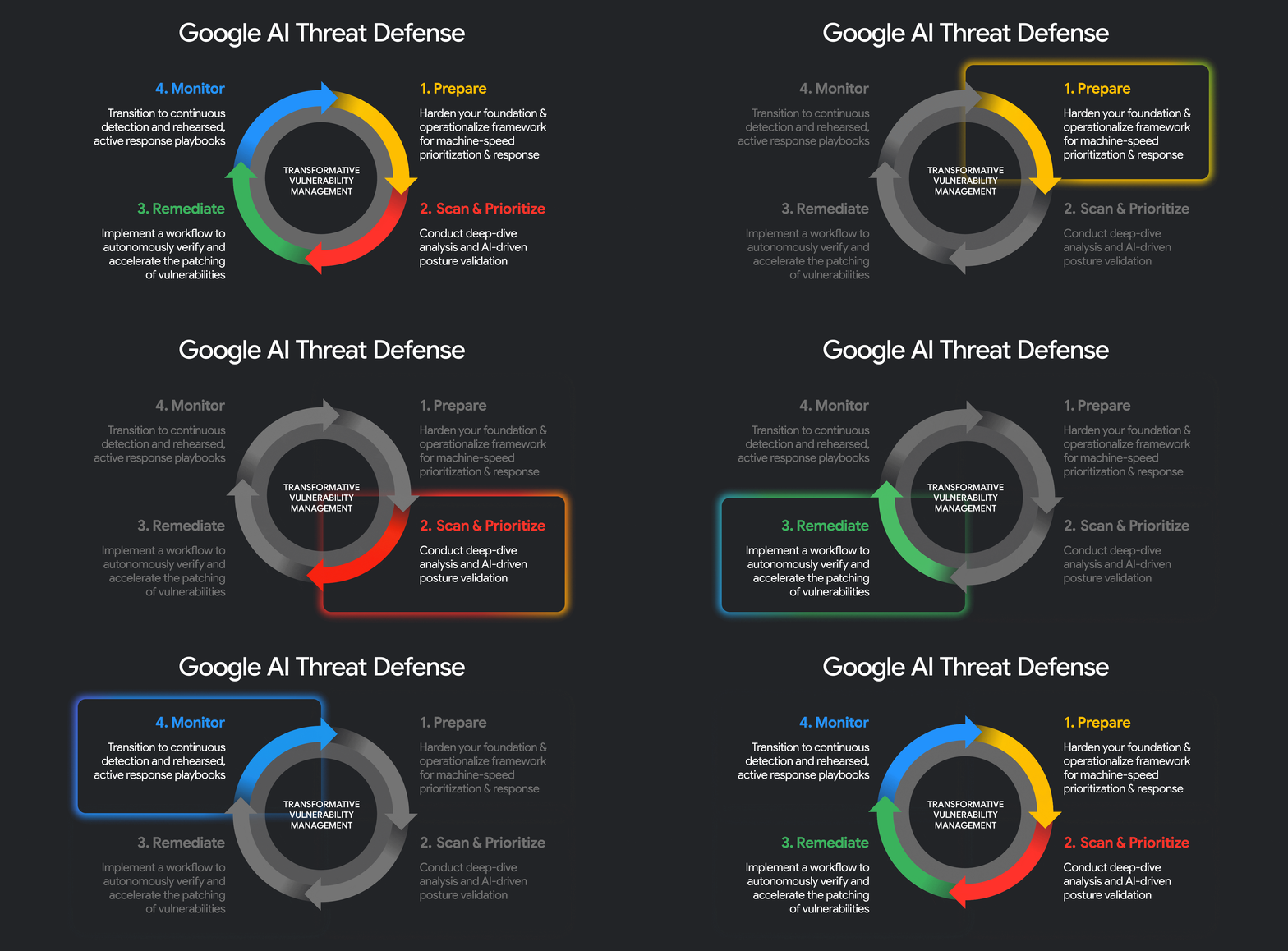
- Execution Blueprint: The system operates on a tripartite framework—Prepare, Scan, and Counter—designed to harden foundational cloud environments against advanced persistent threats (APTs).
NEW YORK & MOUNTAIN VIEW — In an era where state-sponsored threat actors and cybercriminal syndicates deploy automated, generative artificial intelligence to infiltrate enterprise networks at machine speed, corporate defense has faced an existential bottleneck: human latency. On May 27, 2026, Google Cloud upended the global cybersecurity landscape with the official introduction of Google AI Threat Defense. Announced via the company's premier engineering channels by veteran executive Francis deSouza, the suite represents a monumental shift in enterprise infrastructure security, promising to neutralize complex attack vectors before human security operations center (SOC) analysts can even log the anomaly.
For Chief Information Security Officers (CISOs), Chief Financial Officers (CFOs), and institutional investors monitoring tech sector capital allocation, this release is more than a routine product update. It is a critical milestone in the commercialization of defensive artificial intelligence—a multi-billion-dollar market response to weaponized machine learning. As regulatory compliance frameworks tighten globally and cyber insurance underwriting becomes increasingly punitive, Google’s latest ecosystem expansion introduces systemic risk mitigation that could fundamentally alter valuation multiples for enterprise security vendors.
The Catalytic Threat Landscape: Why Machine-Speed Defense is Mandatory
Test Our Free AI & Tech Utilities Suite
Calculate LLM API token costs, analyze article dwell-time, or simulate tech DCA returns.
To understand the valuation and market implications of Google AI Threat Defense, one must examine the macroeconomic and technical pressures forcing its development. Modern enterprise networks are no longer static perimeters guarded by firewalls and signature-based antivirus tools. Cloud-native architectures, distributed microservices, and hybrid work models have vastly expanded the digital attack surface. Simultaneously, adversaries have industrialized generative AI to craft polymorphic malware, automate social engineering campaigns at scale, and discover zero-day vulnerabilities in fractions of a second.
Traditional SOC workflows rely heavily on human analysts to triage alerts, correlate threat intelligence, and execute containment strategies. In a high-frequency threat environment, this manual cadence is fatal. An attacker operating via automated scripts can compromise an enterprise environment, exfiltrate proprietary financial data, and deploy ransomware within minutes. Google AI Threat Defense is engineered precisely to compress this response timeline from hours to milliseconds.
Building upon foundational insights from specialized intelligence initiatives—such as the widely followed Google TI Mondays threat-intelligence series—Google Cloud has integrated deep telemetry across its global hyperscale infrastructure. By unifying threat intelligence with native machine learning models, the platform anticipates adversary movements rather than merely recording post-breach telemetry.
Anatomy of the Platform: Prepare, Scan, and Counter
Google AI Threat Defense is structured around a rigorous operational methodology designed to eliminate blind spots across enterprise cloud compute architectures. Industry analysts dissecting the technical whitepapers note three foundational pillars:
- Prepare: The platform initiates a continuous posture-hardening protocol. By analyzing historical attack graphs and current configuration states, it proactively remediates misconfigurations in cloud infrastructure before exploitation occurs, protecting vital enterprise ROI.
- Scan: Leveraging advanced neural networks trained on petabytes of global threat data, the engine continuously inspects codebases, container registries, and live data streams for anomalous behavior indicative of advanced persistent threats or insider manipulation.
- Counter: When an intrusion or policy violation is detected, the system initiates instantaneous, autonomous containment procedures. This machine-speed response isolates compromised nodes, revokes compromised credentials, and rolls back unauthorized state changes without requiring manual human intervention.
This systematic approach addresses the core vulnerability plaguing modern enterprises: operational fatigue. By automating the mundane, high-volume aspects of threat hunting, organizations can reallocate valuable human capital toward strategic risk governance and architecture design.
Verified Data & Metrics Breakdown
To contextualize the market relevance and technical scope of Google's latest security offensive, consider the following comparative metrics tracking the evolution of enterprise cloud security and threat mitigation:
| Metric / Parameter | Traditional SOC / Legacy Defense | Google AI Threat Defense Framework |
|---|---|---|
| Average Incident Triage Time | 30 to 120 minutes (Human dependent) | Sub-second automated containment |
| Threat Detection Paradigm | Signature-based and reactive rules | Behavioral anomaly detection via LLMs |
| Primary Launch Date | Historical baseline (2020–2025) | May 27, 2026 |
| Infrastructure Scalability | Linear cost scaling with analyst headcount | Elastic hyperscale cloud compute integration |
Industry & Market Implications: Winners, Losers, and Capital Reallocation
The commercial rollout of Google AI Threat Defense triggers immediate ripple effects across the enterprise software and cybersecurity sectors. Wall Street analysts are already recalibrating market valuations based on how this platform influences corporate IT spending.
The Winners: Hyperscale cloud providers with robust proprietary AI architectures—principally Google Cloud, Microsoft Azure, and Amazon Web Services—stand to capture substantial market share. Enterprises are increasingly inclined to consolidate their security spend within their primary cloud vendor ecosystem, reducing vendor sprawl and optimizing IT budgets. Furthermore, forward-thinking enterprises that adopt autonomous defense frameworks early will likely see lowered cyber insurance premiums and enhanced regulatory compliance standing.
The Losers: Legacy point-solution vendors that rely on manual alerts, dashboard fatigue, and traditional rule-based monitoring face an existential squeeze. If an enterprise can achieve comprehensive, machine-speed protection natively within its cloud environment, the economic justification for expensive, standalone third-party monitoring tools diminishes rapidly. Cybersecurity consultancies that rely heavily on billable hours for manual incident response may also need to pivot toward strategic advisory and high-level architecture auditing.
From a macroeconomic standpoint, this technology acts as a stabilizing force for digital market liquidity. By significantly lowering the probability of catastrophic, business-interrupting ransomware events, Google AI Threat Defense protects enterprise valuations and shores up investor confidence in digital-first business models.
Frequently Asked Questions (People Also Ask)
1. What is Google AI Threat Defense?
Google AI Threat Defense is an advanced enterprise security solution launched by Google Cloud on May 27, 2026. Authored and spearheaded by industry leaders including Francis deSouza, the platform is designed to help organizations outpace sophisticated, AI-driven cyber adversaries by automating threat preparation, environmental scanning, and machine-speed counter-responses across cloud architectures.
2. How does Google AI Threat Defense differ from traditional security information and event management (SIEM) tools?
Traditional SIEM tools primarily aggregate logs and generate alerts that require human analysts to investigate and remediate—a process susceptible to human latency. Google AI Threat Defense leverages advanced machine learning models to autonomously detect anomalies and execute containment actions in milliseconds, shifting the security paradigm from reactive analysis to proactive, autonomous mitigation.
3. Which organizations benefit most from implementing this framework?
Large enterprises, financial institutions, healthcare providers, and federal agencies operating complex, distributed cloud environments benefit most. These entities face high-volume, automated attacks where human-speed defense is insufficient to prevent data exfiltration or operational disruption.
4. How does the platform integrate into existing enterprise IT and security budgets?
The platform is engineered to integrate natively within Google Cloud infrastructure. By consolidating disparate security tooling into an automated, hyperscale framework, enterprises can optimize capital allocation, reduce reliance on excessive manual security staffing, and lower overall total cost of ownership (TCO) for risk management.
Future Outlook & Strategic Milestones
As we look toward the second half of 2026 and beyond, the adoption curve of autonomous security platforms like Google AI Threat Defense will serve as a bellwether for enterprise tech resilience. Key milestones for institutional investors and tech executives to monitor include:
- Regulatory Recognition: Watch for potential frameworks from global financial and data protection regulators (such as the EU NIS2 Directive and SEC cybersecurity guidelines) recognizing autonomous AI defense mechanisms as standard benchmarks for due diligence.
- Ecosystem Integration: Track how rapidly Google expands third-party API integrations, allowing multi-cloud environments (AWS and Azure) to feed telemetry into Google’s threat-defense engine.
- Adversary Evolution: Observe how malicious actor groups adapt their methodologies in response to widespread enterprise deployment of machine-speed countermeasures.
Ultimately, Google AI Threat Defense signals the definitive close of the manual cybersecurity era. In the relentless war between automated algorithms, survival now belongs exclusively to those who can execute defense at the speed of silicon.