Executive Takeaways
- Staggering Capital Outlay: Alphabet has dramatically revised its 2026 capital expenditure (capex) forecast, pushing projections as high as $205 billion to fuel aggressive artificial intelligence infrastructure expansion.
- Wall Street Anxiety: The unprecedented spending acceleration has triggered intense debates among institutional investors regarding near-term enterprise ROI, valuation multiples, and margin compression.
- Infrastructure Supremacy: The funds are primarily earmarked for next-generation cloud compute architecture, custom Tensor Processing Units (TPUs), and hyperscale data center construction to outpace rivals Microsoft and Amazon.
- Risk Mitigation & Monetization: Alphabet executives face mounting pressure to demonstrate how hyper-scale AI integration will translate into sustainable, high-margin revenue growth across Search, Google Cloud, and enterprise workflows.
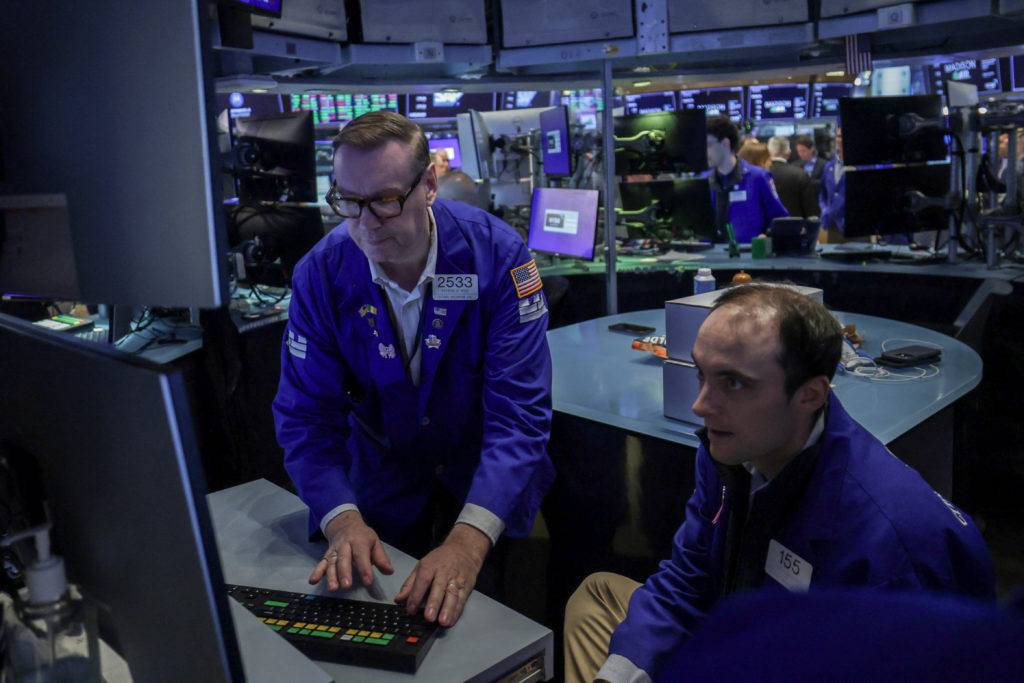
SAN FRANCISCO — In the high-stakes arms race for artificial intelligence dominance, Alphabet Inc. has crossed a historic financial Rubicon. According to disclosures released in late July 2026, Google has escalated its projected capital expenditure for the fiscal year to an astonishing $205 billion. This aggressive upward revision has fundamentally upended consensus Wall Street models, igniting urgent discussions among portfolio managers, equity analysts, and industry executives about the financial sustainability of the generative AI boom.
For months, institutional investors anticipated heavy spending as tech giants vied for compute supremacy. However, the sheer velocity and scale of Google's latest fiscal pivot have exceeded even the most aggressive bullish estimates. As the company races to secure foundational dominance in large language models, autonomous agents, and enterprise infrastructure scalability, the financial markets are being forced to re-evaluate the risk-reward matrix of the entire technology sector.
The Catalyst: Why Google Is Supercharging Its AI Spend
Test Our Free AI & Tech Utilities Suite
Calculate LLM API token costs, analyze article dwell-time, or simulate tech DCA returns.
The decision to expand capital allocation to the $205 billion threshold is not arbitrary; it is a calculated, existential bet on the future of computing architecture. Over the past twenty-four months, the bottleneck in artificial intelligence has shifted decisively from algorithmic breakthroughs to raw power, cooling capacity, and silicon availability. Google’s leadership, facing relentless competitive pressure from OpenAI, Microsoft, and Amazon Web Services (AWS), has opted for aggressive capacity expansion over short-term margin preservation.
At the core of this spending surge is a massive overhaul of Google’s global data center footprint. The company is actively deploying next-generation liquid-cooled server racks designed to house thousands of custom-designed Tensor Processing Units (TPUs) alongside advanced NVIDIA accelerators. These facilities require unprecedented electrical power loads, prompting Alphabet to negotiate directly with nuclear, geothermal, and renewable energy providers to secure uninterrupted, green baseload power.
Furthermore, the integration of generative AI into core consumer products—such as AI-driven Search Overviews—and enterprise-facing offerings via Google Cloud demands extraordinary daily inference capacity. Unlike traditional web indexing, running complex multi-modal queries for billions of active users requires real-time computational power that dwarfs legacy search infrastructure. Alphabet's capital allocation strategy is explicitly designed to ensure that supply constraints never bottleneck its product rollout or cede market share to nimble competitors.
Financial Mechanics: Valuation Multiples and Margin Pressures

The immediate reaction from the financial community has been a mixture of awe and acute apprehension. For years, Alphabet has been celebrated by equity analysts for its formidable free cash flow generation and disciplined capital allocation. However, deploying over $200 billion in a single fiscal year fundamentally alters the company's financial profile.
When evaluating this expenditure through the lens of modern portfolio management, several critical financial dynamics emerge:
- Depreciation Headwinds: Massive investments in servers, networking gear, and real estate translate into substantial future depreciation charges. Analysts project that these non-cash expenses will exert downward pressure on operating margins over the next three to five years.
- Free Cash Flow Compression: While Alphabet's revenue streams remain robust—anchored by digital advertising and accelerating Google Cloud adoption—the sheer volume of cash directed toward capex will temporarily compress free cash flow yields, forcing institutional investors to adjust valuation models and discounted cash flow (DCF) targets.
- The ROI Imperative: Wall Street is demanding absolute clarity on enterprise ROI. Institutional shareholders are no longer satisfied with vague promises of "strategic positioning"; they require measurable proof that capital investments in AI infrastructure are yielding high-margin, sticky enterprise contracts and incremental advertising monetization.
Verified Data & Metrics Breakdown
To contextualize the scale of Alphabet’s fiscal trajectory, the following data breakdown contrasts historical spending patterns with the newly revised 2026 projections, alongside peer comparisons within the hyperscale cloud sector.
| Metric / Indicator | Historical Baseline (2024) | Prior Consensus (Early 2026) | Revised Projection (July 2026) |
|---|---|---|---|
| Alphabet Annual Capex | ~$51 billion | ~$145 billion | Up to $205 billion |
| Primary Expenditure Driver | Standard cloud & search scaling | GenAI foundational models | Hyperscale TPU clusters & power secured data centers |
| Primary Funding Source | Operating cash flow | Operating cash flow & reserves | Operating cash flow, structured debt & liquidity reserves |
| Market Reaction | Stable bullish sentiment | Cautious optimism | Intense scrutiny & valuation reassessment |
Industry & Market Implications: Winners and Loses
A capital expenditure wave of this magnitude does not occur in a vacuum; it triggers seismic shockwaves across the entire global technology and energy ecosystems. Understanding who benefits and who absorbs the friction is essential for strategic market positioning.
The Winners
Semiconductor Innovators & Hardware Manufacturers: Companies specializing in advanced silicon, high-bandwidth memory (HBM), optical networking components, and server manufacturing remain the immediate beneficiaries. Google's aggressive spending guarantees multi-billion-dollar revenue streams for its supply chain partners.
Energy Infrastructure & Utilities: Because hyperscale AI data centers demand gigawatt-scale power, energy providers—particularly those offering clean, reliable, and nuclear baseload power—are seeing unprecedented pricing power and long-term procurement agreements.
Enterprise Cloud Clients: With multiple hyperscalers aggressively expanding capacity and competing for market share, enterprise customers enjoy robust feature rollouts, highly competitive pricing for inference workloads, and accelerating innovation cycles.
The Losers and Risk Bearers
Near-Term Margin Stability: Alphabet’s equity holders absorb immediate risk as capital outlays outpace near-term cash returns, creating potential volatility in quarterly earnings reports.
Smaller Competitors and Startups: Venture-backed AI startups face a formidable barrier to entry. As capital requirements scale into the hundreds of billions, the ability to train frontier models independently becomes restricted to an elite oligopoly of trillion-dollar tech titans.
Frequently Asked Questions (People Also Ask)
Why is Google increasing its 2026 capital expenditure to $205 billion?
Google is scaling up its capital expenditure to secure long-term infrastructure dominance in artificial intelligence. This includes building next-generation data centers, procuring massive volumes of custom silicon (TPUs) and GPUs, and securing dedicated power sources to support heavy real-time inference and training workloads for generative AI applications.
How does this spending impact Alphabet's stock valuation and financial health?
While Alphabet maintains robust revenue generation through advertising and Google Cloud, the massive outlay introduces short-term friction. It exerts downward pressure on operating margins due to higher depreciation expenses and compresses free cash flow, prompting analysts to recalibrate valuation models based on future enterprise monetization milestones.
What sectors benefit the most from Google's AI infrastructure push?
The primary beneficiaries include semiconductor manufacturers, optical networking firms, server hardware providers, and energy utilities capable of supplying clean, reliable baseload power to hyperscale data centers.
Are investors concerned about a potential AI "bubble" due to these high costs?
Yes. Institutional investors are increasingly focused on enterprise ROI. The central concern across Wall Street is whether the enormous capital investments being deployed by tech giants will generate sufficient, sustainable revenue growth to justify the valuation multiples assigned to the sector.
Future Outlook: Milestones to Watch
As the market digests Google’s $205 billion capex commitment, attention will pivot toward execution and measurable returns. Over the next twelve to eighteen months, executive leadership will be judged on three critical milestones:
- Google Cloud Growth Acceleration: Demonstrating that expanded infrastructure directly translates into accelerated market share acquisition in enterprise cloud computing, particularly in high-value financial services, healthcare, and industrial sectors.
- Monetization Efficiency of AI Features: Proving that consumer-facing AI implementations (such as enhanced search monetization and agentic workflows) deliver sustainable advertising and subscription revenue streams that offset infrastructure costs.
- Power and Supply Chain Resilience: Successfully navigating global constraints on electrical grid access, specialized silicon, and liquid-cooling components without experiencing project delays or cost overruns.
Google's historic spending surge represents a high-conviction wager on the absolute centrality of artificial intelligence in the global economy. Whether this unprecedented capital allocation cements a lasting technological monopoly or tests the patience of financial markets will define the corporate narrative of the decade.