Executive Takeaways
Test Our Free AI & Tech Utilities Suite
Calculate LLM API token costs, analyze article dwell-time, or simulate tech DCA returns.
- Capital Re-allocation Strategy: Automotive OEMs and battery developers are pivoting capital expenditure (CAPEX) toward hybrid chemistries—such as lithium manganese iron phosphate (LMFP) and sodium-ion—while using Stationary Energy Storage Systems (ESS) as an immediate high-margin hedge against slower EV adoption rates.
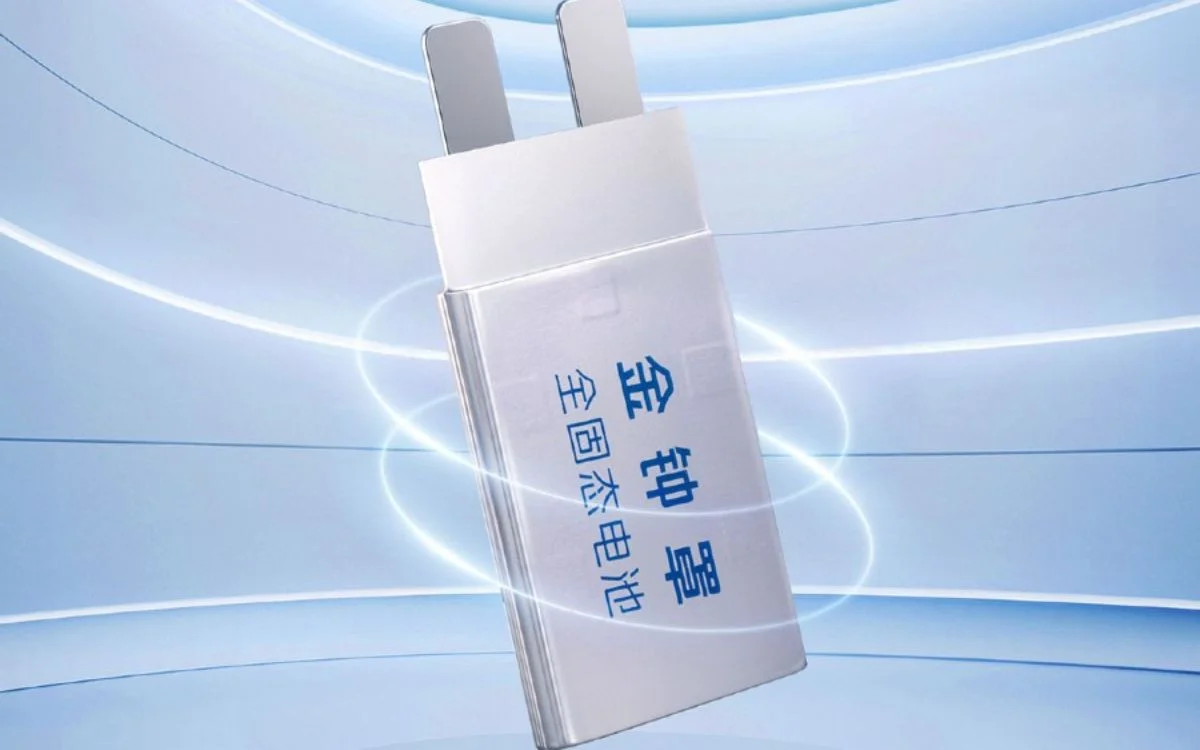
- Solid-State Commercialization Delayed: True all-solid-state battery (ASSB) integration for mass-market passenger EVs has officially shifted beyond 2028–2030 due to high manufacturing yield losses, complex dry-electrode processing challenges, and high cost per kilowatt-hour ($/kWh).
- Liquidity Optimization via ESS: Developers are absorbing excess manufacturing capacity by directing low-cost, long-cycle LFP and sodium-ion cells to grid-scale energy storage projects, stabilizing EBITDA margins and preserving balance sheet liquidity.
- Regulatory and Supply Chain Drivers: Stricter supply chain localization mandates under the U.S. Inflation Reduction Act (IRA) and the EU Critical Raw Materials Act are driving rapid phase-outs of un-localized nickel and cobalt chemistries in favor of localized, non-critical mineral configurations.
The Great Battery Realignment of 2026

The global energy transition has reached a critical inflection point. For the past decade, the automotive industry operated under a singular, relentless mandate: maximize volumetric energy density at all costs to eliminate EV range anxiety. Millions of dollars in research and venture funding flowed into high-nickel ternary chemistries (NMC 811, NCA) and blue-sky all-solid-state architectures promised to render liquid electrolytes obsolete by the mid-2020s.
However, the industrial reality of 2026 paints a vastly different picture. Fluctuating consumer demand in key automotive markets, severe supply chain volatility for nickel and cobalt, and complex manufacturing yield bottlenecks have forced a re-evaluation of corporate strategies. According to industry intelligence from Automotive News, premier cell developers and Tier-1 battery manufacturers are executing a dual-track strategic pivot: diversifying commercial cell chemistries away from raw-material-intensive formulations and actively redirecting manufacturing capacity toward stationary grid energy storage systems (ESS).
This structural transformation is not a retreat from electrification; it is a mature, capital-efficient calibration. Battery manufacturers are shifting focus from high-cost, speculative breakthrough technologies to scalable, localized, and economically viable cell designs. In doing so, they are building resilient enterprise revenue models capable of surviving the prolonged bridge to next-generation solid-state technology.
From Liquid to Solid: The Multi-Track Evolution of Cell Chemistries
The lithium-ion cell architecture is no longer a monolith. Instead, the market has bifurcated into distinct chemistry tiers optimized for specific cost structures, energy densities, and duty cycles.
1. The Dominance of LFP and the Rise of LMFP
Once dismissed in Western markets for its lower gravimetric energy density, Lithium Iron Phosphate (LFP) has achieved dominant market share across entry-level and mid-tier electric vehicles, as well as stationary storage. Free of nickel and cobalt, LFP offers superior thermal stability, lower thermal runaway risks, exceptionally long cycle life (3,000 to 6,000+ cycles), and raw material cost advantages.
To overcome LFP’s inherent volumetric limitations, developers have introduced Lithium Manganese Iron Phosphate (LMFP). By substituting a portion of iron with manganese, chemistry engineers boost the nominal cell voltage from 3.2V to 3.7V. This delivers an immediate 15% to 20% increase in energy density without introducing expensive, supply-constrained transition metals. LMFP is fast becoming the baseline chemistry for mass-market European and North American EV platforms targeting the $25,000–$35,000 price range.
2. Sodium-Ion: The Ultra-Low-Cost Contender
Sodium-ion (Na-ion) technology has moved from academic laboratories directly into commercial gigafactories. Operating on chemistries that completely eliminate lithium, sodium-ion cells utilize earth-abundant sodium salts paired with Prussian blue analogues or layered oxide cathodes and hard carbon anodes. While its energy density (150–170 Wh/kg) trails standard LFP (190–220 Wh/kg), sodium-ion exhibits cold-weather performance characteristics—retaining over 85% capacity at -20°C—and exceptional safety profiles.
Na-ion is gaining rapid traction in urban micro-EVs, two-wheelers, and low-cost grid storage applications where mass and volume are secondary to upfront CAPEX optimization and raw material security.
3. The Solid-State Bottleneck: Silicon Anodes and the ASSB Reality
All-Solid-State Batteries (ASSB)—utilizing sulfide, oxide, or polymer solid electrolytes alongside high-capacity lithium metal or silicon-dominant anodes—remain the ultimate goal for vehicle electrification. Promising gravimetric densities exceeding 400 Wh/kg, sub-10-minute fast charging, and non-flammable operation, solid-state cells could fundamentally transform long-haul freight and luxury performance EVs.
However, the path to gigawatt-hour (GWh) scale manufacturing remains challenging. Interfacial impedance degradation, micro-structural dendrite formation penetrating solid electrolytes under high-rate charging, and extreme pressure requirements (often requiring internal mechanical pressing apparatuses) have severely impacted production yields. Furthermore, advanced dry battery electrode (DBE) coating technologies and roll-to-roll inline processing under ultra-dry atmospheric conditions require massive capital investments.
Consequently, major cell developers have adjusted their commercialization timelines. High-volume, mass-market integration of fully solid-state batteries has been reassessed from 2026 to the late 2020s or early 2030s. In the interim, "semi-solid-state" or hybrid liquid-solid electrolytes featuring high-content silicon-anodes (10–30% silicon-oxide/carbon composites) are acting as a bridge, delivering 300–350 Wh/kg densities while leveraging existing wet-coating manufacturing infrastructure.
The ESS Hedge: Pivoting Capacity to Grid Energy Storage
The single most dramatic strategic realignment among battery developers in 2026 is the rapid, high-capital pivot toward Stationary Energy Storage Systems (ESS). Driven by the worldwide expansion of renewable energy generation (solar and wind) and the immense power draw of next-generation cloud compute architectures and AI data centers, global utility demand for utility-scale battery storage has surged.
For battery developers facing temporary demand plateaus or pricing pressure in the automotive sector, grid-scale ESS provides an immediate, high-margin revenue offset. The economic and engineering requirements of ESS differ significantly from automotive traction packs:
- Cycle Life over Volumetric Efficiency: Grid operators prioritize long cycle life (6,000 to 10,000+ deep discharge cycles) over compact size. Standard LFP and emerging sodium-ion chemistries excel in these parameters.
- Capital Expenditure Efficiency: Manufacturing cells for ESS applications requires lower engineering overhead and less complex mechanical integration than automotive-grade battery packs, which must pass rigorous crash, vibration, and thermal propagation mandates.
- Predictable Enterprise ROI: Utility-scale energy storage contracts feature long-term power purchase agreements (PPAs) and steady capacity payments, providing cell developers with predictable cash flow and high EBITDA visibility.
By shifting factory lines from under-utilized automotive EV cell production to standardized ESS containerized modules (such as 20-foot 5MWh DC blocks), manufacturers are maintaining high capacity utilization rates, absorbing fixed factory overhead, and protecting balance sheet liquidity while automotive OEMs finalize their long-term architecture strategies.
Chemistry Comparison Matrix
The modern battery ecosystem spans a spectrum of chemistries, each tailored to distinct commercial, spatial, and financial parameters:
| Cell Chemistry | Gravimetric Density (Wh/kg) | Volumetric Density (Wh/L) | Est. Pack Cost ($/kWh, 2026) | Typical Cycle Life | Primary Commercial Application |
|---|---|---|---|---|---|
| Sodium-Ion (Na-Ion) | 150 - 170 | 280 - 330 | $55 - $70 | 4,000 - 6,000 | Grid ESS, Urban Micro-EVs, Telecom Power |
| LFP (Lithium Iron Phosphate) | 180 - 220 | 350 - 420 | $65 - $80 | 4,000 - 8,000+ | Standard-Range EVs, Commercial Fleet, Utility ESS |
| LMFP (Lithium Manganese FP) | 220 - 250 | 420 - 490 | $75 - $90 | 3,000 - 5,000 | Mid-Tier Mass Market Passenger EVs |
| High-Nickel Ternary (NMC 811 / Silicon) | 280 - 340 | 650 - 780 | $105 - $130 | 1,500 - 2,500 | Premium Performance EVs, Long-Haul Trucking, Aviation |
| All-Solid-State (ASSB - Sulfide/Li-Metal) | 400 - 500+ | 850 - 1,100+ | $180 - $250+ (Pilot Scale) | 1,000 - 2,000 (Targeting 3,000+) | Luxury Hypercars, Defense, Specialized Aerospace (Post-2028) |
Market & Industrial Implications: Winners, Losers, and Capital Allocation
The ongoing chemistry evolution and structural pivot toward ESS are dramatically restructuring corporate valuation multiples, risk mitigation paradigms, and supply chain investments across the globe.
The Winners
- Grid Operators and Data Center Infrastructure Providers: The influx of cost-effective, long-cycle LFP and Na-ion cell production has significantly lowered capital costs for stationary storage, accelerating grid decarbonization and stabilizing energy costs for AI data centers.
- Chemical Refiners for Earth-Abundant Materials: Chemical processors specialized in synthetic hard carbons, high-purity manganese salts, and refined iron phosphate inputs are seeing rising demand, insulating them from volatile nickel and cobalt commodity markets.
- Flexible Equipment Manufacturers: Turnkey gigafactory tooling providers capable of converting cell assembly lines between automotive prismatic designs and large-format ESS pouch/cylindrical cells are enjoying elevated order backlogs.
The Losers
- Pure-Play, Un-Diversified Advanced Battery Startups: Early-stage solid-state developers that locked themselves into rigid, exclusive luxury EV off-take agreements—without secondary ESS products or bridge chemistries—face severe cash-burn headwinds, down-rounds, or consolidation.
- High-Cost Cobalt/Nickel Extractors: Upstream mining enterprises heavily leveraged to high-nickel ternary chemistry dominance face structural pricing pressure as automotive OEMs recalibrate their baseline fleets toward manganese and iron-based alternatives.
Frequently Asked Questions (People Also Ask)
Why are EV battery manufacturers shifting focus toward stationary energy storage (ESS)?
Battery manufacturers are deploying capacity to stationary energy storage systems (ESS) to diversify enterprise revenue, maximize factory utilization, and counter temporary fluctuations in automotive EV adoption. Utility-scale ESS projects require long-cycle, lower-cost cell chemistries like LFP and sodium-ion. This allows manufacturers to generate stable operational cash flow, optimize yield rates, and preserve balance sheet liquidity without relying solely on passenger vehicle demand.
What is the realistic timeline for mass-market solid-state EV batteries?
While low-volume pilot runs and high-end niche automotive applications will debut around 2026–2027, high-volume mass-market integration of all-solid-state batteries (ASSB) into standard consumer EVs is projected between 2028 and 2032. Industry delays stem from high pilot manufacturing costs, low yield rates, complex cell interface degradation under fast-charging conditions, and the capital expenditure needed to deploy new dry-electrode assembly tooling at scale.
How does sodium-ion compare to traditional lithium-ion batteries?
Sodium-ion (Na-ion) batteries eliminate the need for lithium, cobalt, and nickel by relying on abundant sodium salts. While Na-ion offers lower gravimetric energy density (150–170 Wh/kg) than standard lithium-ion chemistries, it provides substantial raw material cost reductions, improved thermal safety, superior cold-weather operating characteristics, and high cycle stability. It is ideal for short-range urban mobility, energy storage, and industrial backup systems.
How do regulatory mandates like the U.S. IRA impact battery chemistry selection?
Regulatory frameworks such as the U.S. Inflation Reduction Act (IRA) and the EU Critical Raw Materials Act enforce strict rules regarding raw material sourcing, critical mineral extraction, and local component processing for consumer tax credit eligibility. These compliance mandates have pushed battery developers to move away from un-localized supply chains (e.g., concentrated cobalt or nickel refining) and fast-track localized production of LFP, LMFP, and domestic silicon-anode materials within approved trade jurisdictions.
Future Outlook & Strategic Roadmap (2026–2030)
The battery landscape through the end of the decade will be defined by pragmatic engineering and portfolio diversification. The industry's strategic roadmap centers on three core operational pillars:
- Near-Term (2026–2027): Industrialization of LMFP and Na-Ion Scale-Up. Automotive OEMs will deploy LMFP as the primary entry-to-mid-tier passenger EV chemistry, while sodium-ion establishes a solid footprint in commercial energy storage and urban transport fleets. ESS projects will continue to absorb global cell overcapacity.
- Medium-Term (2027–2029): Expansion of Semi-Solid and High-Silicon Anodes. Hybrid solid-liquid electrolytes with high silicon-content anodes will scale in high-end automotive platforms, offering 350+ Wh/kg energy density without requiring a complete overhaul of traditional gigafactory equipment.
- Long-Term (2030 and Beyond): Commercial All-Solid-State Integration. As continuous roll-to-roll dry processing, advanced electrolyte interfacial coatings, and automated yield management mature, full solid-state cells will enter high-volume production, unlocking extreme fast charging, improved safety, and higher range metrics across the transportation sector.
Ultimately, the battle for battery dominance is no longer a sprint toward a single technological breakthrough. It is an enterprise-scale exercise in capital discipline, chemistry diversification, and strategic manufacturing flexibility—where utility grid storage and advanced chemistry architectures work together to power the global energy transition.