The economic landscape of custom hardware procurement has undergone a profound structural transformation. For enthusiasts evaluating how much it costs to build a high-end gaming PC in 2026, the answer is no longer bounded by traditional historical pricing norms. What was once a $2,500 investment yielding a top-tier, uncompromised battlestation at the start of the decade has now morphed into a capital-intensive endeavor approaching enterprise-grade budgets. Driven by compounding macro-economic pressures, semiconductor manufacturing shifts, and the relentless gravitational pull of the artificial intelligence boom, the modern desktop PC has become a luxury asset class.
The Catalytic Shift: Silicon Scarcity and Enterprise Capital Allocation
To understand why building an elite gaming PC in 2026 carries such a steep financial penalty, one must examine the broader industrial economics governing global semiconductor fabrication. Advanced node capacity—specifically sub-3-nanometer and gate-all-around (GAA) architectures—is heavily contested. Hyperscale cloud providers, enterprise AI developers, and sovereign computing initiatives are aggressively bidding for foundry wafer allocations.
This dynamic has forced foundries like TSMC, Samsung, and Intel Foundry to prioritize wafer starts that maximize enterprise ROI and valuation multiples. Consumer-grade GPUs and CPUs, while still profitable, compete directly with accelerator chips that command profit margins twice or triple that of retail PC components. Consequently, overall market liquidity for high-performance silicon has tightened, driving up component costs across the entire supply chain.
Furthermore, the memory market has experienced seismic turbulence. The rapid scaling of Large Language Models (LLMs) requires massive quantities of high-bandwidth memory. Memory manufacturers have pivoted capital expenditure toward server-class modules, leaving consumer RAM and VRAM supply vulnerable to sudden shocks. In 2026, securing a graphics card equipped with 24GB or more of next-generation VRAM means absorbing the cost of components whose production schedules are dictated by corporate data center demands rather than gamer budgets.
Comprehensive Cost Breakdown of a 2026 Flagship Build
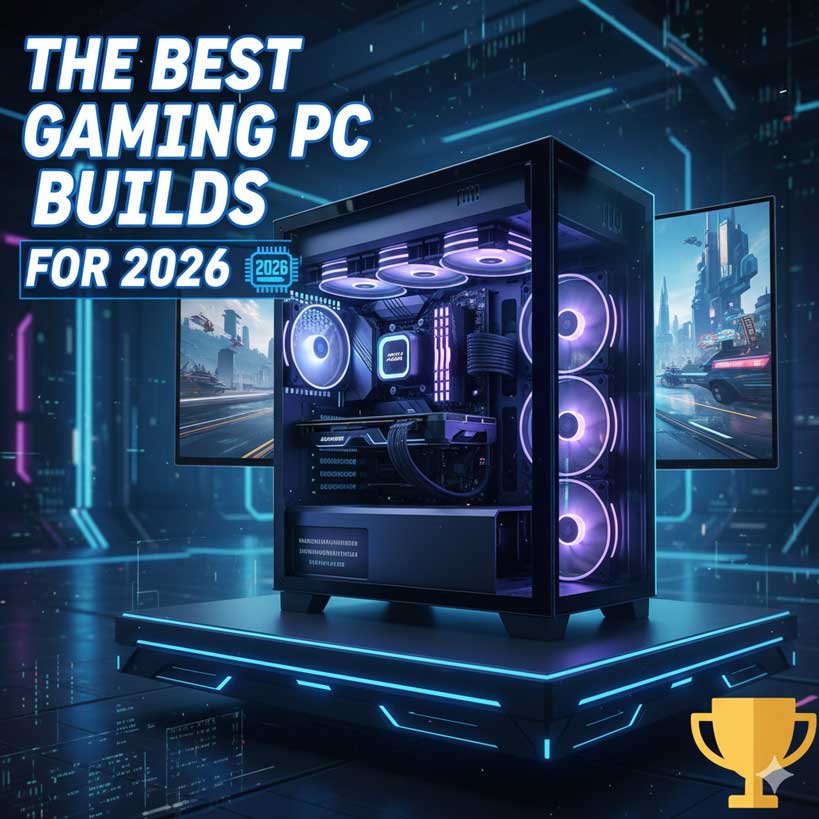
A rigorous examination of current market pricing reveals where capital is being deployed when engineering a no-compromise gaming rig. Below is a detailed valuation of the core components required to build a state-of-the-art system capable of uncompromised 4K ray-tracing and extreme-framerate competitive gaming.
| Component Category | Target Specification (2026) | Estimated Cost Range (USD) | Market Volatility & Impact |
|---|---|---|---|
| Graphics Processing Unit (GPU) | Flagship Next-Gen (e.g., RTX 5090 / RX 8900 XTX equivalent) | $1,800 – $2,400 | Extreme; driven by VRAM costs and AI compute demand. |
| Central Processing Unit (CPU) | 16-Core / 32-Thread Enthusiast Architecture with 3D V-Cache | $650 – $850 | Moderate-High; socket longevity adds premium. |
| Motherboard | Top-Tier Chipset (PCIe 5.0, Wi-Fi 7, Robust VRM Design) | $500 – $750 | Stable; reflects advanced power delivery requirements. |
| System Memory (RAM) | 64GB – 128GB High-Speed DDR5 (Optimized Latency) | $350 – $600 | High; direct competition with server module demand. |
| Storage (SSD) | 4TB Gen5 NVMe M.2 (High IOPS, DRAM Cache) | $350 – $500 | Moderate; NAND flash pricing normalization cycles. |
| Power Supply (PSU) & Chassis | 1600W+ ATX 3.1 Certified, Titanium Efficiency / Premium Case | $450 – $700 | Stable; required to handle high transient power spikes. |
| Total Capital Outlay | Fully Integrated High-End System | $4,100 – $5,800 | Reflects peak enthusiast market realities. |
Industry & Market Implications: Winners, Losers, and Economic Shifts
The financial gravity of a $4,000+ entry barrier for top-tier PC gaming alters the competitive landscape across multiple sectors. Semiconductor manufacturers sitting at the apex of the supply chain continue to record robust revenue growth, insulated by enterprise contracts. However, component distributors and independent system integrators face acute margin compression as consumer purchasing hesitation grows.
For PC peripheral and monitor manufacturers, the slowdown in consumer hardware adoption represents a distinct headwind. When end-users allocate upwards of $5,000 to internal system components, secondary upgrade budgets for high-refresh-rate displays, precision input devices, and immersive audio systems experience noticeable contraction. Consequently, market consolidation among niche hardware brands is accelerating, with larger conglomerates absorbing boutique system builders to capture recurring revenue streams.
Simultaneously, cloud gaming and remote desktop infrastructure providers are positioning themselves as viable alternatives for cost-conscious consumers. As local hardware costs escalate, the economic proposition of subscription-based cloud compute architecture gains traction among casual and mid-tier enthusiasts, creating a bifurcated market where elite desktop ownership becomes an increasingly exclusive domain.
Frequently Asked Questions (People Also Ask)
Why are high-end gaming PCs significantly more expensive in 2026 than in previous years?
The primary driver is the intense competition for advanced semiconductor manufacturing capacity and memory resources between consumer hardware and enterprise-grade AI infrastructure. Foundries prioritize high-margin server accelerators, creating structural supply constraints that drive up retail pricing for GPUs, CPUs, and high-speed memory modules.
Is it possible to build a respectable mid-to-high-end gaming PC on a tighter budget in 2026?
Yes. While flagship builds exceed $4,000, a highly capable performance system utilizing previous-generation architecture or carefully balanced mid-tier components (such as 1440p-focused GPUs and standard DDR5 configurations) can still be assembled for $1,500 to $2,200, offering strong price-to-performance ratios without paying the bleeding-edge silicon premium.
How do enterprise AI trends directly impact consumer PC hardware pricing?
Enterprise AI models require vast quantities of high-bandwidth memory (HBM) and advanced logic wafers. Because memory fabricators and foundries allocate production lines to fulfill lucrative enterprise contracts, the overall supply of silicon available for consumer-facing components drops, driving up spot prices and retail costs through basic supply-and-demand mechanics.
What component represents the greatest financial risk when planning a custom PC build?
The Graphics Processing Unit (GPU) remains the single largest capital expenditure and volatility risk. Given that flagship GPUs consume nearly half of the total budget and are subject to sudden supply fluctuations driven by enterprise demand, timing the purchase or opting for tiered alternatives is critical for risk mitigation.
Future Outlook: What Comes Next and Key Milestones to Watch
Looking ahead, the trajectory of high-end gaming PC pricing will remain tightly coupled with broader macroeconomic trends in semiconductor manufacturing. Industry analysts will monitor upcoming foundry capacity expansions scheduled for late 2026 and 2027, which aim to alleviate the severe supply imbalances currently plaguing the memory and logic markets.
Key milestones to watch include the rollout of next-generation packaging technologies, potential regulatory interventions regarding technology supply chains, and shifts in enterprise AI capital expenditure cycles. If corporate demand for AI infrastructure stabilizes, foundry capacity may gradually re-balance toward consumer silicon, offering a pathway toward price normalization. Until then, building a bleeding-edge gaming PC remains an investment reserved for the most dedicated enthusiasts and professionals willing to absorb the realities of a silicon-constrained global economy.