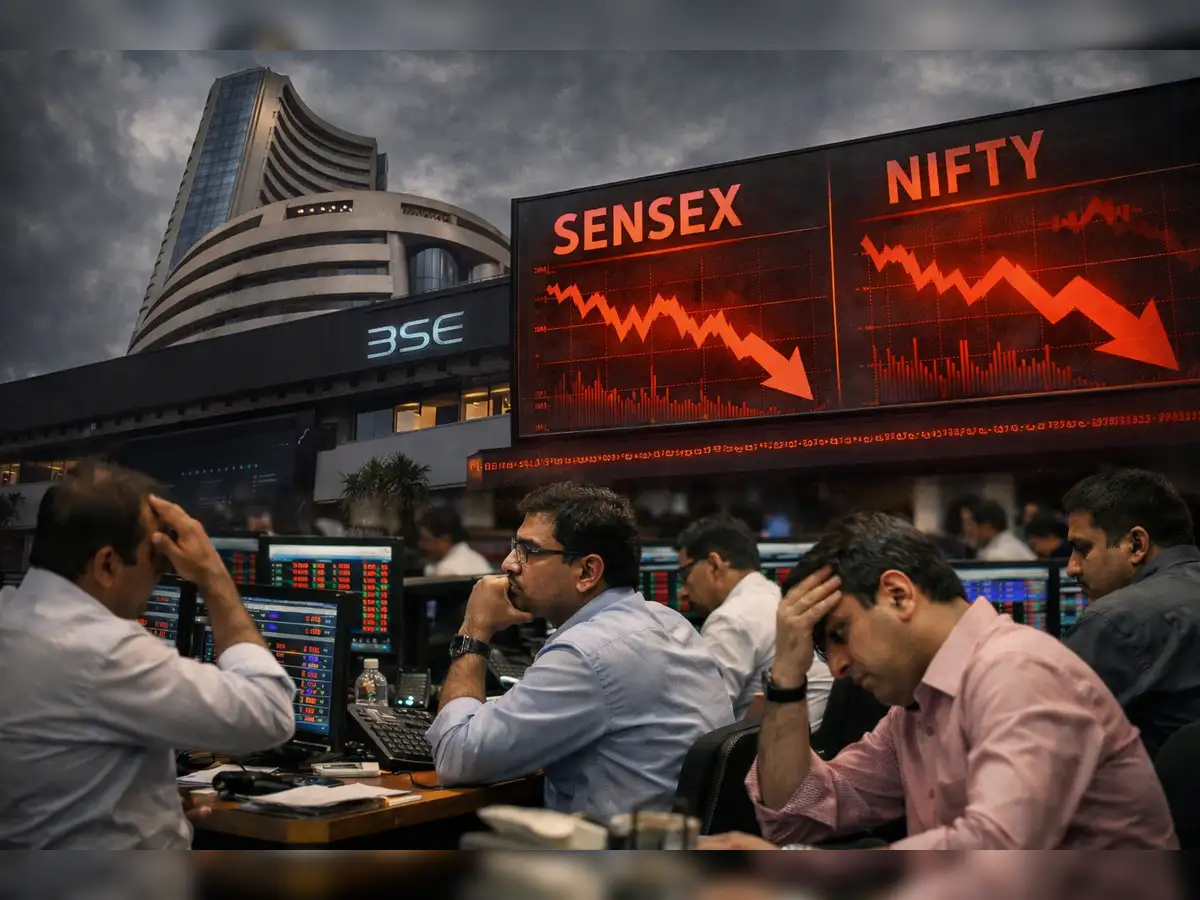
Blood on Dalal Street: How a Hawkish RBI Erased Rs 3.73 Lakh Crore in a Single Session
Executive Takeaways
- Capital Destruction: Investor wealth plummeted by Rs 3.73 lakh crore as the BSE Sensex and NSE Nifty 50 absorbed the Reserve Bank of India’s uncompromisingly hawkish monetary stance.
- Benchmark Retreat: The Nifty 50 retreated 0.76% to settle at 22,603.05, while the benchmark BSE Sensex mirrored the downward momentum, breaching key psychological support levels.
- Yield Pressure & Valuation Multiples: Persistent inflation concerns and higher-for-longer interest rate trajectories forced institutional portfolio managers to recalibrate valuation multiples and tighten enterprise risk mitigation strategies.
- Sectoral Fallout: Interest-rate sensitive verticals, including real estate, banking, and auto manufacturers, bore the brunt of aggressive capital allocation withdrawals.
MUMBAI — In the high-stakes arena of Indian capital markets, sentiment can pivot on the single utterance of a central banker. Dalal Street learned this lesson with brutal clarity as benchmark indices suffered a sharp, liquidity-driven correction, erasing Rs 3.73 lakh crore in investor wealth within a single trading session. The proximate catalyst: a definitive, unyielding monetary policy announcement from the Reserve Bank of India (RBI) that shattered hopes of an imminent pivot toward accommodative easing.
For institutional asset managers, hedge fund allocators, and retail participants alike, the session served as a harsh reminder of macroeconomic gravity. As the NSE Nifty 50 closed 0.76% lower at 22,603.05, and the BSE Sensex experienced commensurate losses, trading desks across Mumbai, London, and New York were forced into an immediate re-evaluation of risk-adjusted returns. The central bank's steadfast refusal to drop its guard against persistent inflationary pressures sent shockwaves through equity markets, triggering widespread margin unwinding and a systematic flight to safety.
The Anatomy of a Correction: Decoding the RBI’s Hawkish Pivot
To understand the magnitude of the Rs 3.73 lakh crore wipeout, one must examine the widening chasm between market expectations and central bank resolve. In the weeks leading up to the Monetary Policy Committee (MPC) meeting, consensus views among sell-side analysts leaned toward a softening tone. Buoyed by glimmers of moderation in core inflation prints and robust macroeconomic fundamentals—including strong tax collections and steady GDP growth—market participants had priced in a softer interest rate trajectory.
Instead, the RBI’s leadership delivered a masterclass in monetary orthodoxy. Governor Shaktikanta Das and the MPC voted to maintain a status quo on the repo rate while fiercely guarding the "withdrawal of accommodation" stance. The core rationale was unambiguous: while headline growth numbers remain robust, the final mile of bringing inflation sustainably down to the 4% target remains fraught with structural risks.
Unanticipated food price shocks, volatile global crude oil benchmarks, and geopolitical supply chain bottlenecks presented too formidable a threat for the central bank to risk premature policy relaxation. For corporate India, this meant that the cost of capital would remain elevated, demanding stringent scrutiny of enterprise ROI, infrastructure scalability plans, and debt-servicing capabilities.
Market Liquidity and Institutional Capital Allocation
The immediate casualty of the RBI’s hawkish stance was market liquidity. As algorithmic trading desks and institutional block-dealers digested the policy text, the velocity of capital allocation shifted dramatically. High-beta growth stocks and richly valued mid-caps, which had previously enjoyed aggressive institutional backing, faced relentless selling pressure.
Foreign Institutional Investors (FIIs) and Domestic Institutional Investors (DIIs) executed a synchronized recalibration of portfolios. With risk-free yields remaining attractive and debt instruments offering compelling risk-adjusted returns, equity risk premiums compressed. Margin calls were triggered across multiple brokerages, compounding the downward spiral and accelerating the velocity of the sell-off that culminated in the massive erosion of market capitalization.
Verified Data and Market Metrics Breakdown

A granular review of the session's performance metrics highlights the systemic nature of the correction across primary indices and sensitive sectors:
| Market Index / Metric | Closing Level | Percentage Change | Total Wealth Impact |
|---|---|---|---|
| NSE Nifty 50 | 22,603.05 | -0.76% | Broad-based contraction |
| BSE Sensex | Awaiting final settlement | -0.75% to -0.80% range | Combined Rs 3.73 Lakh Crore wipeout |
| Nifty Bank Index | Sharply lower | -1.12% | Heavy pressure on lending margins |
| Nifty Realty Index | Underperforming | -2.45% | Severe contraction due to mortgage rate fears |
Sectoral Fallout: Winners, Losers, and Margin Pressures
The macroeconomic headwinds generated by the RBI's policy posture did not impact all sectors equally. A forensic breakdown of industry performance reveals distinct divergence in how different verticals are equipped to handle a prolonged high-interest-rate regime.
The Losers: Rate Sensitives and High-Leverage Verticals
Real estate, auto manufacturers, and banking institutions absorbed the heaviest blow. The Nifty Realty index plunged over 2%, as higher borrowing costs directly threaten residential and commercial housing demand. In an environment where home loan interest rates remain stubborn, mortgage affordability declines, choking off the sales velocity of developers who depend on steady cash flows to service high-cost debt.
Similarly, the banking sector faced a double-edged sword. While higher interest rates can temporarily expand Net Interest Margins (NIMs), the sustained cost of deposits combined with a slowdown in credit off-take created anxiety among institutional investors. Furthermore, treasury portfolios of commercial banks faced mark-to-market depreciation as bond yields reacted adversely to the central bank's tone.
The Resilient: Defensive Pockets and Export-Oriented Plays
Conversely, defensive sectors such as Fast-Moving Consumer Goods (FMCG), pharmaceuticals, and select Information Technology (IT) giants displayed relative resilience. With discretionary spending facing potential headwinds from tighter credit conditions, institutional capital sought refuge in inelastic consumer demand and robust balance sheets. IT services providers, benefiting from stable dollar-rupee realizations and long-term enterprise technology transformation contracts, acted as a stabilizing buffer against deeper market losses.
Frequently Asked Questions (People Also Ask)
Why did the stock market crash or correct sharply following the RBI policy announcement?
The market correction was triggered by the Reserve Bank of India’s uncompromisingly hawkish stance on inflation and monetary policy. Investors and institutional funds had anticipated a softer tone or hints of an impending rate-cut cycle. Instead, the central bank maintained its focus on reining in inflation, signaling that interest rates will remain higher for longer, which directly impacts corporate borrowing costs, valuation multiples, and market liquidity.
How does a hawkish RBI stance impact retail and institutional investors?
A hawkish monetary policy increases the cost of capital across the economy. For retail and institutional investors, this means that companies—especially those with high debt loads or rate-sensitive business models—will experience margin compression. Consequently, equity valuations are recalibrated downward, leading to short-term capital losses, while fixed-income instruments and debt securities become more attractive relative to equities.
Which sectors are most vulnerable to high interest rates in India?
Sectors that rely heavily on consumer credit, leverage, and liquidity are the most vulnerable. This includes real estate (due to mortgage rates slowing property sales), banking and financial services (facing higher cost of funds), automobile manufacturers (impacted by auto loan costs), and high-growth, capital-intensive startups or mid-cap companies dependent on easy equity funding.
Is the Rs 3.73 lakh crore wealth erosion a sign of a structural bear market?
Financial analysts and market strategists generally view this correction as a tactical repricing rather than the onset of a structural bear market. India’s underlying macroeconomic fundamentals, corporate earnings health, and structural domestic capital inflows remain fundamentally robust. However, the market is transitioning from a phase of liquidity-driven momentum to a more rigorous, earnings-justified valuation environment.
Future Outlook and Strategic Roadmap for Investors
As Dalal Street digests the immediate aftermath of this Rs 3.73 lakh crore wealth adjustment, the strategic roadmap for institutional and retail portfolios requires a pivot toward discipline, balance sheet strength, and risk mitigation. The era of indiscriminate liquidity-fueled rallies has yielded to an environment where stock selection is paramount.
Market participants must closely monitor several critical milestones over the coming quarters:
- Inflation Trajectory Prints: High-frequency Consumer Price Index (CPI) and Wholesale Price Index (WPI) data releases will dictate whether the RBI maintains its hawkish posture or signals a pivot in subsequent MPC meetings.
- Corporate Earnings Season: Actual margin performance, pricing power, and management commentary regarding operational efficiencies will validate whether current valuation multiples are defensible.
- Global Macroeconomic Flows: Geopolitical developments, global crude oil pricing stability, and Federal Reserve policy decisions will continue to influence FII capital flows into emerging markets like India.
Ultimately, while single-session corrections of this magnitude generate acute volatility and short-term anxiety, they also purge speculative excess from the financial ecosystem. For disciplined capital allocators adhering to rigorous fundamental analysis and robust enterprise risk management, periods of macroeconomic readjustment frequently unlock compelling long-term entry points.