
Executive Takeaways
- Macroeconomic Paralysis: The Dow Jones Industrial Average, S&P 500, and Nasdaq Composite are trading in tight, hesitant ranges as institutional desks brace for the policy gridlock or shifts stemming from incoming midterm election results.
- Micro-Level Catalyst: Advanced Micro Devices (AMD) earnings are acting as a definitive litmus test for enterprise technology spending, semiconductor demand cycles, and the sustainability of artificial intelligence infrastructure capital allocation.
- Valuation Multiples Under Scrutiny: Portfolio managers are aggressively reassessing risk mitigation strategies, liquidity deployment, and equity valuations against a backdrop of sticky inflation and shifting monetary policy expectations.
- Capital Allocation Pivots: Institutional asset allocators are moving toward defensive sector positioning while maintaining tactical exposure to high-growth compute architecture leaders.
NEW YORK — Financial markets are caught in a classic macroeconomic vise this week, balancing the high-stakes political calculus of national midterm election results against a heavyweight corporate earnings calendar anchored by semiconductor titan Advanced Micro Devices (AMD). Across trading floors from lower Manhattan to Mayfair, desks are reporting subdued volume paired with elevated options hedging. The Dow Jones Industrial Average, the benchmark S&P 500, and the technology-heavy Nasdaq Composite continue to waver, reflecting a delicate tug-of-war between systemic political uncertainty and fundamental corporate earnings resilience.
For institutional investors, wealth managers, and corporate treasurers, today's trading session represents a convergence of dual existential catalysts. On one hand, the legislative trajectory of the United States federal government hangs in the balance, with control of Congress threatening to alter fiscal spending, tax codes, and regulatory compliance frameworks for heavily capitalized sectors ranging from energy to healthcare. On the other hand, AMD’s quarterly report serves as an unvarnished window into the health of enterprise information technology budgets, cloud compute architecture demand, and the broader global semiconductor supply chain.
This comprehensive investigation examines the underlying mechanics driving today's market hesitation, dissects the financial metrics and market implications of AMD's earnings release, and provides institutional-grade perspective on capital allocation strategies navigating this period of heightened volatility.
The Macroeconomic Backdrop: Elections, Liquidity, and Risk Mitigation
Test Our Free AI & Tech Utilities Suite
Calculate LLM API token costs, analyze article dwell-time, or simulate tech DCA returns.
Equity markets historically detest policy ambiguity, and the current midterm election cycle is proving to be a textbook case of political paralysis translating directly into price discovery friction. Institutional risk desks have spent the past several weeks executing complex risk mitigation overlays, utilizing options markets to hedge against sharp tail-risk events tied to shifting legislative majorities.
A divided government&mdashtraditionally viewed by Wall Street as a safeguard against sweeping, disruptive fiscal legislation&mdashis currently being weighed against the paralysis of debt ceiling debates, federal budget impasses, and strategic defense appropriations. Corporate capital allocation plans hinge heavily on these legislative outcomes. Chief Financial Officers across the Fortune 500 have delayed multi-billion-dollar enterprise ROI initiatives, waiting for clarity on corporate tax provisions, energy subsidies, and cross-border trade policies.
Concurrently, the Federal Reserve's ongoing battle against sticky inflation adds another layer of complexity. Market liquidity is being squeezed by quantitative tightening and higher-for-longer interest rate projections. As cost-of-capital calculations shift, equity valuation multiples, particularly within high-growth technology segments, face severe downward pressure. Investors are no longer rewarding top-line revenue expansion at the expense of profitability; instead, rigorous operational efficiency, robust free cash flow generation, and disciplined balance sheet management have become the mandatory prerequisites for institutional sponsorship.
AMD Earnings: The Barometer for Silicon Demand and AI Scalability
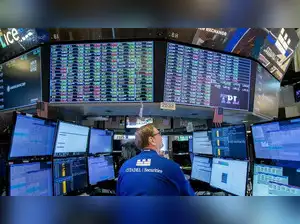
While Washington commands the macro narrative, Advanced Micro Devices (AMD) is dictating the micro-level sentiment for the technology sector. As the primary challenger to Nvidia in the high-performance graphics processing unit (GPU) market and a dominant force in traditional x86 server and client processors, AMD’s quarterly metrics offer an indispensable audit of global enterprise technology demand.
Ahead of the print, Wall Street analysts have focused intensely on three core operational pillars:
- Data Center Infrastructure Scalability: The pace at which hyperscalers and enterprise data center operators are adopting AMD’s Instinct MI300 series accelerators to handle intensive large language model (LLM) training and inference workloads.
- Client and Consumer PC Stabilization: Indications of a sustained inventory normalization cycle within the personal computer market, following years of post-pandemic digestion and sluggish consumer demand.
- Embedded and Gaming Segments: Performance indicators from industrial, automotive, and gaming hardware divisions, which serve as leading economic indicators for broader industrial demand and consumer discretionary spending.
During conference calls with equity analysts, institutional buy-side participants are pressing executive leadership for granular clarity on gross margin trajectories. Supply chain constraints, fab capacity allocation at Taiwan Semiconductor Manufacturing Company (TSMC), and pricing power dynamics against fierce competition will ultimately dictate whether AMD can sustain its premium valuation multiple in an environment where capital is increasingly discerning.
Verified Data & Metrics Breakdown
To contextualize the current market environment, the following comparative matrix outlines key macroeconomic indicators, equity index performance ranges, and fundamental metrics driving today's trading session:
| Index / Metric | Current Market Trend | Primary Driver | Institutional Impact |
|---|---|---|---|
| Dow Jones Industrial Average | Wavering / Sideways | Midterm election positioning & industrial rotation | Defensive posture; reduced cyclical risk exposure |
| S&P 500 Index | Narrow Range Bound | Macro policy uncertainty & Fed rate trajectory | Broad asset rebalancing; hedging via index puts |
| Nasdaq Composite | Volatile / Tech-Led | AMD earnings anticipation & semiconductor demand | High-beta sensitivity; scrutinizing valuation multiples |
| AMD (Advanced Micro Devices) | High Anticipation Volume | AI GPU market share & data center compute demand | Sector-wide sentiment contagion across tech equities |
Industry & Market Implications: Winners, Losers, and Economic Ripple Effects
The simultaneous pressures of political uncertainty and high-stakes tech earnings create a bifurcated market environment where asset performance is intensely polarized.
The Winners: Defensive Anchors and Infrastructure Monopolies
In periods of legislative ambiguity and macroeconomic deceleration, capital naturally flows toward quality. Mega-cap technology enterprises boasting fortress balance sheets, pristine credit ratings, and recurring revenue business models continue to attract institutional sponsorship. Furthermore, companies providing mission-critical enterprise software, cloud infrastructure architecture, and localized supply chain resilience are insulated from short-term policy shifts.
The Losers: High-Beta Growth and Policy-Sensitive Sectors
Conversely, unprofitable growth companies, high-beta biotechs, and early-stage technology startups relying on continuous external financing face severe headwinds. Similarly, industries heavily dependent on federal subsidies, regulatory frameworks, or international trade agreements&mdashincluding renewable energy developers, defense contractors, and multinational financial institutions&mdashare experiencing heightened volatility as portfolio managers de-risk ahead of election returns.
Broader Economic Impact
The hesitation observed in the public equity markets mirrors broader corporate decision-making. When capital expenditure is paused, commercial loan growth slows, and labor markets experience subtle cooling. However, this period of consolidation also serves a healthy market function, purging speculative excess and resetting valuation multiples to more sustainable historical averages.
Frequently Asked Questions (People Also Ask)
Why are the Dow, S&P 500, and Nasdaq wavering ahead of midterm election results?
Financial markets inherently price in political risk and regulatory predictability. Midterm elections introduce the potential for congressional gridlock, shifts in fiscal spending priorities, and modifications to corporate tax and energy policies. Institutional investors respond by trimming risk exposure, rebalancing portfolios into defensive sectors, and utilizing derivatives for downside protection until definitive election outcomes materialize.
What makes AMD's earnings report so critical for the broader stock market today?
Advanced Micro Devices (AMD) is a bellwether for the global semiconductor industry and enterprise IT spending. Beyond traditional PC and server processor sales, investors are scrutinizing AMD’s data center revenue and artificial intelligence chip deployment (such as the MI300 accelerator series). Because tech stocks carry a massive weighting in major indexes like the S&P 500 and Nasdaq, AMD's forward guidance directly influences sentiment regarding the sustainability of the AI infrastructure boom.
How should institutional investors navigate high valuation multiples during periods of macro uncertainty?
Institutional portfolio managers are currently prioritizing rigorous risk mitigation, focusing capital allocation on companies with demonstrated free cash flow generation, strong pricing power, and low leverage. Diversification away from high-beta growth stocks toward defensive, cash-generative equities remains a primary strategy for navigating compressed valuation multiples in a higher-rate environment.
What are the long-term implications of tech sector earnings on enterprise cloud compute architecture?
Strong earnings and forward guidance from foundational semiconductor firms validate ongoing corporate commitments to digital transformation. Despite macroeconomic caution, enterprise spending on cloud compute architecture and generative AI infrastructure remains structurally supported by long-term productivity gains and competitive necessity.
Future Outlook: Strategic Milestones to Monitor
As trading desks process incoming midterm election returns and dissect AMD’s quarterly performance metrics, the market's trajectory over the coming quarters will be defined by several critical milestones:
- Monetary Policy Pivot Confirmation: Investors will parse every communication from the Federal Reserve for definitive signals regarding interest rate cuts, balance sheet normalization, and the soft-landing economic scenario.
- Fiscal Policy Execution: The legislative makeup of the incoming Congress will dictate the scope of federal spending bills, taxation reforms, and regulatory enforcement across antitrust, technology, and energy markets.
- Enterprise IT Budget Realization: Subsequent earnings reports from cloud hyperscalers (Amazon AWS, Microsoft Azure, Google Cloud) will confirm whether enterprise demand for AI infrastructure and cloud compute architecture translates into sustained top-line revenue acceleration.
Ultimately, today's market wavering is not merely a transient reaction to headlines, but a fundamental reassessment of risk and reward in a complex macroeconomic landscape. Disciplined capital allocation, rigorous fundamental analysis, and strategic risk mitigation will remain the essential hallmarks of successful institutional portfolio management as these multi-layered catalysts unfold.