Cosmic Breakthrough: NASA Launches $4.3 Billion Roman Telescope on SpaceX Rocket to Decode the Universe’s Deepest Secrets
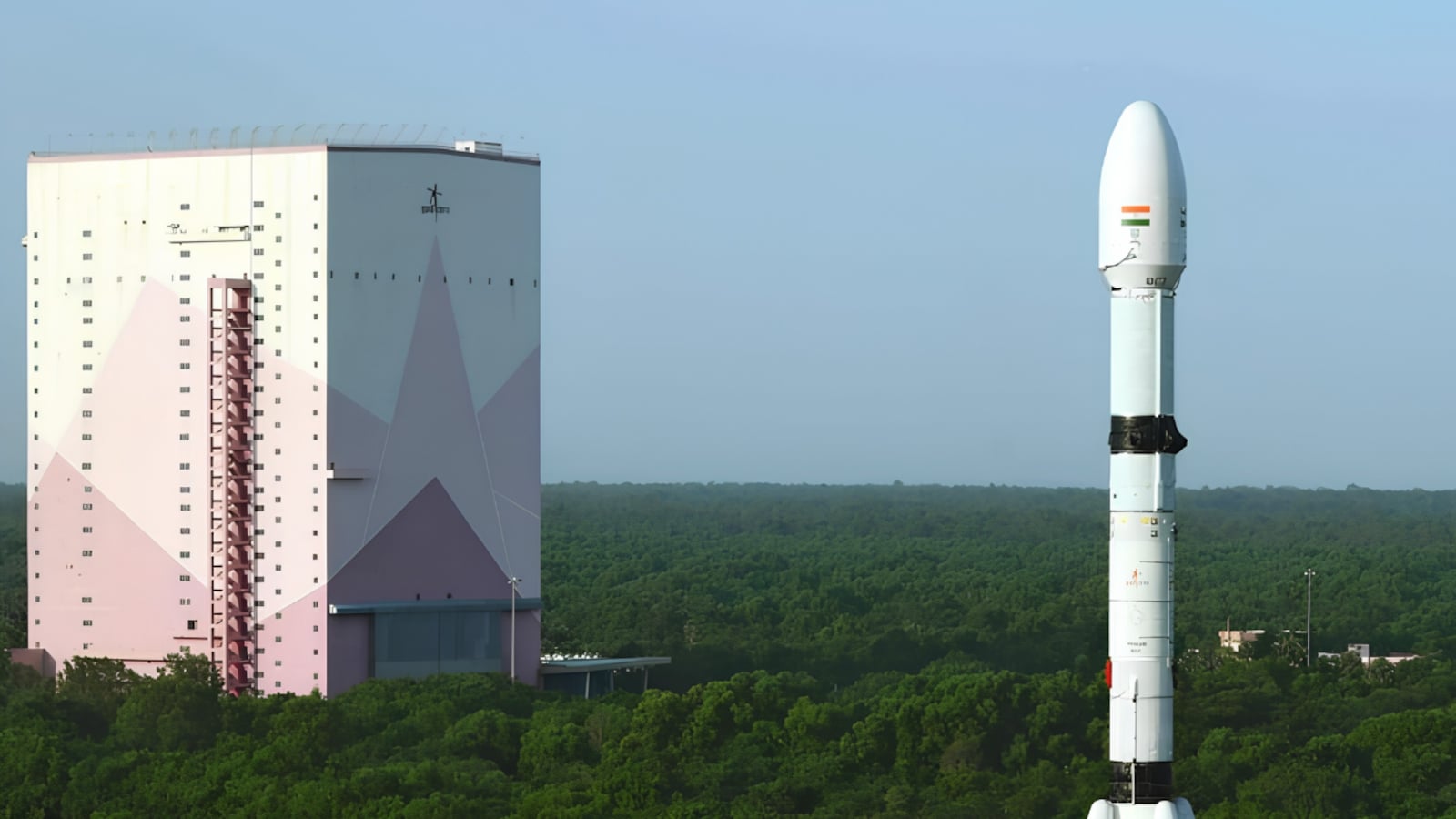
CAPE CANAVERAL, Fla. — In a watershed moment for modern astrophysics and the commercial space economy, NASA has successfully launched the $4.32 billion Nancy Grace Roman Space Telescope aboard a SpaceX Falcon Heavy rocket, initiating a high-stakes mission to chart the invisible architecture of the cosmos.
Executive Briefing: The $4.3B Mission at a Glance
- The Vehicle & Trajectory: Propelled off Launch Complex 39A at Kennedy Space Center by SpaceX’s triple-booster Falcon Heavy, sending the observatory on a million-mile transit toward Lagrange Point 2 (L2).
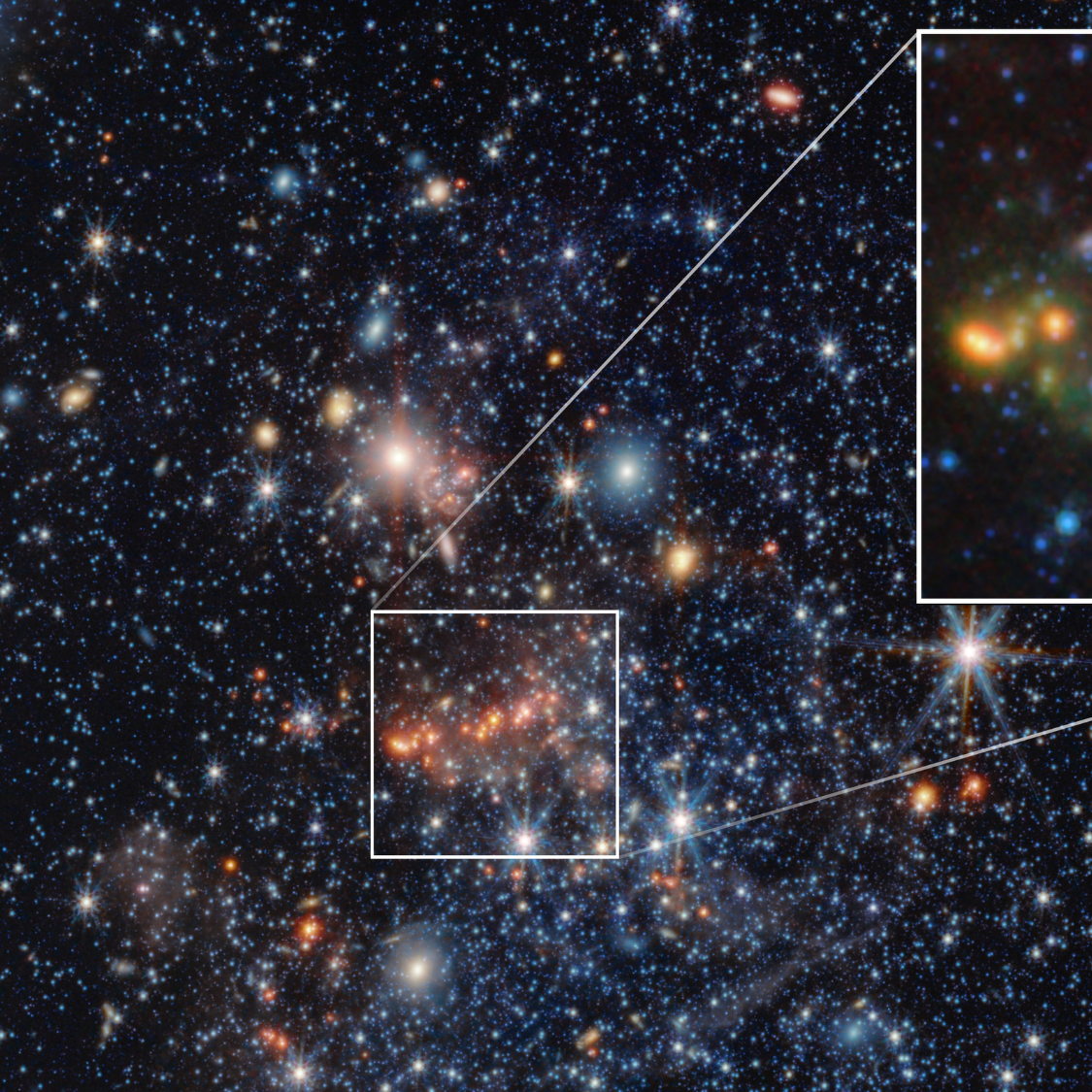
- Unprecedented Optical Scope: Possesses a panoramic field of view 100 times larger than the Hubble Space Telescope at comparable infrared sharpness, effectively delivering "Hubble clarity across stadium-sized celestial swathes."
- Core Scientific Directives: Quantify the accelerating expansion of the universe driven by dark energy, map the web of dark matter, and catalog thousands of uncharted exoplanets via gravitational microlensing.
- Economic Discipline: Positioned as a major flagship victory for NASA’s astrophysics division, delivering transformative wide-field capability at less than half the capitalized cost of the $10 billion James Webb Space Telescope (JWST).
A Flawless Thunder Run from Pad 39A

Rumbling across the Florida coastline with 5.1 million pounds of sea-level thrust, the Falcon Heavy sliced through the upper atmosphere before staging its payload into an escape trajectory. The mission represents one of the most critical science payloads ever entrusted to Elon Musk’s SpaceX, cementing commercial heavy-lift vehicles as the backbone of Tier-1 deep-space science.
NASA mission controllers confirmed signal acquisition from the spacecraft shortly after fairing deployment, confirming that the observatory’s primary bus had deployed its power systems and initiated autonomous health diagnostics. Over the next month, the probe will execute trajectory-correction maneuvers to settle into a halo orbit around the Sun-Earth L2 gravitational equilibrium point—the same tranquil, ultra-cold vantage point occupied by JWST.
“Today’s flawless launch marks the opening salvo of a revolutionary era in observational cosmology,” said NASA Associate Administrator for Science. “Where Webb drills deep into individual cosmic needles, the Roman Space Telescope provides the entire cosmological haystack. We are finally equipped to map the invisible forces shaping our reality.”
Hubble on Steroids: Engineering the Panoramic Giant
Named in honor of Dr. Nancy Grace Roman—NASA’s inaugural Chief of Astronomy and the pioneering executive widely remembered as the "Mother of Hubble"—the observatory represents an astronomical leap in survey velocity. The telescope utilizes a 2.4-meter primary mirror—the identical diameter to Hubble’s—originally donated to NASA by the National Reconnaissance Office (NRO). However, NASA engineers paired this legacy aperture with a state-of-the-art 300-megapixel focal plane array.
This design allows Roman to photograph single celestial frames encompassing the apparent width of nearly two full moons. A high-resolution cosmological survey that would require 100 years of continuous Hubble operations can be concluded by the Roman Space Telescope in approximately 100 calendar days.
Beyond its Wide Field Instrument, Roman carries a pathfinder Coronagraph Instrument. Designed to suppress stellar glare by a factor of over one billion, this cutting-edge optical mask will allow astronomers to directly image giant exoplanets and circumstellar dust disks orbiting nearby stars, setting the engineering template for future Earth-finder missions.
Key Specifications: Nancy Grace Roman Space Telescope
| Metric / Parameter | Specification | Strategic Significance |
|---|---|---|
| Total Mission Life-Cycle Cost | ~$4.32 Billion | Strict cost containment relative to the decadal-delayed JWST |
| Launch Vehicle | SpaceX Falcon Heavy | High-mass, cost-efficient orbital delivery to Sun-Earth L2 |
| Primary Mirror Aperture | 2.4 Meters (7.9 Feet) | Delivers Hubble-class spatial resolution across wide infrared bands |
| Field of View | 0.281 Square Degrees | 100x broader observational field than Hubble |
| Primary Instruments | Wide Field Instrument & Coronagraph | Combines macroeconomic cosmic survey with micro-exoplanet imaging |
| Target Data Output | Over 1 Terabyte / Day | Creates the world's richest open-access astronomical catalog |
The Economic and Cosmological Stakes: Dark Energy and Microlensing
For the astrophysics community and policymakers alike, Roman addresses the most embarrassing gap in fundamental physics: approximately 95% of the universe consists of dark energy and dark matter—forces that can neither be seen nor integrated into the Standard Model. By tracking more than a billion galaxies across billions of light-years, Roman will map the growth of cosmic structure and determine whether dark energy is a static cosmological constant (as postulated by Albert Einstein) or a dynamic, evolving scalar field.
Simultaneously, the telescope will execute a sweeping gravitational microlensing survey across the crowded galactic bulge. By analyzing how the gravitational gravity of intermediary stars bends background starlight, Roman is forecast to identify thousands of exoplanets—including rogue planets drifting untethered through interstellar space and icy worlds orbiting at distances equivalent to Jupiter and Saturn.
The Horizon: Commissioning and First Light
The mission now enters an intensive six-month commissioning envelope. Following its arrival at L2, ground teams at the Space Telescope Science Institute (STScI) in Baltimore, Maryland, will manage instrument cool-down, calibrate its optical detectors to micro-arcsecond accuracy, and align the coronagraph’s deformable mirrors.
Unlike proprietary science models of past decades, all Roman survey data will enter public domain databases within days of acquisition, unlocking global institutional access and transforming academic research pipelines worldwide. First light science operations are slated to begin shortly after orbital commissioning concludes, delivering humanity's most comprehensive panoramic scan of the cosmos.
Frequently Asked Questions (FAQ)
How does the Roman Space Telescope differ from the James Webb Space Telescope?
While the $10 billion James Webb Space Telescope (JWST) is engineered for hyper-focused, deep-field infrared scrutiny of specific targets, the Roman Space Telescope is a panoramic survey instrument. Roman boasts a field of view 100 times larger than Hubble or Webb, designed to gather enormous statistical datasets across vast swaths of sky, which Webb can then target for granular, high-magnification analysis.
Why was a SpaceX Falcon Heavy selected instead of NASA’s SLS?
NASA procured the launch service through its Commercial Crew and Launch Services Program, awarding SpaceX a contract valued at roughly $255 million. Utilizing the commercially operational, flight-proven Falcon Heavy saved taxpayers billions of dollars compared to NASA's Space Launch System (SLS), preserving the telescope’s capped lifecycle budget of $4.3 billion.