Executive Takeaways
Test Our Free AI & Tech Utilities Suite
Calculate LLM API token costs, analyze article dwell-time, or simulate tech DCA returns.
- Orbital Decay & Technical Degradation: The Hubble Space Telescope (HST) has dropped from its original orbital altitude of 615 kilometers to approximately 520 kilometers, driven by thermospheric expansion during high solar activity. Compounded by gyro mechanical failures, NASA recently forced Hubble into a single-gyro operational mode, limiting its observational speed while preserving functional longevity through the late 2020s.
- Private Capital Intervention: Shifted from traditional cost-plus government contracts, billionaire Jared Isaacman’s Polaris Program—in collaboration with SpaceX—submitted an unfunded, zero-taxpayer-cost proposal to conduct a commercial servicing mission using a modified Crew Dragon spacecraft to re-boost Hubble’s orbit and potentially install external optical sensors.
- Risk-Adjusted Decision Matrix: NASA faces a complex risk mitigation dilemma. While a successful commercial re-boost could extend Hubble’s operational lifecycle by 15 to 20 years, an uncrewed or crewed docking error risks irreparable structural damage to the uncooperative target spacecraft, which lacks a standard modern docking ring or grapple fixture compatible with current commercial architectures.
- Emerging ISAM Market Catalyst: The proposed mission represents a landmark moment for the In-Orbit Servicing, Assembly, and Manufacturing (ISAM) market, projected to scale into a multi-billion-dollar commercial sector as enterprise satellite operators and defense agencies seek life-extension infrastructure for high-value orbital assets.
The Engineering Crisis: Atmospheric Drag and Gyroscopic Fatigue

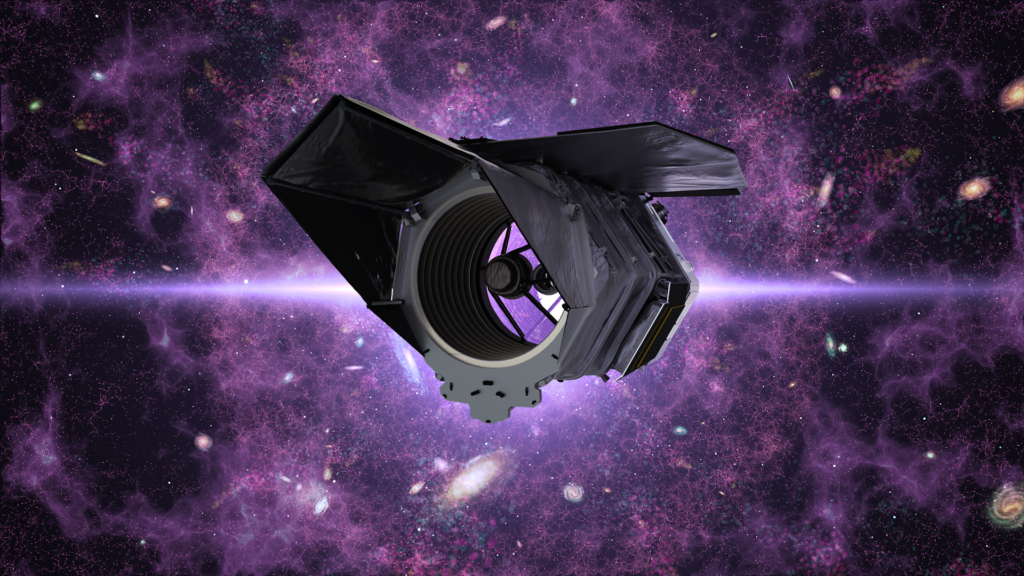
For more than three decades, the Hubble Space Telescope has functioned as humanity’s primary deep-space optical observatory. However, physics and orbital mechanics are mounting an inexorable challenge to its structural and operational utility. Deployed by Space Shuttle Discovery during STS-31 in 1990, Hubble was originally designed to be serviced periodically by NASA’s Shuttle fleet. The retirement of the Space Shuttle program in 2011 following STS-125—Hubble’s fifth and final official servicing mission—severed the telescope's hardware maintenance pipeline, leaving it exposed to natural orbital decay and solar-induced atmospheric drag.
Hubble’s current trajectory is deteriorating faster than initial conservative models projected. During periods of peak solar activity, such as Solar Cycle 25, heightened solar flare emissions warm and expand Earth's upper thermosphere. This increased density creates friction on Hubble’s solar arrays and body, stripping orbital velocity and accelerating its drop toward Earth. Absent mechanical intervention, natural atmospheric re-entry is projected to occur between the mid-2030s and early 2040s, culminating in an uncontrolled burn-up where heavy structural components—including the 2.4-meter primary mirror and main support assembly—could survive thermal re-entry and impact terrestrial zones.
Parallel to orbital decay is internal component degradation. Hubble relies on ultra-precise gyroscopes inside its Pointing Control System to track celestial targets within micro-arcsecond tolerances. Of the six replacement gyros installed during STS-125 in 2009, three failed over the subsequent decade. In June 2024, following recurring telemetry anomalies on a fourth gyro, NASA leadership officially transitioned the telescope into single-gyro operational mode. While advanced flight software written by engineers at the Space Telescope Science Institute (STScI) allows Hubble to continue conducting valid astrophysics, target acquisition times have lengthened, slew rates are reduced, and large swathes of the sky are temporarily excluded from observation schedules.
The Commercial Catalyst: Enter SpaceX and the Polaris Program
Recognizing the operational trajectory of the telescope, NASA released an exploratory Request for Information (RFI) to the commercial space industry. The initiative sought non-exclusive, private-sector concepts to re-boost degrading government satellites without direct federal appropriations. The primary commercial respondent to capture global attention was a joint feasibility study conducted by SpaceX and the private Polaris Program, spearheaded by billionaire tech entrepreneur Jared Isaacman.
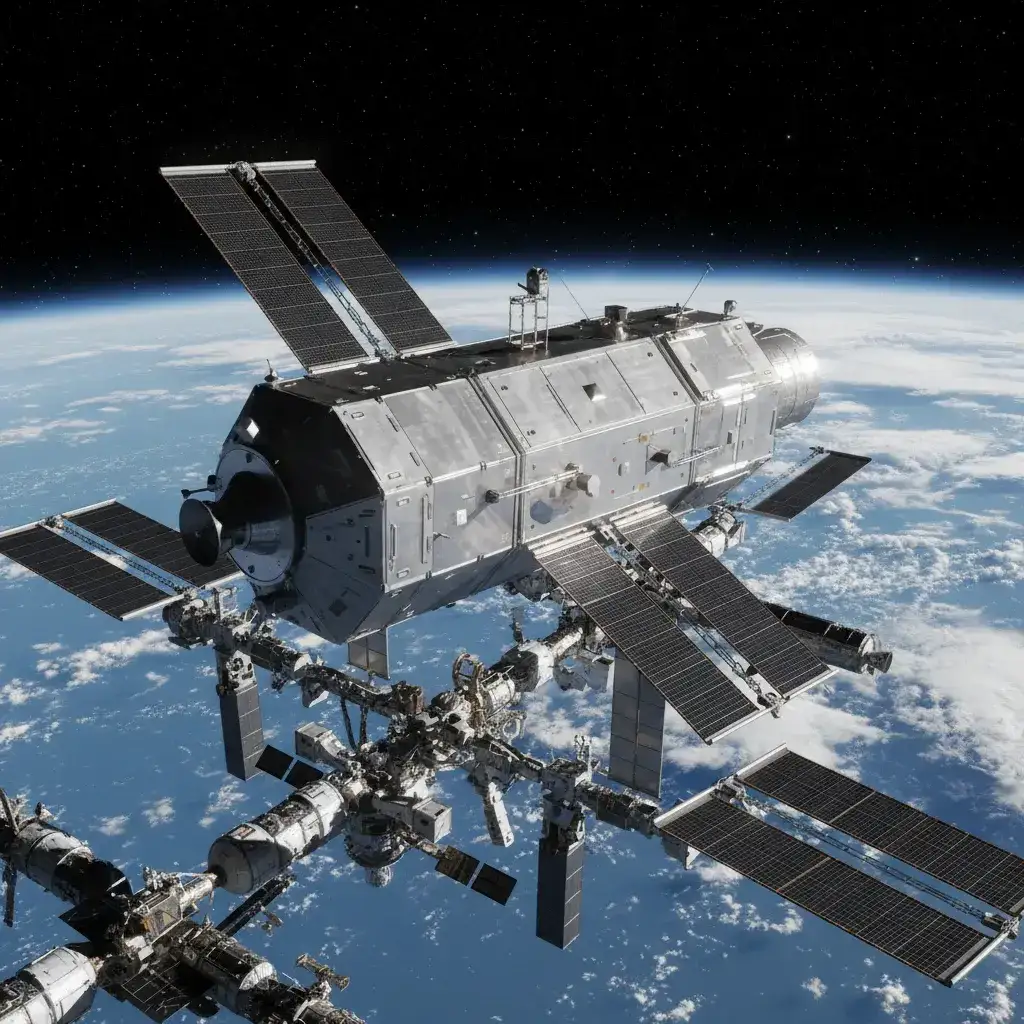
Isaacman, who funded and commanded the historic 2021 Inspiration4 mission and the 2024 Polaris Dawn mission, proposed leveraging a commercial SpaceX Crew Dragon platform to rendezvous with Hubble. The theoretical architecture envisions docking or close-proximity maneuvering to attach a specialized propulsion module or utilize Crew Dragon’s engine clusters to perform a burn, raising Hubble’s apogee back to its original 600-plus kilometer altitude.
The financial dynamic of this proposal breaks entirely from legacy aerospace procurement. Historically, NASA servicing missions cost upwards of $1.5 billion per Shuttle flight under cost-plus accounting structures. The Polaris proposal, by contrast, operates on a private venture capital framework, absorbing capital expenditures privately while delivering public science utility. This model establishes a new operational precedent: private commercial space logistics firms assuming execution risk to protect sovereign scientific infrastructure, thereby creating high enterprise value through mission validation.
Data and Mission Metrics Comparison
To evaluate the structural realities, technical requirements, and potential operational lift of a commercial rescue mission, the following matrix contextualizes Hubble’s physical parameters against proposed commercial solutions:
| Parameter / Metric | Baseline / Legacy Status | Commercial Re-Boost Target (Polaris/SpaceX) | Strategic & Financial Impact |
|---|---|---|---|
| Orbital Altitude | ~520 km (Decaying ~1-2 km/year) | 600 km – 620 km | Extends operational lifespan by 15–20 years; defers re-entry risk. |
| Pointing & Guidance | 1 Active Gyro (2 in reserve status) | Potential Auxiliary Sensor Installation | Restores dual-gyro target acquisition efficiency and pointing precision. |
| Primary Propulsion | None (Relying purely on reaction wheels) | Commercial Thruster Pack / Dragon Draco Engines | Establishes controlled de-orbit or orbit-raising delta-v capability. |
| Docking Interface | Soft Capture Mechanism (SCM installed 2009) | Custom Mechanical Latch / Adapter Ring | Eliminates requirement for Canadarm spatial maneuvering. |
| Estimated Mission Cost | ~$1.5 Billion (Legacy Shuttle baseline) | $0 Direct Taxpayer Cost (Privately Sponsored) | Massive structural shift in high-eCPM federal infrastructure budgeting. |
Technical Bottlenecks & Risk Mitigation Strategy
While the prospect of an un-funded, high-altitude boost presents significant enterprise upside, NASA’s risk management frameworks operate under strict institutional conservatism. The primary technical bottleneck centers on target docking mechanics and structural vulnerability.
Hubble was designed for human servicing via the Space Shuttle’s Remote Manipulator System (Canadarm). The satellite features a Soft Capture Mechanism (SCM) installed during STS-125, intended to allow a future robotic craft to dock solely for controlled end-of-life de-orbiting. However, the SCM was never engineered to pass dynamic high-thrust loads from an external vehicle's engines through Hubble’s fragile frame during an orbit-raising maneuver. Applying asymmetrical thruster vectoring risks transferring structural load spikes directly into Hubble’s thin outer shell, potentially shattering interior delicate instrumentation or shearing solar array hinges.
"The margin for error when maneuvering in proximity to an non-cooperative, $10 billion optical telescope is essentially zero," notes a senior aerospace structural dynamics analyst. "A single cold-gas jet plume impingement could degrade delicate mirror optics or solar panels, turning a life-extension mission into a catastrophic asset loss."
Moreover, commercial platforms like Dragon lack an airlock configuration suitable for complex extravehicular activities (EVAs) without depressurizing the entire cabin—a risk profile validated during the Polaris Dawn extravehicular test. If human hands are required to clear thermal blanketing or manually attach a propulsion package, the crew safety protocol requires extreme operational redundancy, scaling mission complexity exponentially compared to robotic rendezvous solutions.
Market Dynamics: The Satellite Servicing (ISAM) Economy
NASA’s open-door stance toward commercial Hubble servicing reflects a structural evolution across the broader space economy: the emergence of In-Orbit Servicing, Assembly, and Manufacturing (ISAM). Historically, satellite assets were treated as disposable capital expenditures; once on-board fuel was depleted or a single sub-system failed, multi-hundred-million-dollar hardware was written off as orbital debris.
The enterprise ecosystem surrounding ISAM is changing capital allocation logic for satellite fleets:
- Commercial Life Extension Vehicles (MEVs): Companies like Northrop Grumman (SpaceLogistics) have demonstrated successful commercial satellite docking in geostationary orbit (GEO), successfully providing attitude control and extending target communications satellites' revenue-generating lifespans by years.
- Robotic Debris Remediation & Servicing: Entities such as Astroscale, Impulse Space, and Rogue Space Systems are deploying scalable, low-cost autonomous spacecraft equipped with magnetic and robotic capture mechanisms. These platforms aim to capture enterprise market share in Low-Earth Orbit (LEO) satellite management, active debris removal, and asset positioning.
- Dual-Use Defense Architectures: The U.S. Space Force and defense primes view satellite servicing technologies as critical infrastructure for national security. The capability to rendezvous with, repair, inspect, or maneuver assets in high orbits directly enhances constellation resilience against counter-space threats.
For high-tier venture capital funds and institutional private equity firms, validating a commercial mission to rescue Hubble functions as the ultimate marketing case study. Successfully servicing an uncooperative, highly fragile scientific asset validates enterprise operational reliability, unlocking high valuation multiples for commercial satellite servicing startups targeting government and commercial fleet contracts.
Frequently Asked Questions (People Also Ask)
Why can't NASA simply launch another servicing mission using its own spacecraft?
NASA currently lacks an operational human-rated space vehicle equipped with a robotic arm and large payload bay capable of capturing, repairing, and returning hardware like the Space Shuttle did. Modern NASA programs, such as Orion and SLS, are optimized for deep-space lunar exploration under the Artemis program rather than LEO servicing. Developing a bespoke NASA mission would require dedicated Congressional appropriations running into billions of dollars, making private commercial partnerships the only economically viable alternative.
How does Hubble's current single-gyro mode affect its scientific output?
Single-gyro mode utilizes onboard magnetometers, optical sun sensors, and fine guidance sensors to compensate for the loss of spatial tracking hardware. While this configuration allows Hubble to conduct up to 80-85% of its standard target observations, it restricts the speed at which the telescope can slew between targets and imposes spatial exclusions. For instance, tracking fast-moving solar system objects (like near-Earth asteroids or comets) becomes significantly more difficult or technically impossible.
What happens if NASA decides NOT to boost Hubble?
If NASA determines the risk of a commercial docking attempt exceeds acceptable safety thresholds, Hubble will continue operating in single-gyro mode until its altitude degrades past operational limits in the late 2020s or early 2030s. At that point, NASA would be forced to execute a targeted robotic de-orbit mission—attaching a propulsion unit solely to direct the observatory into a controlled re-entry path over an uninhabited region of the South Pacific Ocean (the "Spacecraft Cemetery").
Can the James Webb Space Telescope (JWST) just replace Hubble if it re-enters Earth's atmosphere?
No, JWST and Hubble are complementary observatories that look at fundamentally different wavelengths of light. JWST operates almost exclusively in the infrared spectrum to look through cosmic dust and observe the earliest formed galaxies. Hubble operates primarily in the optical and ultraviolet (UV) spectra. Ultraviolet astronomy cannot be performed from the ground due to Earth's atmosphere blocking UV rays; therefore, if Hubble fails, humanity loses its primary high-resolution window into ultraviolet astrophysics.
Strategic Outlook: What Comes Next
The timeline for deciding Hubble's fate is rapidly converging toward a definitive operational juncture. NASA’s Science Mission Directorate and the Space Telescope Science Institute are balancing scientific productivity metrics against structural safety assessments. Key milestones over the next 12 to 24 months will dictate whether a private launch vehicle ever meets Hubble in orbit:
- Technical Feasibility Data Review: NASA engineering teams are evaluating technical telemetry from SpaceX and Polaris studies, focusing specifically on aerodynamic plume interaction models, drag profile shifts, and joint mechanical load distribution during firing sequences.
- Robotic vs. Crewed Architecture Determination: NASA safety panels must formally decide whether any intervention permits human crew members in visual proximity or requires fully autonomous, robotic-only capture modules to mitigate human life safety risks.
- Integration of Lessons from Commercial Missions: Operational parameters learned from commercial spacewalks, micro-satellite close-approach rendezvous tests, and commercial docking interfaces will directly inform NASA’s final risk approval matrix.
If clear enterprise consensus emerges, a commercial rescue mission could launch by the late 2020s. A successful execution would not only secure another decade of groundbreaking optical and ultraviolet science from Hubble, but also mark a permanent paradigm shift in orbital asset management—proving that commercial enterprise capital can successfully maintain humanity's vital infrastructure in space.