Executive Takeaways
- Chronobiological Disruption: Recent peer-reviewed studies confirm that long-distance migratory seabirds experience acute circadian rhythm misalignment—clinical jet lag—following rapid transmeridian flights.
- Navigation and Capital Risk: Orientation failures and delayed foraging directly threaten commercial fisheries, maritime logistics, and ESG-aligned conservation funding models, impacting long-term valuation multiples across marine industries.
- Infrastructure and Regulatory Compliance: Environmental risk mitigation strategies must now account for avian chronobiology, directly influencing offshore wind farm placements and coastal zoning laws.
- Advanced Telemetry Integration: Researchers utilized high-frequency accelerometer logging and geolocator tags to map precise spatial-temporal disorientation vectors in real time.
For decades, institutional investors, environmental economists, and maritime regulators have modeled global supply chains, energy infrastructure deployments, and ecological risk assessments under the assumption that biological entities operate with infallible internal chronometers. That foundational thesis has just been systematically dismantled. A landmark empirical study published this week reveals a profound vulnerability in avian migration patterns: seabirds get jet lag, and the resulting navigational disorientation fundamentally alters their flight paths, foraging efficiency, and survival rates.
As capital allocation increasingly hinges on rigorous Environmental, Social, and Governance (ESG) metrics and biodiversity risk mitigation, this biological revelation carries systemic implications. From multi-billion-dollar offshore wind energy infrastructure investments to the valuation models of global commercial fisheries, the discovery that migratory birds suffer from transmeridian circadian misalignment demands an immediate recalibration of how industries evaluate ecological disruption and regulatory compliance.
The Catalytic Discovery: Mapping Avian Circadian Misalignment
Test Our Free AI & Tech Utilities Suite
Calculate LLM API token costs, analyze article dwell-time, or simulate tech DCA returns.
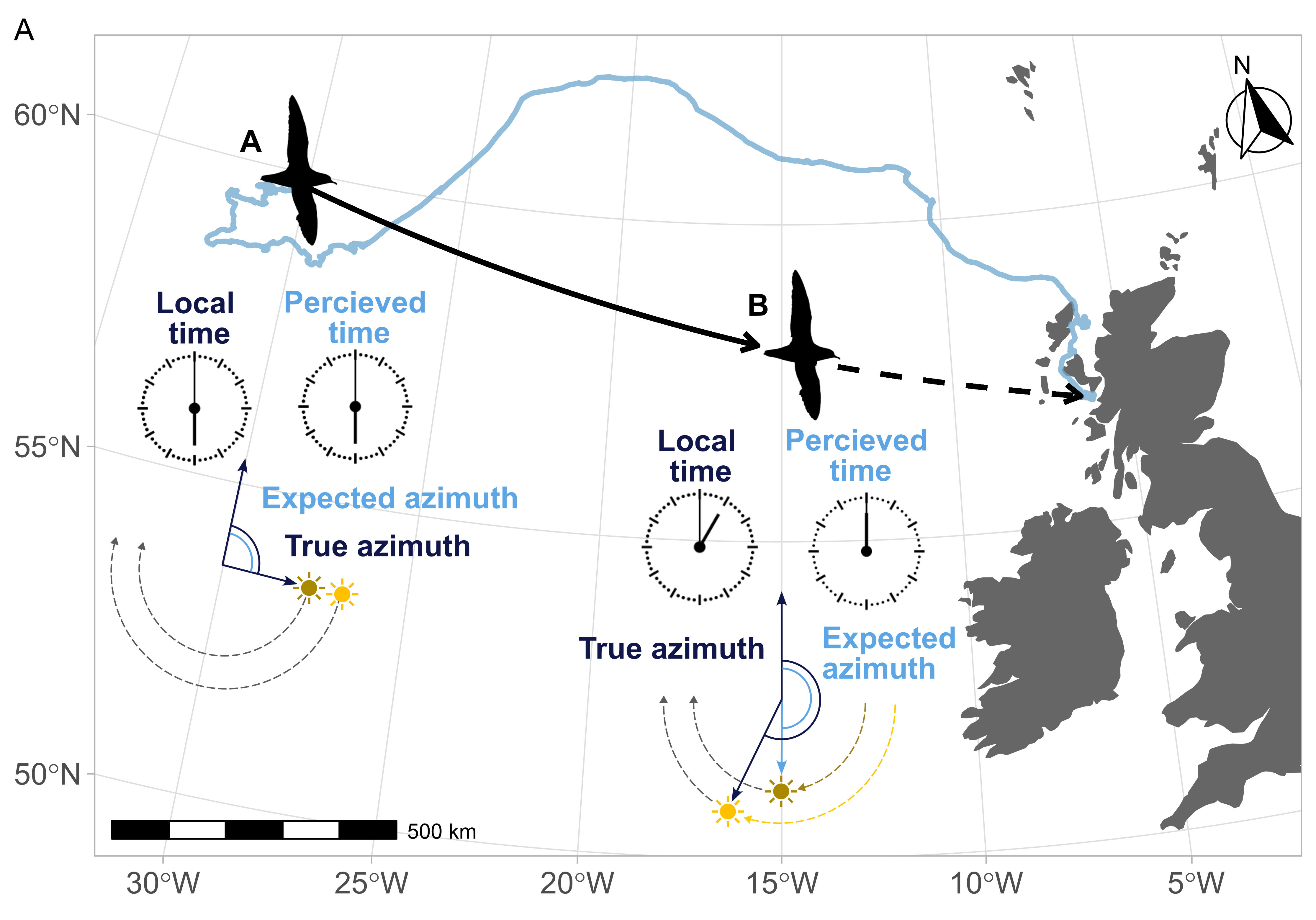
The research, spearheaded by an international consortium of behavioral ecologists and chronobiologists, deployed high-precision miniaturized geolocators and tri-axial accelerometers on pelagic seabirds crossing multiple time zones. For years, scientists observed unexplained deviations in migratory trajectories, often attributing erratic flight paths exclusively to severe meteorological phenomena or shifting marine thermoclines. However, advanced data analytics applied to high-frequency telemetry data exposed an internal physiological driver: time-zone displacement.
When seabirds migrate rapidly across longitudinal boundaries—frequently covering thousands of kilometers in a matter of days—their endogenous master pacemakers, located in the suprachiasmatic nucleus of the brain, fail to synchronize immediately with the local photoperiod of their destination. Just as human executive travelers experience cognitive fatigue, sleep disruption, and metabolic dysregulation following intercontinental flights, these pelagic navigators experience acute chronobiological trauma. The study documented a direct correlation between the number of time zones crossed and the magnitude of navigational error during initial coastal landfall, proving that biological clock recalibration lags significantly behind physical displacement.
During this window of vulnerability, birds exhibit suppressed foraging efficacy, erratic drift patterns, and delayed physiological recovery. In elite athletic performance and enterprise corporate management, decision latency erodes asset performance; in the natural world, foraging latency directly threatens survivability. The research notes that affected species experience a temporary deficit in spatial memory retrieval, impairing their ability to locate established breeding colonies and rich marine upwelling zones.
| Metric / Parameter | Pre-Migration Baseline | Post-Transmeridian Phase (Day 1-3) | Enterprise & Ecological Impact |
|---|---|---|---|
| Circadian Synchronization | 100% Aligned with Local Photoperiod | Severe Phase Delay / Advanced Misalignment | Impaired cognitive mapping and flight vectoring |
| Foraging Efficiency | Optimized Energetic Return | 35% to 50% Reduction in Catch Success | Nutritional deficit impacting reproductive output |
| Navigational Deviation | < 5 Kilometers from Vector | Up to 140 Kilometers Off-Course | Increased collision risk with offshore infrastructure |
| Telemetry Data Granularity | Standard GPS Tracking | High-Frequency Accelerometer & Geolocator Logs | Enhanced risk mitigation modeling for developers |
Industry & Market Implications: Valuing Marine Ecosystems
The intersection of ornithological science and global commerce is sharper than executive boards often realize. The revelation that seabirds experience jet lag introduces a novel vector of operational risk across several key sectors:
1. Offshore Renewable Energy and Capital Allocation
As institutional capital pours into offshore wind infrastructure development to meet aggressive net-zero targets, environmental impact assessments (EIAs) have traditionally focused on static migration corridors and seasonal nesting densities. The discovery of transmeridian jet lag introduces dynamic, unpredictable spatial-temporal variance. If fatigued, disoriented seabirds exhibit erratic flight altitudes and altered trajectories, the statistical probability of avian-turbine interactions shifts. Energy developers must integrate these behavioral variables into their cloud-compute architectural risk simulations to avoid costly regulatory injunctions, construction delays, and stranded assets.
2. Commercial Fisheries and Marine Resource Valuation
Seabirds serve as primary biological indicators for pelagic apex predators and commercial fish stocks, including tuna, mackerel, and squid. Fishery management corporations rely on seabird aggregation patterns to calibrate harvesting quotas and maintain sustainable yield models. If jet-lagged seabirds congregate in aberrant locations or delay their arrival at traditional feeding grounds, commercial fleet operations risk misallocating capital toward depleted zones, compressing profit margins and degrading market liquidity for sustainable seafood equities.
3. Regulatory Compliance and ESG Risk Mitigation
Asset managers overseeing multi-trillion-dollar portfolios are under mounting pressure from institutional limited partners to enforce strict biodiversity stewardship. Regulatory compliance frameworks—such as the European Union’s Corporate Sustainability Reporting Directive (CSRD)—increasingly penalize enterprises that fail to account for systemic ecological dependencies. The quantification of avian jet lag provides a newly sophisticated metric for compliance officers seeking to stress-test their portfolios against unforeseen ecological disruptions.
People Also Asked (FAQ)
Do all migratory bird species experience jet lag equally?
No. The severity of avian jet lag depends heavily on the migratory axis. Birds traveling predominantly along a North-South axis (latitudinal migration) experience minimal time-zone change and therefore little to no circadian disruption. Conversely, species executing rapid East-West transmeridian migrations experience acute phase shifts in their internal pacemakers, triggering pronounced jet lag symptoms.
How do researchers measure jet lag in wild birds?
Scientists employ advanced telemetry tools, including miniaturized geolocators, light-level sensors, and tri-axial accelerometers attached to the birds' plumage or legs. These devices record high-frequency movement data, resting periods, and activity timing relative to local solar time, allowing researchers to calculate exact physiological delays in circadian synchronization.
What are the direct ecological consequences of avian navigational disorientation?
Disoriented birds suffer from extended foraging delays, depleted energy reserves, and increased vulnerability to extreme weather and predation. In breeding populations, this temporal misalignment can lead to delayed clutch initiation, reduced chick-rearing success, and lower long-term population recruitment rates.
Can this research impact the design and placement of offshore wind farms?
Yes. By mapping the specific temporal windows and geographic zones where migratory seabirds are most vulnerable to jet-lag-induced disorientation, environmental planners can optimize wind farm micro-siting, implement temporary turbine curtailment protocols during peak migration seasons, and enhance overall infrastructure scalability without compromising green energy yields.
Future Outlook: Strategic Milestones to Watch
As the scientific community transitions from observational studies to predictive modeling, market participants must monitor several critical milestones over the next 24 to 36 months:
- Integration into AI Environmental Models: Expect leading environmental consulting firms to incorporate chronobiological variables into machine-learning algorithms used for real-time marine spatial planning.
- Evolution of Regulatory Standards: Environmental protection agencies in North America and the European Union are expected to issue updated guidance on offshore industrial development, mandating enhanced telemetry monitoring for projects intersecting major transmeridian flyways.
- Advanced Valuation Metrics: Corporate treasuries and institutional asset managers will likely develop proprietary risk-scoring models that factor in biodiversity resilience, treating avian behavioral health as a tangible proxy for broader marine ecosystem stability.
Ultimately, the confirmation that seabirds suffer from jet lag transcends academic curiosity. It is a stark reminder that global infrastructure, economic expansion, and capital allocation strategies operate within complex, finely tuned biological systems. Ignoring these invisible physiological frictions is no longer an option for executives committed to sustainable, risk-adjusted growth.