Executive Takeaways
- Unprecedented Cadence: SpaceX successfully executed its 700th Falcon 9 mission, cementing the rocket's status as the most prolific operational orbital launch vehicle in aerospace history.
- Capital Efficiency & Valuation Multiples: The rapid turnaround and booster reusability model continue to compress launch costs, driving structural advantages that influence global defense procurement and private market valuation multiples.
- Infrastructure Scalability: This milestone underscores the robust operational maturity of SpaceX's ground systems, propellant logistics, and flight-proven hardware, setting a benchmark for enterprise-grade aerospace reliability.
- Market Disruption: Traditional aerospace primes and international space agencies face mounting pressure to accelerate risk mitigation strategies and overhaul legacy supply chains to compete with SpaceX's unmatched cadence.
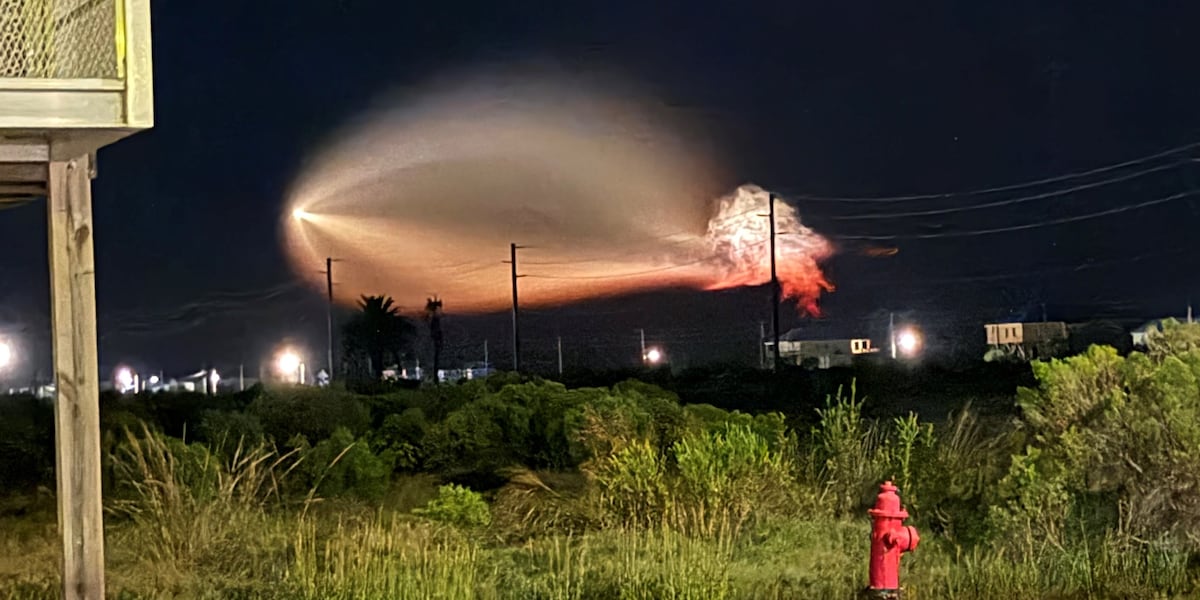
WASHINGTON & HAWTHORNE — As the calendar turned on October, SpaceX achieved a quiet yet monumental watershed moment in modern industrial history, executing the 700th launch of its Falcon 9 rocket family. What began as a high-risk gamble in a heavily regulated, legacy-dominated aerospace sector has evolved into a hyper-efficient orbital logistics engine. This latest flight not only underscores the remarkable reliability of the two-stage, medium-lift vehicle but also highlights a fundamental shift in how global capital, telecommunications, and national security infrastructure intersect with low-Earth orbit (LEO).
For institutional investors, aerospace analysts, and policy-makers tracking the commercialization of space, the 700th mission represents far more than a numerical milestone. It is a masterclass in enterprise ROI, iterative engineering, and supply chain mastery. As SpaceX continues to scale its operations—dominating global payload deployment while self-funding its next-generation Starship architecture—the rest of the aerospace ecosystem is left evaluating the capital allocation strategies required to remain competitive in a rapidly bifurcating market.
The Engineering and Economic Anatomy of a 700-Flight Phenomenon
Test Our Free AI & Tech Utilities Suite
Calculate LLM API token costs, analyze article dwell-time, or simulate tech DCA returns.
To understand the magnitude of 700 Falcon 9 launches, one must examine the historical failure rates and cost structures of traditional space agencies and defense primes. For decades, orbital launch was treated as a boutique, bespoke manufacturing endeavor. Each rocket was essentially a high-end prototype, constructed with artisanal precision and discarded after a single use. SpaceX upended this economic paradigm through aggressive vertical integration, standardization, and, most importantly, booster reusability.
The financial mechanics of the Falcon 9 program are built upon high capital expenditure upfront, amortized across an aggressively scaling flight manifest. By recovering first-stage boosters—often flying single boosters upwards of twenty times—SpaceX has systematically lowered the marginal cost per kilogram to orbit. This infrastructure scalability has granted the company unprecedented market liquidity, enabling it to cross-subsidize internal research and development, including the ambitious Starlink satellite constellation, without immediate reliance on public equity markets.
Furthermore, the iterative software and hardware upgrades implemented across the Falcon 9 fleet have drastically reduced operational friction. Ground operations, telemetry analysis, and regulatory compliance protocols have been streamlined into a repeatable, almost assembly-line process. This operational velocity has allowed SpaceX to capture the vast majority of commercial satellite launches, secure lucrative national security payloads, and maintain a launch cadence that routinely outpaces entire continental space programs combined.
Verified Data & Metrics: The Falcon 9 Trajectory

A rigorous examination of the Falcon 9 program's operational metrics reveals the compounding advantages of scale and reusability. The following data breakdown illustrates the vehicle's evolution from its maiden flight in 2010 to its 700th mission.
| Metric / Specification | Early Phase (2010–2015) | Mature Phase (2016–2020) | Hyper-Scale Era (2021–Present) |
|---|---|---|---|
| Total Cumulative Launches | 20 | 100+ | 700 |
| Booster Reusability Rate | 0% (Experimental) | ~40% | >90% |
| Average Turnaround Time | Months | Weeks | Days (Record under 21) |
| Primary Payload Driver | Commercial GEO Comms / NASA Cargo | Iridium / Commercial LEO Constellations | Starlink Deployment & National Security |
Industry & Market Implications: Winners, Losers, and Macroeconomic Shockwaves
The achievement of the 700th Falcon 9 launch reverberates far beyond the launch pads of Cape Canaveral and Vandenberg Space Force Base. It acts as an economic litmus test for the global aerospace and defense complex.
The Winners
- Enterprise and Telecom Operators: Global broadband providers, Earth-observation startups, and defense agencies benefit from compressed deployment timelines and significantly lower capital expenditure requirements to place assets in orbit.
- SpaceX Supply Chain Partners: Precision machining, specialized alloy manufacturers, and avionics suppliers embedded in SpaceX’s vendor network enjoy steady, high-volume demand that scales directly with the company's flight cadence.
- Institutional Investors: Private equity and venture capital funds holding equity in SpaceX continue to see robust valuation multiples, driven by undeniable revenue generation and cash-flow positivity derived from commercial launch and Starlink subscriptions.
The Losers and Challenged Entities
- Legacy Aerospace Primes: European, Asian, and traditional American launch providers face severe pricing pressures. Their cost-plus contracting models and slower innovation cycles struggle to match Falcon 9’s price-per-kilogram economics.
- National Space Programs Lacking Reusability: Space agencies relying on expendable launch vehicle architectures find themselves grappling with budgetary strains, as taxpayers increasingly question the fiscal prudence of single-use rockets in an era of rapid reusability.
Frequently Asked Questions (People Also Ask)
How many total Falcon 9 launches have occurred to date?
SpaceX officially closed out October by executing its 700th Falcon 9 mission, a milestone that solidifies the rocket's position as the most frequently flown orbital-class launch vehicle in history.
What is the secret behind Falcon 9's economic dominance?
The primary driver is first-stage booster reusability combined with aggressive vertical integration and a high flight cadence. By landing and reusing boosters multiple times, SpaceX drastically reduces manufacturing costs and passes those savings onto customers while maintaining high profit margins.
How does the Falcon 9 launch cadence impact competitors?
The high launch frequency creates immense competitive pressure. Legacy aerospace companies and foreign space agencies are forced to accelerate their own reusable rocket development programs—such as Europe's proposed Ariane Next or various commercial ventures in China—to avoid being priced out of the global launch market.
What role does Starlink play in Falcon 9's flight rate?
A significant percentage of Falcon 9 missions are dedicated to deploying SpaceX’s own Starlink internet satellites. This internal demand guarantees a baseline launch schedule, allowing the company to optimize ground operations, refine safety protocols, and offer reliable scheduling to external commercial and government clients.
Future Outlook: The Road Beyond 700
As SpaceX looks past its 700th Falcon 9 flight, the strategic focus within executive suites at Hawthorne is shifting toward the inevitable transition to Starship, the fully reusable, heavy-lift transport system designed to eventually succeed both Falcon 9 and Falcon Heavy. However, market analysts emphasize that Falcon 9 will remain the workhorse of global orbital logistics for the remainder of the decade, anchoring commercial and national security missions while Starship undergoes iterative orbital testing.
Key milestones to watch in the coming quarters include the continued optimization of booster flight limits—pushing individual cores past 20 flights safely—and the expansion of national security payload integration under the United States Space Force's National Security Space Launch (NSSL) contracts. As regulatory frameworks evolve to accommodate higher launch frequencies, SpaceX’s operational blueprint will continue to serve as the definitive case study in modern aerospace infrastructure scalability and risk mitigation.