Executive Takeaways
- Staggering Capital Outlay: Alphabet has dramatically revised its 2026 capital expenditure (capex) forecast, scaling projections to as much as $205 billion to fuel aggressive infrastructure scalability.
- Infrastructure Scalability Demand: The unprecedented spending spree is driven by the race to build next-generation cloud compute architecture capable of supporting massive large language models (LLMs) and real-time enterprise AI inference.
- Unprecedented pressure mounts on valuation multiples and free cash flow as Wall Street scrutinizes enterprise ROI timelines against soaring infrastructure costs.
- Strategic risk mitigation is forcing Big Tech to over-provision hardware, balancing the threat of over-capacity against the existential risk of missing the generative AI paradigm shift.
SAN FRANCISCO — In a move that has sent immediate shockwaves across Wall Street trading desks and Silicon Valley boardrooms alike, Alphabet Inc. has officially detonated a financial bombshell. According to disclosures filtering out through primary wire networks including TechRepublic, Google has aggressively raised its full-year capital expenditure forecast for 2026 to an eye-watering ceiling of $205 billion. This fiscal maneuver shatters previous consensus estimates, signaling that the technological titans driving the artificial intelligence revolution are doubling down on infrastructure investments at a velocity that continues to test the risk tolerance of even the most bullish institutional investors.
The revised guidance underscores a profound reality of the current technological epoch: the race to achieve artificial general intelligence (AGI) and dominate enterprise cloud computing is not merely an intellectual exercise; it is an unforgiving, capital-intensive industrial war of attrition. For Chief Executive Sundar Pichai and Chief Financial Officer Anat Ashkenazi, the strategy requires an unprecedented deployment of capital allocation. Yet, as institutional shareholders digest the sheer magnitude of these figures, questions regarding near-term margin compression, valuation multiples, and the ultimate timeline for tangible enterprise ROI have taken center stage in global financial markets.
The Catalytic Drivers Behind the $205 Billion Figure
Test Our Free AI & Tech Utilities Suite
Calculate LLM API token costs, analyze article dwell-time, or simulate tech DCA returns.
To understand why Alphabet is willing to burn through historical expenditure ceilings, one must examine the relentless demands of modern cloud compute architecture. The generative AI boom has fundamentally altered the economics of data centers. Traditional CPU-centric server farms are rapidly being supplanted by hyper-dense clusters of advanced Graphics Processing Units (GPUs) and Google’s proprietary Tensor Processing Units (TPUs), which require specialized liquid-cooling systems, uninterrupted multi-gigawatt power supplies, and state-of-the-art networking fabrics.
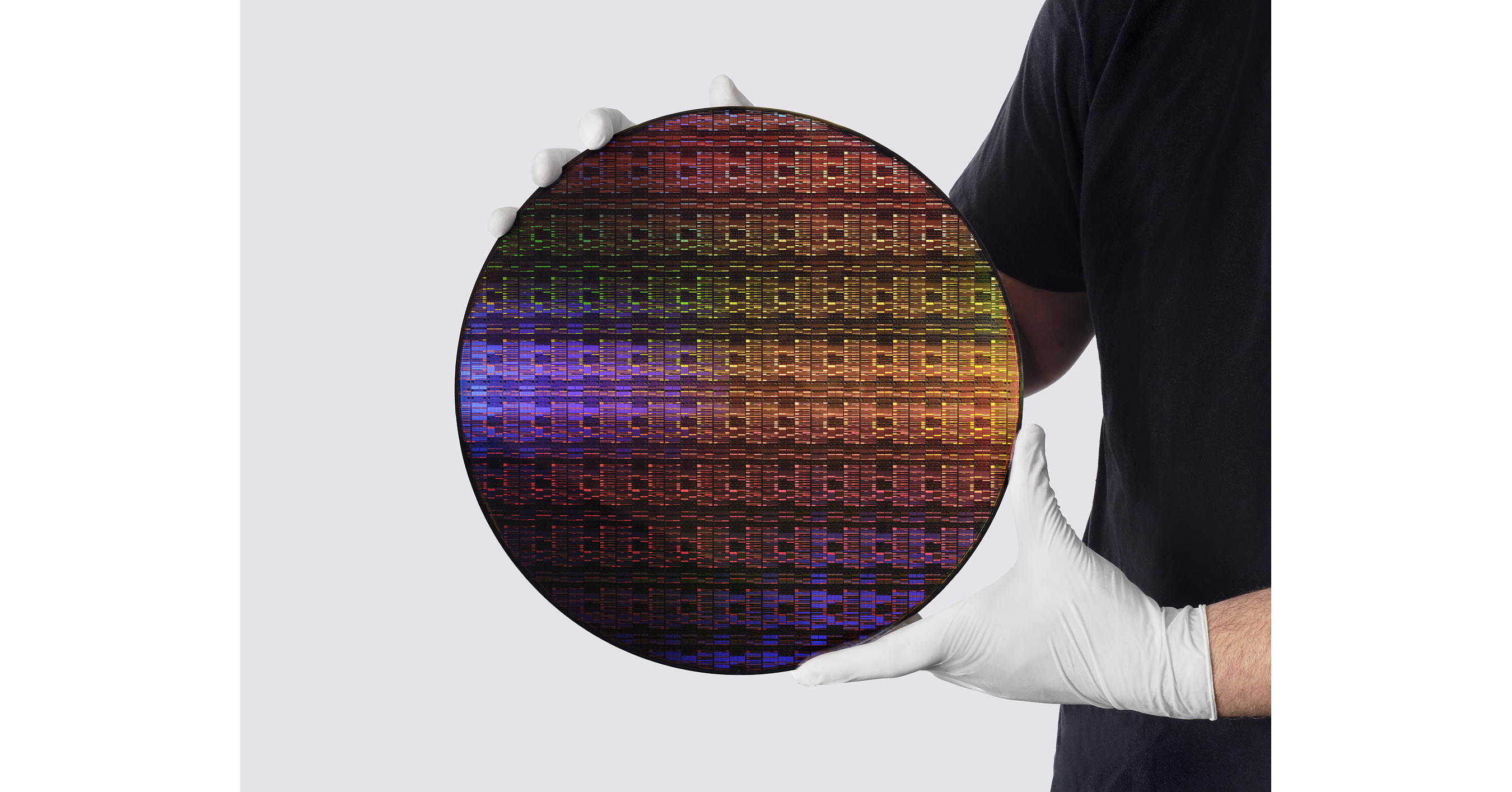
Throughout late 2024 and 2025, market analysts observed a steady upward creep in Big Tech infrastructure spending. However, the July 2026 revision past the $200 billion mark represents an inflection point. Industry insiders note that Google is not merely purchasing silicon; it is securing long-term real estate leases for next-generation data center campuses, forging direct partnerships with nuclear and renewable energy providers to power these facilities, and aggressively pre-purchasing next-generation semiconductor wafers years in advance.
This aggressive posture is rooted in a fundamental corporate fear: artificial intelligence obsolescence. In the calculus of Silicon Valley, the financial penalty of under-investing and losing search dominance or enterprise cloud market share to rivals like Microsoft, OpenAI, and Amazon dwarfs the short-term penalty of capital inefficiency. Consequently, risk mitigation for Google now means over-provisioning infrastructure rather than risking a capacity bottleneck.
Financial Mechanics: Margin Compression vs. Market Dominance
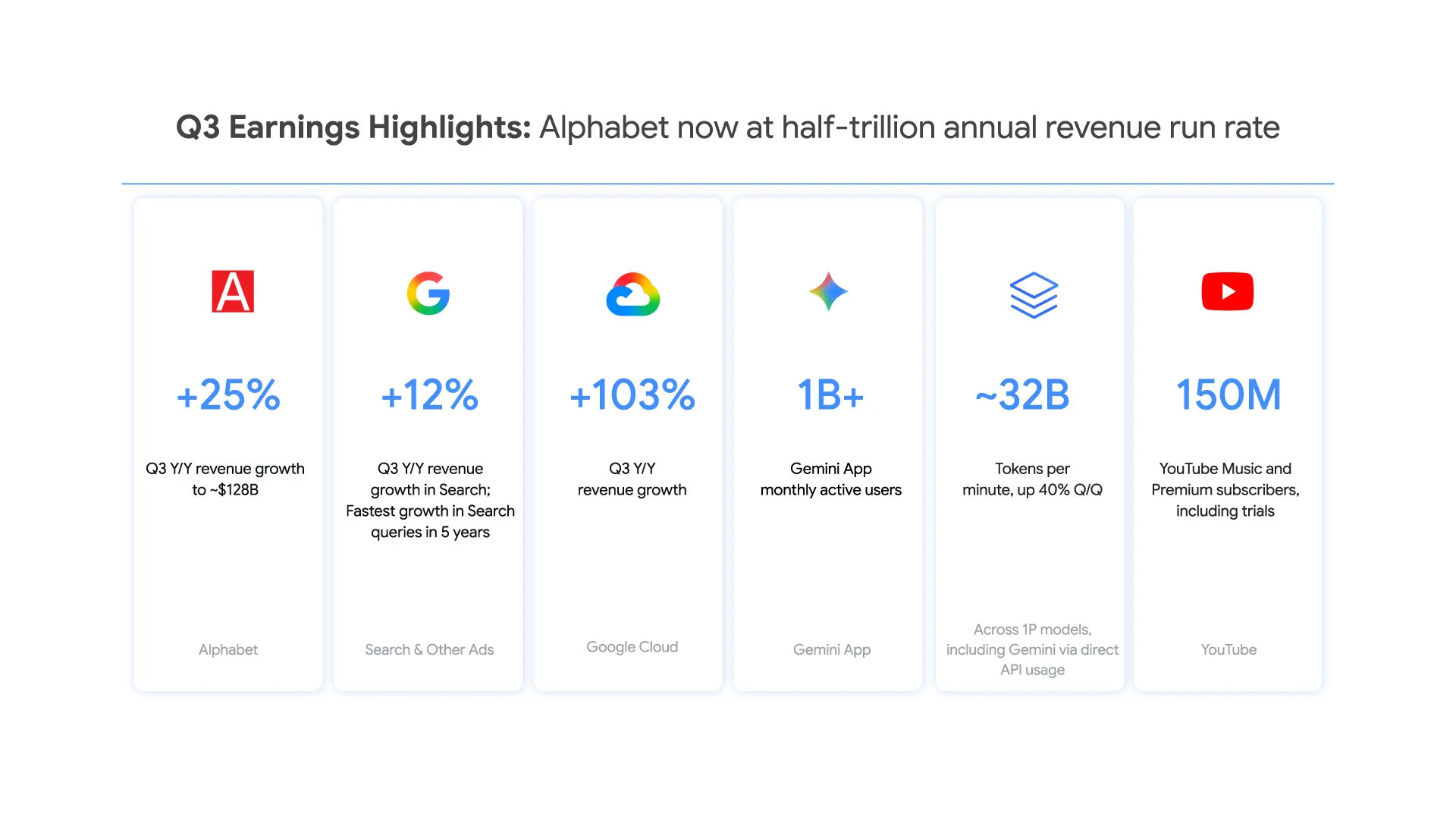
The immediate market reaction to Alphabet's revised capex trajectory highlights the classic tension between long-term strategic positioning and short-term financial performance. Equity analysts at major investment banks are frantically recalculating free cash flow projections for the remainder of the decade. When a technology conglomerate commits over $200 billion annually to capital expenditures, depreciation schedules inevitably expand, placing severe downward pressure on operating margins.
However, proponents of Google's aggressive fiscal strategy argue that traditional valuation metrics fail to capture the deflationary and productive power of scalable AI platforms. By embedding advanced multimodal AI models directly into Google Cloud, Workspace, Android, and its core search infrastructure, the company is attempting to construct an unassailable economic moat. Enterprise clients are no longer simply buying raw storage or basic computing power; they are demanding turnkey machine learning pipelines, secure fine-tuning environments, and autonomous agent capabilities.
| Metric / Indicator | Previous Consensus | Revised 2026 Guidance | Strategic Implication |
|---|---|---|---|
| Full-Year Capex Forecast | $140B – $160B | Up to $205 Billion | Massive acceleration in physical and digital infrastructure buildout. |
| Primary Cost Driver | General Cloud Expansion | Advanced TPU/GPU Clusters & Energy | Unprecedented demand for power-dense, liquid-cooled data centers. |
| Market Liquidity & Debt | Conservative Borrowing | Heightened Capital Markets Activity | Potential for increased debt issuance to preserve cash reserves. |
| ROI Timeline | 12 to 24 Months | Extended to 36+ Months | Longer gestation period for capital payback tests investor patience. |
Industry & Market Implications: Winners, Loses, and Broader Economic Ripples
The decision by Google to flood the market with capital has profound macroeconomic implications that extend far beyond Mountain View, California. The ripple effects are actively reshaping multiple global industries:
- Semiconductor Manufacturers & Hardware Vendors: The immediate beneficiaries of Google's $205 billion expenditure are the semiconductor fabricators, networking equipment providers, and specialized server assemblers. Companies supplying high-bandwidth memory (HBM), optical networking components, and custom silicon design services are experiencing historic order backlogs.
- Energy Utilities & Clean Tech: Data centers operating at multi-gigawatt scales require unprecedented electrical capacity. Google’s infrastructure expansion is accelerating partnerships with nuclear energy startups, geothermal innovators, and grid operators, fundamentally altering the commercial energy landscape.
- Wall Street & Institutional Investors: Portfolio managers face a reckoning regarding tech sector concentration. As capital expenditures skyrocket, companies lacking robust, diversified revenue streams to offset these costs risk severe corrections in their valuation multiples.
- Cloud Competitors: Microsoft, Amazon Web Services (AWS), and Oracle are being forced to match or re-evaluate their own capital outlay plans to avoid falling behind in raw compute capacity, fueling an unprecedented global arms race.
Frequently Asked Questions (People Also Ask)
Why is Google raising its 2026 capital expenditure to $205 billion?
Google is scaling its capital expenditures to meet the soaring infrastructural demands of generative artificial intelligence. This includes purchasing advanced AI accelerators (TPUs and GPUs), constructing liquid-cooled data centers, securing long-term power contracts (including nuclear and renewable energy), and expanding global cloud compute architecture to support real-time enterprise AI inference and LLM training.
How does this massive spending impact Alphabet's stock and investor returns?
While the heavy spending positions Google as an undisputed infrastructure leader, it places immediate pressure on near-term free cash flow and operating margins. Institutional investors are closely scrutinizing whether enterprise customers will adopt AI services quickly enough to justify the extended return-on-investment (ROI) timelines, creating volatility in valuation multiples.
What specific technologies are driving these high costs?
The primary cost drivers are specialized high-performance silicon (such as custom TPUs and NVIDIA GPUs), high-speed optical networking hardware required to cluster thousands of processors together, and the massive real estate and electrical infrastructure needed to power and cool high-density server racks.
How does Google's capex strategy compare to other hyperscalers like Microsoft and Amazon?
All major hyperscalers are aggressively increasing their capital budgets, but Google’s upward revision to $205 billion places it at the absolute vanguard of the AI infrastructure race. Each player is aggressively over-provisioning compute capacity to mitigate the existential risk of falling behind in the commercial AI marketplace.
Future Outlook: Critical Milestones and What to Watch
As the industry navigates the second half of the decade, the $205 billion figure will serve as a definitive benchmark for corporate capital allocation. Over the next twelve to eighteen months, financial analysts and industry observers will monitor several critical milestones to determine whether Google's massive gamble is yielding sustainable dividends:
First, market participants must track enterprise adoption velocity within Google Cloud. For these capital expenditures to translate into shareholder value, enterprise clients must rapidly transition from proof-of-concept AI trials to large-scale, production-grade deployments that generate recurring subscription revenues.
Second, regulatory compliance and energy procurement hurdles will test the execution speed of Google's infrastructure team. Securing continuous, reliable, and green power for multi-gigawatt data centers in an era of constrained electrical grids is a formidable logistical challenge. Any delays in data center activation could lead to idle capital and compressed margins.
Ultimately, Google’s aggressive fiscal posture signals that the artificial intelligence transition is entering a mature, industrial phase. The era of low-cost software scaling has been replaced by heavy, physical infrastructure commitments. Whether this $205 billion investment anchors Google's dominance for the next generation or strains financial discipline will define the narrative of global technology markets for years to come.