Executive Takeaways
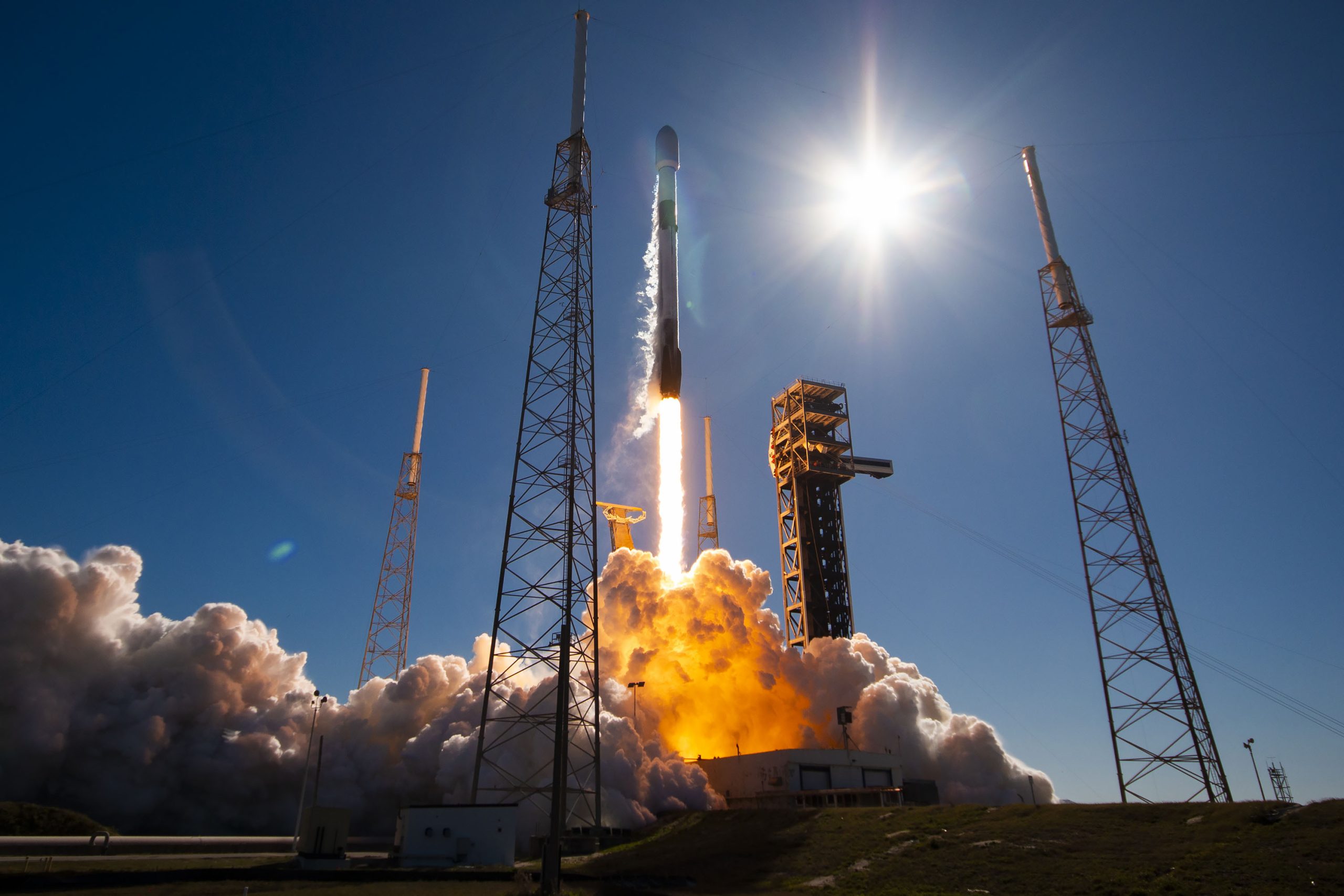
- A Historic Milestone: SpaceX closed out October by executing its 700th successful Falcon 9 launch to date, cementing the rocket’s status as the most-flown medium-to-heavy lift vehicle in operational history.
- Market Disruption & Capital Efficiency: The unmatched flight cadence has fundamentally altered launch industry economics, driving down cost-per-kilogram metrics and forcing legacy aerospace and defense contractors to reevaluate their valuation multiples and enterprise strategies.
- Infrastructure Scalability: The rapid turnaround of flight-proven first-stage boosters showcases an unprecedented level of infrastructure scalability, mitigating traditional supply-chain bottlenecks and maximizing orbital ROI.
- Regulatory & Strategic Horizons: As SpaceX looks beyond the 700-flight threshold, the operational maturity of Falcon 9 provides the financial and technical runway necessary to fund next-generation architectures like Starship.
WASHINGTON & HAWTHORNE — In an industry historically defined by astronomical cost overruns, glacial development cycles, and deep risk aversion, SpaceX has achieved a benchmark once thought mathematically impossible for a single rocket family. By closing out October with its 700th successful Falcon 9 launch, Elon Musk’s aerospace juggernaut has not only rewritten the operational playbooks of commercial spaceflight but has fundamentally inverted the global economics of orbital access.
For institutional investors, defense strategists, and enterprise technology leaders, the 700-flight milestone is far more than a statistical footnote. It represents a masterclass in capital allocation, iterative engineering, and risk mitigation. What began as an experimental, vertically integrated challenger to state-backed space programs two decades ago now operates with the relentless predictability of a high-frequency trading desk. As global markets assess the broader geopolitical and commercial implications of routine, low-cost orbital access, the Falcon 9 stands at the center of a profound structural realignment across the aerospace, telecommunications, and defense sectors.
The Anatomy of a Hegemony: Background and Catalytic Scale
Test Our Free AI & Tech Utilities Suite
Calculate LLM API token costs, analyze article dwell-time, or simulate tech DCA returns.
To understand the gravity of the 700th flight, one must examine the arid landscape of the global launch market prior to the Falcon 9’s debut in June 2010. At the turn of the century, government contractors operated under cost-plus procurement models that disincentivized rapid iteration and technological obsolescence. Launch vehicles were largely treated as exquisite, single-use artifacts, commanding price tags that restricted space access to sovereign states, well-heeled defense conglomerates, and elite scientific organizations.
SpaceX systematically dismantled this paradigm through a relentless focus on reusability and vertical integration. While early industry critics questioned the financial viability of landing and refurbishing orbital-class boosters, the company’s leadership bet heavily on iterative design and internal capital deployment. The catalytic turning point arrived when SpaceX successfully landed its first orbital booster in December 2015. From that moment forward, the company unlocked a flywheel effect: higher flight frequencies generated proprietary operational data, which in turn drove down refurbishment costs, compressed turnaround times, and attracted a massive volume of commercial and institutional payloads.
By the time the calendar turned to October, the Falcon 9 was launching at a pace that regularly outstripped entire national space programs. Achieving 700 flights requires a cadence that treats rocket hardware not as a fragile museum piece, but as a durable transportation asset akin to a commercial wide-body airliner. This industrial scaling has insulated SpaceX from traditional aerospace supply-chain vulnerabilities, allowing the company to capture an overwhelming share of the global commercial launch market while simultaneously servicing internal demands for its expanding Starlink satellite constellation.
Verified Data and Metrics Breakdown
A rigorous quantitative analysis of the Falcon 9 program reveals the sheer velocity of SpaceX's scaling efforts. Below is a comparative breakdown of key programmatic milestones, structural metrics, and operational efficiencies:
| Program Metric | Initial Phase (2010–2015) | Scaling Phase (2016–2020) | Hyper-Scale Phase (2021–Present) |
|---|---|---|---|
| Total Falcon 9 Flights | 20 flights | ~80 flights cumulative | 700+ flights (October Milestone) |
| Booster Reusability Rate | 0% (Expendable configuration) | Incremental landings & tests | Routine multi-flight reusability (up to 20+ flights per booster) |
| Average Launch Cadence | ~3.3 flights / year | ~16 flights / year | 100+ flights / year |
| Primary Payload Focus | Third-party commercial & NASA cargo | Commercial GEO & early LEO constellations | Starlink deployment + diverse global institutional manifests |
Industry and Market Implications: Winners, Losers, and Economic Realities
The achievement of the 700-flight threshold sends powerful shockwaves across the global enterprise and financial landscapes. The economic reality is stark: legacy aerospace manufacturers that rely on high-margin, low-volume production lines are facing an existential stress test. Traditional defense contractors accustomed to lucrative, cost-plus government procurement are being forced to adapt their cloud compute architecture, supply chain transparency, and engineering methodologies to compete in an environment where launch costs have plummeted by an order of magnitude.
Who Wins
- Enterprise and Institutional Customers: Telecommunications firms, Earth-observation startups, and national security agencies benefit from unprecedented market liquidity, shorter lead times, and significantly lower capital expenditures to place payloads in orbit.
- SpaceX’s Internal Balance Sheet: The sheer volume of missions provides robust cash flow generation, insulating the private company from macroeconomic downturns and funding the R&D required for heavy-lift interplanetary architectures.
- Global Supply Chain Innovators: Specialized component manufacturers, avionics firms, and material science suppliers that meet SpaceX’s rigorous velocity and quality standards are seeing unprecedented enterprise growth.
Who Loses
- Legacy Launch Providers: European, Russian, and domestic competitors that failed to pivot early toward rapid-cadence reusability find themselves priced out of commercial tenders and struggling to secure reliable market share.
- Traditional Defense Procurement Models: Bureaucratic agencies bound to legacy contracting frameworks are under intense political scrutiny to justify multi-billion-dollar development delays when commercial alternatives demonstrate daily reliability at a fraction of the cost.
Frequently Asked Questions (People Also Ask)
Frequently Asked Questions
What makes reaching 700 Falcon 9 launches a significant economic milestone?
Reaching 700 flights proves the viability of industrial-scale rocket reusability. By repeatedly flying the same first-stage boosters, SpaceX has drastically compressed its marginal cost per launch, generating exceptional operating margins while undercutting global competitors and transforming orbital access into a predictable utility.
How does Falcon 9 reusability impact enterprise ROI for satellite operators?
Lower launch costs directly reduce the capital expenditure required to deploy and maintain orbital networks. Satellite operators can achieve faster enterprise ROI, reduce risk mitigation budgets through frequent cadence, and rapidly replace aging hardware with advanced cloud compute architecture and sensors in orbit.
Are all 700 Falcon 9 launches identical in configuration?
No. Over its operational lifespan, the Falcon 9 has undergone numerous block upgrades—including enhancements to Merlin engine thrust, grid fin design, fairing sizes, and landing leg architecture—to continually optimize safety, payload capacity, and turnaround efficiency.
How does the Falcon 9 flight rate influence SpaceX's broader valuation?
The proven reliability and revenue generation of the Falcon 9 program act as the foundational financial engine for SpaceX, supporting capital allocation toward high-risk, high-reward ventures like Starship and expanding global broadband infrastructure.
Future Outlook: Navigating the Horizon Beyond Flight 700
As SpaceX closes the books on an extraordinary October, executive leadership faces both the rewards of absolute market dominance and the strategic imperative of managing technological transition. While the Falcon 9 remains the undisputed workhorse of the orbital economy, the company’s long-term roadmap hinges on the maturation of Starship—its fully reusable, heavy-lift successor designed to carry humanity and massive cargo payloads to the Moon and Mars.
In the near term, the Falcon 9 will continue to shoulder the bulk of commercial and institutional launch demands, serving as the financial anchor for corporate operations. However, regulatory compliance challenges, orbital debris mitigation standards, and increasingly congested low-Earth orbit traffic management will require proactive adaptation. For financial markets and aerospace analysts, the primary metric to watch over the next 24 to 36 months will not merely be the accumulation of launch milestones, but how effectively SpaceX transitions its operational muscle from Falcon 9’s medium-lift dominance to Starship’s disruptive heavy-lift paradigm. Until that transition is complete, the Falcon 9 remains the undisputed anchor of modern commercial space infrastructure—a testament to what happens when engineering rigor meets relentless execution.