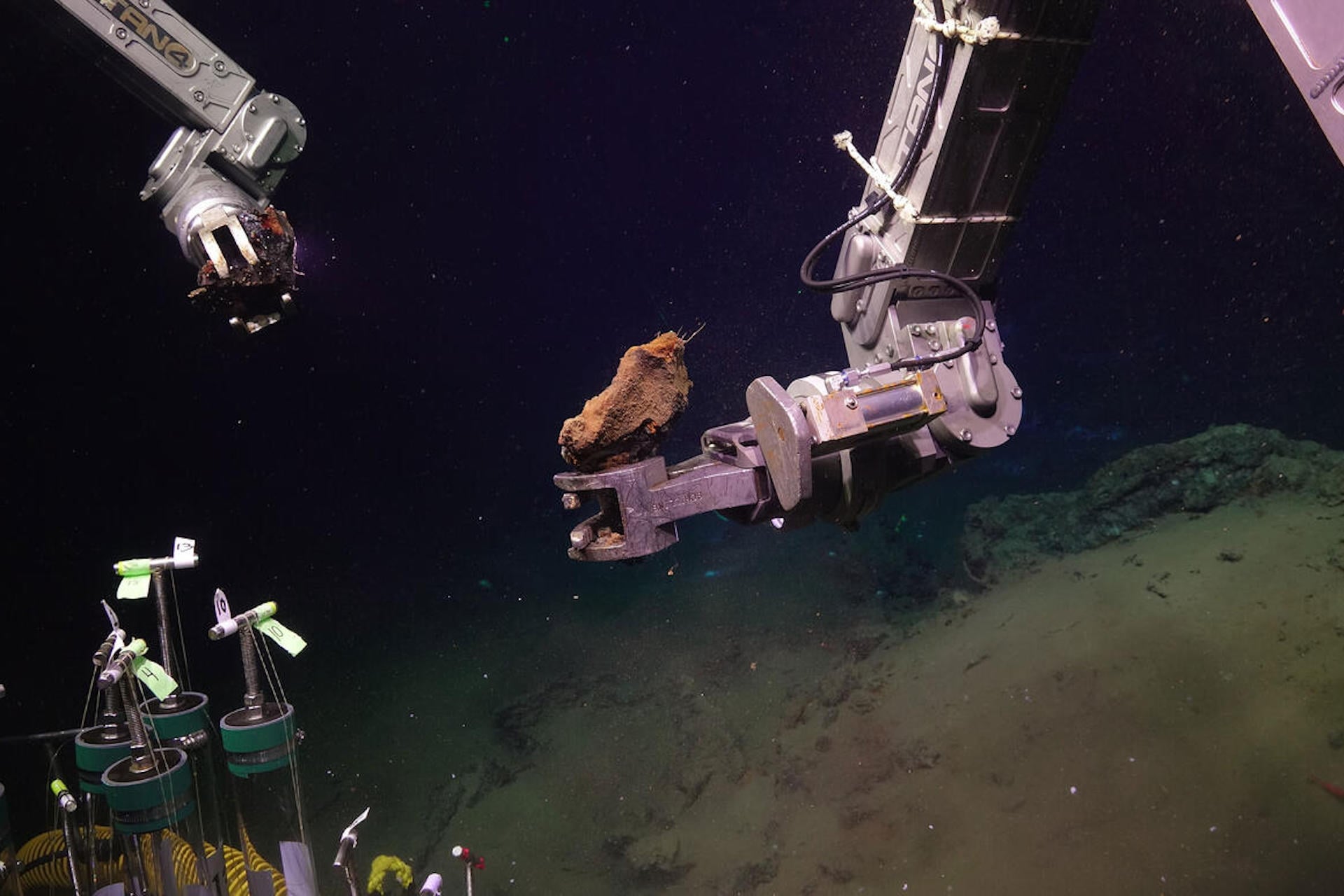
Executive Takeaways
- Unforeseen Pyrophoric Reaction: Deep-sea polymetallic nodules brought aboard research vessels unexpectedly underwent spontaneous combustion, exposing critical gaps in marine geology risk mitigation and extraction protocols.
- 스와Market Valuation Shocks: The incident has sent immediate ripples through capital allocation strategies for deep-sea mining conglomerates, pressuring equity valuation multiples and demanding rigorous regulatory compliance reviews.
- Energy Transition Friction: As automotive OEMs and technology giants race to secure EV battery metals, the physical volatility of abyssal resources introduces unprecedented infrastructure scalability and supply chain hazards.
- Advanced Risk Assessment: Geoscientists and enterprise risk officers must now factor extreme thermodynamic instability into future extraction methodologies, fundamentally altering the economics of deep-ocean mineral harvesting.
For decades, the pitch presented to institutional investors, sovereign wealth funds, and venture capitalists has been alluringly straightforward: resting undisturbed upon the pitch-black abyssal plains of the Pacific Ocean lies the world’s largest unexploited cache of battery-grade metals. Trillions of potato-sized polymetallic nodules—rich in nickel, cobalt, copper, and manganese—pave the Clarion-Clipperton Zone (CCZ), representing an estimated $10 trillion in untamed asset value. Wall Street analysts have long modeled these deposits as the ultimate hedge against geopolitical supply crunches, viewing them as the foundational infrastructure scalability required to power the global green energy transition.
That narrative, however, struck a literal and figurative match.
Recent marine science expeditions have documented an alarming, previously unmodeled phenomenon: deep-sea rocks spontaneously combusting moments after being hoisted from the crushing pressures and freezing temperatures of the ocean floor into the Earth's oxygen-rich atmosphere. This pyrophoric reaction—where geological formations ignite simply through exposure to ambient air—has transformed what was once viewed as a predictable engineering challenge into a high-stakes operational hazard. As regulatory bodies, mining executives, and environmental watchdogs scramble to decode the thermodynamics of these abyssal fires, the financial markets are being forced to re-price the entire sector's risk mitigation profile.
The Physics of Abyssal Instability: Catalytic Events and Chemical Catalysts
To understand why a rock resting peacefully four kilometers beneath the surface could burst into flames upon exposure to daylight, one must examine the extreme geochemistry of the deep ocean. Polymetallic nodules are not ordinary stones; they are hyper-dense accretionary formations that grow over millions of years through the precipitation of metal ions from seawater and sediment pore-waters. In their native environment, these minerals exist under hydrostatic pressures exceeding 400 atmospheres and near-freezing temperatures, stabilized by a delicate chemical equilibrium.
When research vessels winch these samples to the surface, the environmental shift is catastrophic in geological terms. The sudden drop in pressure, combined with an exponential increase in oxygen concentration and ambient temperature, triggers aggressive oxidation-reduction reactions. Specific phases of manganese and iron oxides within the nodules, coupled with trapped trace elements and micro-porous structures, act as catalysts. The rapid absorption of atmospheric oxygen onto the vast internal surface area of the porous nodules releases substantial exothermic heat. If this thermal energy cannot dissipate quickly enough, the temperature surpasses the ignition point of associated organic compounds or reactive mineral phases, resulting in spontaneous combustion.
This pyrochemical volatility is not merely a localized laboratory anomaly; it is a systemic wake-up call. For marine geologists, it shatters longstanding assumptions regarding the stable state of recovered seabed materials. For enterprise operators planning industrial-scale dredging fleets, it introduces a terrifying variable: handling thousands of tons of pyrophoric cargo on a floating platform surrounded by high-octane marine fuel and advanced electronic infrastructure.
| Parameter | Abyssal In-Situ Environment (4,000m Depth) | Surface / Deck Environment (1 ATM) | Operational Risk Implication |
|---|---|---|---|
| Hydrostatic Pressure | ~400 Megapascals (MPa) | 0.1 MPa (Atmospheric) | Rapid degassing and micro-fracturing of nodule matrix. |
| Ambient Temperature | 1°C to 3°C | 20°C to 40°C (Deck conditions) | Thermal shock accelerates exothermic oxidation rates. |
| Oxygen Concentration | Low dissolved oxygen / Anoxic pore waters | 21% Oxygen (Atmospheric air) | Immediate reactive surface oxidation and thermal runaway. |
| Material Porosity | Saturated with abyssal fluid | Rapid drying and gas exchange | High surface-area-to-volume heat generation without cooling. |
Industry & Market Implications: Re-Pricing the Abyssal Frontier

The revelation that deep-sea minerals can self-ignite sends immediate shockwaves across global capital markets, corporate boardrooms, and regulatory commissions. For years, proponents of deep-seabed mining argued that extraction would be cleaner and more economically viable than terrestrial mining, avoiding issues like child labor in the Democratic Republic of Congo or massive deforestation in Indonesia.
However, the financial calculus has fundamentally shifted. Investment banks and private equity firms underwriting exploratory licenses must now account for severe operational risk contingencies:
- Capital Allocation and Insurance Premiums: Marine hull and machinery underwriters are re-evaluating risk models. Insuring a multi-billion-dollar mining vessel carrying thousands of tons of self-igniting cargo requires entirely new classes of maritime risk mitigation, driving up operational expenditures (OPEX).
- Regulatory Compliance and International Law: The International Seabed Authority (ISA) is facing intensified scrutiny from member states and environmental NGOs. The proven volatility of these rocks provides opponents with powerful leverage to demand stricter moratoriums, halting commercial-scale extraction permits until failsafe handling protocols are legally mandated.
- Supply Chain Valuation Multiples: Automotive manufacturers and clean-tech firms relying on predictable long-term offtake agreements must weigh the risk of catastrophic cargo loss at sea against the security of traditional terrestrial supply chains. Valuation multiples for pre-revenue deep-sea mining startups are experiencing downward pressure as institutional investors demand proof of concept regarding thermal stabilization.
Frequently Asked Questions (People Also Ask)
Why do deep-sea rocks spontaneously combust when brought to the surface?
Deep-sea polymetallic nodules form under extreme pressure and near-freezing temperatures in an oxygen-depleted environment. When rapidly brought to the surface, the sudden exposure to atmospheric oxygen and higher temperatures triggers rapid exothermic oxidation reactions within the porous, chemically reactive mineral matrix. If the resulting heat cannot dissipate quickly enough, it causes the material to ignite.
Which specific metals found in these nodules are driving the reaction?
The combustion is primarily driven by reactive transition metal complexes, specifically unstable oxides of manganese and iron, acting in concert with trapped reduced sulfur compounds and micro-porous catalytic structures that aggressively bind atmospheric oxygen upon drying.
How does this discovery impact commercial deep-sea mining stocks and investments?
The discovery introduces severe, unpriced risks into the sector, leading to increased insurance costs, stricter regulatory oversight by bodies like the International Seabed Authority, and higher capital expenditures required to engineer fire-suppression and inert-gas storage systems for extraction vessels.
Can this thermal instability be mitigated during commercial extraction?
Yes, engineers are examining specialized material-handling protocols, including keeping harvested nodules submerged in oxygen-depleted seawater slurries, immediate chemical passivation, or storing them in inert nitrogen-flooded holds, though each solution significantly increases operational complexity and cost.
Future Outlook: What Comes Next for Abyssal Exploration
As the scientific community publishes further empirical data on these pyrophoric events, the race is on between engineering ingenuity and regulatory restriction. Over the next 18 to 24 markets cycles, several key milestones will dictate whether deep-sea mining remains a viable pillar of the green energy transition or becomes an abandoned frontier:
First, marine engineering firms must develop closed-loop, oxygen-isolated transport systems capable of moving raw ore from the seabed directly into chemically stabilized storage holds without atmospheric exposure. Second, maritime classification societies will draft rigid new safety codes governing the carriage of reactive marine minerals, establishing international standards akin to those used for hazardous chemicals and combustible bulk cargoes.
Ultimately, the spontaneous combustion of deep-sea rocks serves as a humbling reminder that nature’s deepest vaults cannot be breached without consequence. For the executives and financiers steering the multi-trillion-dollar energy transition, the message is unmistakable: unlocking the riches of the abyss requires mastering forces far more volatile than previously imagined.