Executive Takeaways
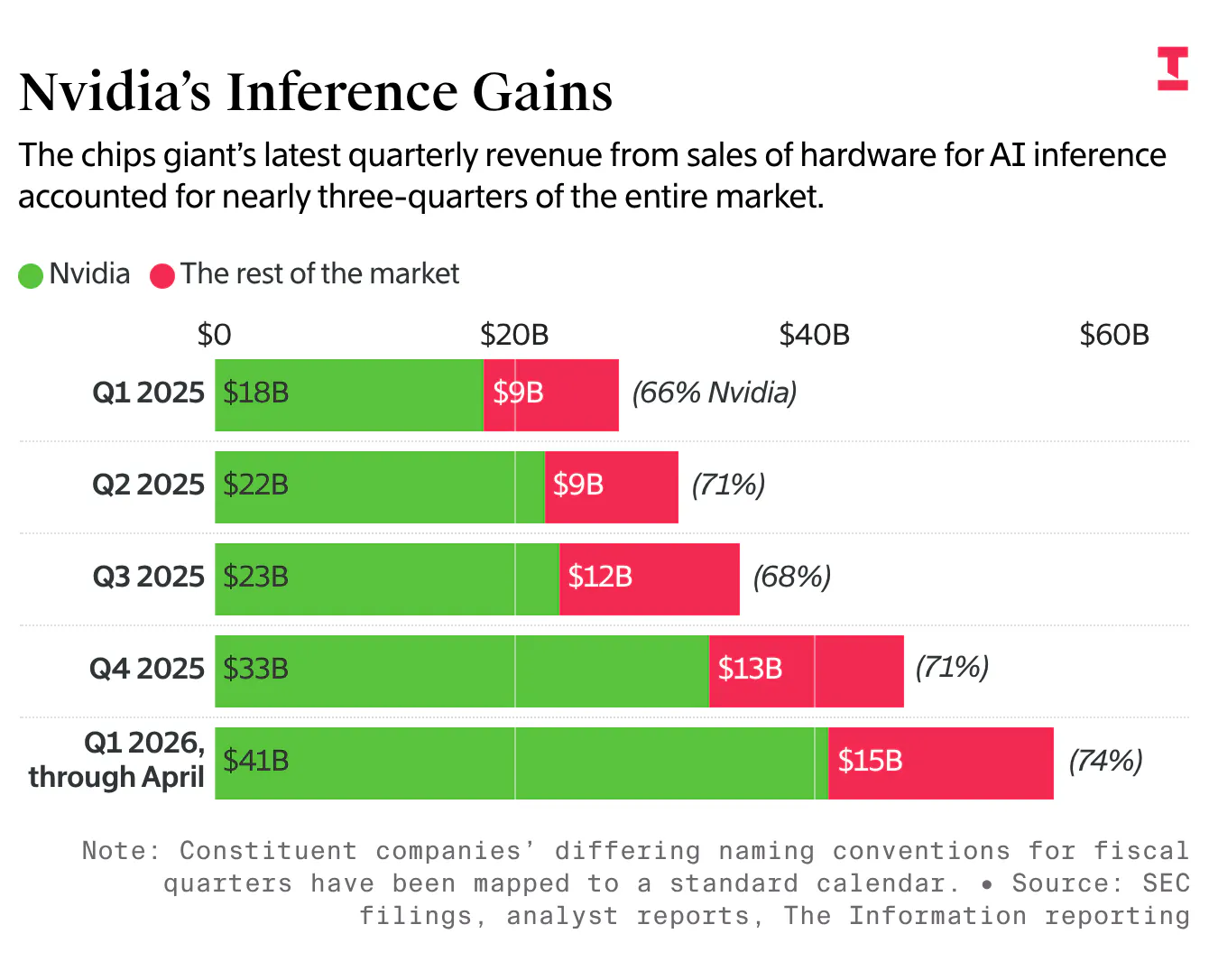
- Unprecedented Demand: Nvidia’s quarterly sales figures continue to break historical precedents, driven by relentless enterprise generative AI adoption and zero-bound elasticity in GPU pricing.
- The Hyperscale Counter-Offensive: Alphabet (Google), Amazon Web Services (AWS), Meta, and Microsoft are aggressively deploying proprietary Application-Specific Integrated Circuits (ASICs) to hedge against supply crunches and compress gross margin leakage.
- Capital Allocation Paradigm Shift: As enterprise ROI scrutiny mounts, cloud service providers are fundamentally restructuring their cloud compute architecture to decouple infrastructure scalability from a single hardware vendor.
- Valuation Multiples at Stake: While near-term cash flow is secure, long-term valuation multiples for pure-play accelerated computing face structural headwinds as custom silicon achieves production parity.
For more than three years, the global technology economy has danced to a singular, deafening rhythm: the hum of Nvidia’s accelerated computing architecture powering the generative AI gold rush. When market data for late November 2025 crossed trading desks, Nvidia’s top-line revenue metrics were once again described by institutional analysts as "off the charts." Wall Street consensus was obliterated as enterprise demand for cutting-edge accelerators outpaced even the most aggressive bullish forecasts. Yet, beneath the euphoria of record-breaking earnings calls and astronomical valuation multiples lies a high-stakes corporate chess match that threatens to alter the landscape of enterprise computing forever.
Even as corporate treasuries empty themselves to secure the latest shipments of Nvidia hardware, the world’s wealthiest technology conglomerates—Alphabet, Amazon, Meta, and Microsoft—are accelerating a multi-billion-dollar counter-offensive. They are no longer content merely being downstream consumers in Nvidia’s supply chain. Armed with staggering market capitalizations and proprietary software ecosystems, these hyperscalers are scaling up their own custom silicon initiatives. The race to dominate the next decade of artificial intelligence is no longer just about who can buy the most GPUs; it is about who can engineer an independent path away from Nvidia’s near-monopoly.
The Anatomy of an Unprecedented Silicon Boom
Test Our Free AI & Tech Utilities Suite
Calculate LLM API token costs, analyze article dwell-time, or simulate tech DCA returns.
To understand the urgency driving the hyperscale custom silicon movement, one must first examine the sheer magnitude of Nvidia’s market dominance. Throughout 2024 and 2025, Nvidia’s networking, hardware, and software stack became the default infrastructure for training and deploying frontier large language models (LLMs). Venture capital firms, sovereign wealth funds, and Fortune 500 enterprises engaged in what can only be described as a capital allocation frenzy, treating GPUs as the primary reserve currency of the digital age.
However, this reliance comes with severe economic friction. Nvidia’s gross margins, consistently hovering near historical highs, represent a direct transfer of wealth from cloud service providers (CSPs) to a single hardware supplier. For Amazon Web Services, Google Cloud, and Microsoft Azure, these input costs compress profit margins on cloud-hosted AI inference workloads. As enterprise clients demand lower pricing for high-throughput AI applications, hyperscalers face a classic margin squeeze: they must pay top-dollar for Nvidia silicon while competing in a commoditized cloud compute market.
This dynamic has transformed capital expenditure (CapEx) strategy across Silicon Valley. Data center investments that once prioritized real estate and power capacity are now laser-focused on silicon sovereignty. By designing custom ASICs tailored precisely to their internal workloads, cloud giants are executing a textbook risk-mitigation strategy designed to shatter Nvidia��s pricing power.
Inside the Hyperscale Custom Silicon Playbook
The pivot toward proprietary silicon is not a unified front; each tech titan is deploying a distinct architectural philosophy tailored to its specific operational DNA:
- Alphabet (Google): As the pioneer of the custom AI chip movement with its Tensor Processing Unit (TPU), Google possesses a mature, battle-tested hardware stack. Having deployed multiple generations of TPUs—such as the TPU v5p and subsequent architectures—Google processes a significant portion of its internal Gemini workloads on its own silicon, effectively bypassing the Nvidia ecosystem for large-scale model training.
- Amazon Web Services (AWS): AWS has doubled down on its Trainium and Inferentia chips. Designed specifically to optimize cost-efficiency for machine learning training and inference, Amazon’s custom silicon strategy focuses on offering enterprise customers a lower-cost alternative to traditional GPU instances via its cloud infrastructure.
- Meta Platforms: Meta, historically a software-centric giant, has restructured its hardware engineering divisions to roll out its Meta Training and Inference Accelerator (MTIA). By tailoring chips specifically to recommendation systems and open-source Llama model deployment, Meta aims to drastically reduce the energy footprint and capital expenditure required to power its social media algorithms and generative features.
- Microsoft: While maintaining an exceptionally close partnership with Nvidia for cutting-edge frontier research, Microsoft has introduced its Azure Maia AI accelerator. This move ensures that the tech giant can optimize its massive investments in OpenAI infrastructure while retaining a proprietary fallback option.
| Company | Primary Custom Silicon | Core Strategic Focus | Market Impact |
|---|---|---|---|
| Alphabet (Google) | Tensor Processing Unit (TPU) | Massive-scale LLM training and internal Gemini execution. | Reduces reliance on merchant silicon for core search and AI products. |
| Amazon (AWS) | Trainium & Inferentia | Cost-optimized cloud inference and targeted model training. | Provides cloud customers high-performance, cost-effective alternatives. |
| Meta Platforms | MTIA (Meta Training & Inference) | Recommendation engines and open-source Llama model deployment. | Lowers internal operational expenditure for ad-targeting and generative features. |
| Microsoft | Azure Maia | Supporting OpenAI workloads and Azure enterprise AI scaling. | Diversifies supply chain risk while maintaining close Nvidia ties. |
Industry and Market Implications: Winners, Losers, and Economic Realities
The structural shift toward custom silicon is reshaping the technology sector’s value distribution. While Nvidia continues to enjoy record-breaking financial performance in the near term, the long-term competitive dynamics are growing increasingly complex.
The Winners: Hyperscalers who successfully deploy custom silicon stand to capture substantial margin expansion. By cutting out third-party markup, companies like Alphabet and Amazon can offer more competitive pricing to enterprise cloud clients, capturing greater market share in the booming AI-as-a-Service (AIaaS) sector. Additionally, semiconductor foundry leaders—most notably Taiwan Semiconductor Manufacturing Company (TSMC)—stand to benefit enormously, as the total volume of chips manufactured remains extraordinarily high regardless of whether the final product bears an Nvidia logo or a hyperscaler’s brand.
The Pressure Points: Nvidia faces a subtle but persistent erosion of its addressable market ceiling. While demand for its flagship GPUs remains robust for frontier training—where general-purpose flexibility and the CUDA software moat are paramount—custom ASICs are rapidly capturing high-volume, predictable inference workloads. Once an AI model is trained and deployed at scale, running it on a specialized, power-optimized ASIC often makes superior economic sense.
Furthermore, enterprise CIOs must navigate an increasingly fragmented infrastructure landscape. Choosing between proprietary cloud chips and industry-standard GPUs introduces architectural complexity, forcing software engineers to optimize codebases for multiple hardware targets.
Frequently Asked Questions (People Also Ask)
Why are Google, Amazon, and Microsoft building their own AI chips instead of buying from Nvidia?
Hyperscalers are building custom chips—such as Google's TPUs and Amazon's Trainium—primarily to reduce financial dependence on Nvidia, protect their gross margins, and optimize infrastructure specifically for their proprietary workloads. Buying merchant silicon at scale creates a significant cost burden, whereas custom ASICs offer superior power-efficiency and cost-performance metrics for specific inference and training tasks.
Do custom AI chips completely replace Nvidia GPUs?
No. While custom ASICs excel at specific, highly optimized workloads and large-scale inference, Nvidia GPUs retain a decisive advantage in general-purpose flexibility, rapid prototyping, and frontier model training. This is largely due to Nvidia's proprietary CUDA software ecosystem, which remains the gold standard for AI researchers developing new algorithms.
How does the rise of custom silicon affect enterprise cloud costs?
Over the medium to long term, the proliferation of custom cloud silicon is expected to drive down the cost of running AI applications in the cloud. As cloud providers offset their hardware acquisition costs by using proprietary chips, they can pass those savings on to enterprise customers, democratizing access to high-performance AI infrastructure.
What is the role of semiconductor foundries in the custom AI chip boom?
Foundries—most notably TSMC—act as the foundational enablers of this entire ecosystem. Whether a chip is designed by Nvidia, Google, or Amazon, the physical manufacturing largely converges on advanced fabrication plants, insulating foundry revenues from shifts in brand preference.
Future Outlook: Milestones and Market Trajectory
As the technology sector navigates the next phase of the artificial intelligence buildout, several critical milestones will determine the ultimate balance of power between merchant silicon suppliers and hyperscale custom chip architects.
First, market observers will closely monitor enterprise adoption rates for cloud instances powered by custom ASICs versus standard GPU clusters. If developer adoption of chips like AWS Trainium or Google TPUs accelerates significantly, it will signal that the software moat protecting traditional GPU architectures is beginning to narrow.
Second, supply chain dynamics and fabrication capacity at advanced nodes (such as 3-nanometer and sub-3-nanometer processes) will dictate how quickly hyperscalers can scale their custom silicon manufacturing. Any bottlenecks at the foundry level could temporarily force cloud providers back into heavy reliance on merchant silicon.
Finally, capital expenditure discipline will remain a focal point for institutional investors. As corporate boards demand clear evidence of enterprise ROI on multi-billion-dollar AI infrastructure investments, the ability of custom silicon to deliver superior cost-to-performance ratios will separate winning technology strategies from costly miscalculations.
Nvidia’s current sales figures are undeniably historic, reflecting a generational technological transition. Yet, the definitive chapter of the AI hardware revolution has not yet been written. The multi-front rebellion led by Google, Amazon, and their peers ensures that the future of enterprise computing will be defined not by a single monopoly, but by a fiercely competitive, multi-architecture silicon marketplace.