Executive Takeaways
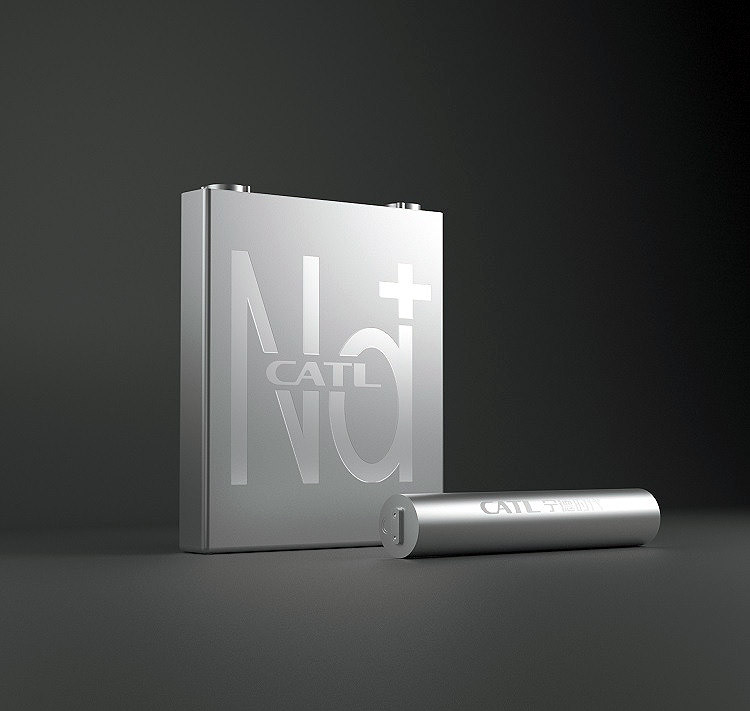
- Parity Achieved: Contemporary Amperex Technology Co. Limited (CATL) has advanced its second-generation sodium-ion battery chemistry to hit a volumetric and gravimetric energy density of 200 Wh/kg, encroaching directly on traditional Lithium Iron Phosphate (LFP) metrics.
- Capital Allocation Shift: Mass production validation and lower raw material acquisition costs promise to structurally compress gross margin pressures for global Original Equipment Manufacturers (OEMs).
- PHEV & Fleet Strategy: CATL is actively engineering these cells to penetrate the high-growth Plug-in Hybrid Electric Vehicle (PHEV) market, mitigating range anxiety while safeguarding enterprise ROI.
- Supply Chain Resilience: By circumventing lithium and cobalt pricing volatility, the breakthrough introduces robust risk mitigation and supply chain sovereignty for industrial energy storage and transport sectors.
BEIJING & HONG KONG — In a development poised to upend global energy transition timelines, Contemporary Amperex Technology Co. Limited (CATL)—the world's largest lithium-ion battery manufacturer—has officially updated global markets on the industrialization of its second-generation sodium-ion battery platform. Reaching an energy density threshold of 200 Wh/kg, CATL's latest iteration effectively narrows the performance delta that has historically handicapped non-lithium chemistries, challenging the absolute market dominance of Lithium Iron Phosphate (LFP) cells.
Announced amid intensifying global competition and shifting capital allocation strategies across the automotive sector, this milestone carries profound implications for asset valuation multiples, infrastructure scalability, and raw material liquidity. By eliminating reliance on scarce, price-volatile lithium carbonates, CATL is engineering a structural shift in manufacturing cost economics. For institutional investors, venture capital syndicates, and corporate strategists navigating regulatory compliance and decarbonization mandates, the commercialization of 200 Wh/kg sodium-ion architecture represents a seminal inflection point.
The Technical Genesis: Engineering Around Lithium Volatility
Test Our Free AI & Tech Utilities Suite
Calculate LLM API token costs, analyze article dwell-time, or simulate tech DCA returns.
For over a decade, the commercial electric vehicle (EV) market has danced to the tune of lithium supply chains. Lithium Iron Phosphate (LFP) batteries emerged as the preferred chemistry for entry-to-mid-tier passenger vehicles due to their thermal stability and lower cost profile relative to Nickel Manganese Cobalt (NMC) configurations. However, historical price spikes in lithium carbonate—which peaked aggressively during post-pandemic supply crunches—exposed the structural vulnerability of relying on a single geochemical foundation.
CATL’s strategic counter-offensive centers on sodium, an alkali metal sitting directly beneath lithium on the periodic table. Sodium shares similar chemical properties with lithium but boasts near-infinite crustal abundance and negligible raw material acquisition costs. Historically, sodium-ion batteries suffered from inferior energy density, poor cycle life, and severe capacity retention drops in sub-zero temperatures.
CATL’s second-generation architecture systematically resolves these engineering bottlenecks. By optimizing cathode material microstructures, refining anode interfaces, and employing advanced electrolyte formulations, the company’s R&D division has unlocked a gravimetric density of 200 Wh/kg. This performance metric places the chemistry within striking distance of mainstream LFP cells, which typically range from 160 Wh/kg to 220 Wh/kg at the pack level. Crucially, CATL's sodium cells demonstrate superior low-temperature performance, retaining upwards of 90% capacity at -20°C—a critical performance indicator for cold-weather fleet operations and northern-hemisphere consumer adoption.
Targeting the PHEV Ecosystem and Mass Production Economics
While early battery industry narratives framed sodium-ion solely as a stationary energy storage solution (ESS) or a niche chemistry for ultra-low-cost micro-mobility, CATL’s updated roadmap signals a far more aggressive commercial assault. The world's biggest battery maker is actively positioning its second-generation chemistry to power the future of Plug-in Hybrid Electric Vehicles (PHEVs).
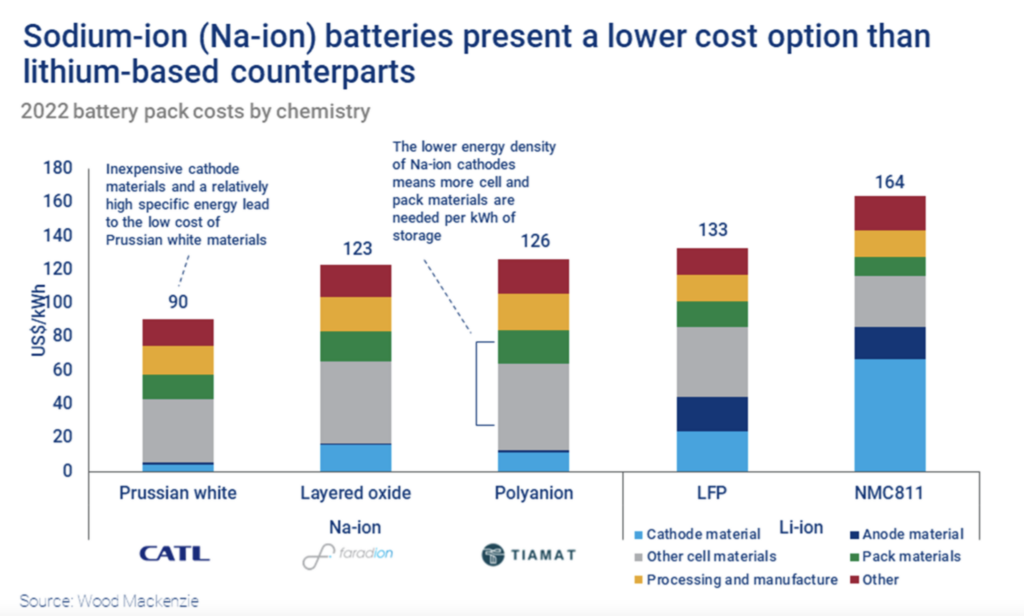
PHEVs represent one of the fastest-growing segments in the global automotive ecosystem, serving as a transitional bridge for consumers reluctant to commit entirely to battery electric vehicles (BEVs) due to charging infrastructure gaps. By integrating 200 Wh/kg sodium-ion cells into PHEV packs, automakers can offer competitive all-electric driving ranges while slashing the bill of materials (BOM). This cost reduction directly enhances corporate profitability, allowing legacy automakers to defend operating margins amidst fierce price wars instigated by market leaders.
Furthermore, CATL’s manufacturing lines are engineered for high-speed, drop-in compatibility with existing lithium-ion cell production infrastructure. This ensures minimal capital expenditure (CapEx) friction during industrial scaling, accelerating mass production timelines and amplifying market liquidity for downstream automotive partners.
Comparative Metrics: Second-Gen Sodium-Ion vs. Traditional LFP
To evaluate the competitive positioning of CATL's latest engineering breakthrough, the following table contrasts key performance indicators, cost dynamics, and operational parameters between second-generation sodium-ion cells and standard LFP alternatives.
| Metric / Parameter | CATL 2nd-Gen Sodium-Ion | Traditional LFP (Lithium Iron Phosphate) |
|---|---|---|
| Gravimetric Energy Density | ~200 Wh/kg | 160 – 220 Wh/kg |
| Raw Material Cost Exposure | Extremely Low (Abundant Sodium Salt) | Moderate (Tied to Lithium Carbonate Index) |
| Low-Temperature Performance (-20°C) | Retains >90% capacity | Significant capacity drop (often 60-70%) |
| Thermal Safety Profile | Exceptional (High thermal runaway threshold) | Very Good (Industry benchmark for safety) |
| Primary Target Markets | PHEVs, Entry-Level BEVs, ESS, Micro-mobility | Standard BEVs, Commercial Fleets, ESS |
Industry & Market Implications: Winners, Losers, and Macroeconomics
The commercial maturation of 200 Wh/kg sodium-ion technology triggers a profound reallocation of economic value across the global energy and automotive value chains. Financial analysts at major Wall Street institutions and European banking houses are already re-evaluating long-term commodity demand forecasts.
The Winners:
- CATL and Tier-1 Innovators: By securing intellectual property moats and early production capacity, CATL cements its status as an indispensable technology provider, insulating itself from pure commodity price cycles.
- Automotive OEMs Embracing Mixed Architectures: Car manufacturers that move swiftly to integrate sodium-ion cells into PHEV platforms will capture margin advantages, undercutting competitors locked into higher-cost lithium supply contracts.
- Industrial Energy Storage Developers: Stationary grid storage providers stand to benefit immensely from lower capital expenditure hurdles, accelerating infrastructure scalability for renewable energy integration.
The Vulnerable:
- Pure-Play Lithium Miners: Junior and mid-tier lithium exploration and extraction companies face downward valuation pressures as alternative chemistries temper long-term demand growth curves.
- High-Cost LFP Producers: Manufacturers lagging in process innovation risk margin compression as sodium-ion alternatives set aggressive pricing floors across entry-level vehicle segments.
From a geopolitical standpoint, sodium-ion technology offers profound risk mitigation. Because sodium precursors can be sourced domestically or regionally in virtually every major industrial economy, the technology significantly reduces exposure to geopolitical trade friction, export controls, and concentrated mineral refining monopolies.
Frequently Asked Questions (People Also Ask)
How close is CATL's sodium-ion battery energy density to LFP?
CATL's second-generation sodium-ion chemistry achieves an energy density of approximately 200 Wh/kg. This places it in direct competition with traditional Lithium Iron Phosphate (LFP) cells, which typically cluster between 160 Wh/kg and 220 Wh/kg at the pack level, effectively closing the historic performance gap.
Why are sodium-ion batteries cheaper to mass-produce?
Sodium is one of the most abundant elements on Earth, eliminating the need for expensive, price-volatile materials like lithium carbonate and cobalt. Furthermore, sodium-ion manufacturing utilizes aluminum foil current collectors for both anodes and cathodes (unlike lithium-ion, which requires costly copper foil), substantially lowering bill-of-materials (BOM) costs.
What vehicle segments will benefit most from CATL's second-generation battery?
While micro-mobility and entry-level battery electric vehicles (BEVs) remain prime candidates, CATL is aggressively targeting the Plug-in Hybrid Electric Vehicle (PHEV) sector. The 200 Wh/kg density allows PHEVs to maintain practical all-electric ranges while optimizing enterprise ROI and reducing retail price points.
How do sodium-ion batteries perform in cold weather?
One of the standout operational advantages of CATL's sodium-ion chemistry is its exceptional low-temperature resilience. While traditional LFP cells experience severe capacity drops in freezing conditions, CATL's second-gen cells retain upwards of 90% of their charge capacity at -20°C.
Future Outlook: Milestones and Strategic Horizon
As CATL transitions its second-generation sodium-ion platform from pilot validation to full-scale mass production, industry observers and financial markets will monitor several critical execution milestones over the next 12 to 24 months:
- OEM Design-In Announcements: Watch for tier-1 global automakers to formally announce vehicle architectures—particularly within the PHEV and affordable compact BEV segments—utilizing CATL's sodium-ion packs.
- Gigafactory Re-tooling Metrics: Capital expenditure updates from CATL and its joint-venture partners will reveal the speed at which existing lithium-ion production lines can be adapted for sodium cell output.
- Regulatory Compliance and Safety Certifications: Securing UN ECE and automotive-grade safety accreditations across North American, European, and Asian markets will dictate the speed of international deployment.
Ultimately, CATL's technological leap underscores a broader structural evolution in the energy storage landscape. By successfully marrying competitive energy density with abundant, low-cost chemistry, the company is not merely diversifying its product portfolio—it is laying the foundation for a more resilient, cost-effective, and globally scalable electrified economy.