Executive Takeaways
- The Hardware Divide: Microsoft’s newly discovered "better performance" toggle relies exclusively on advanced silicon-level instruction sets found only in next-generation processors.
- Enterprise ROI Impact: Millions of corporate machines purchased within the last three to four years are structurally incapable of unlocking this feature, forcing enterprise IT leaders to re-evaluate capital allocation and replacement lifecycles.
- Silicon Obsolescence: The feature exposes the widening gap between software feature availability and physical hardware capabilities, accelerating the timeline for hardware depreciation and corporate risk mitigation strategies.
- Market Valuation Ripple Effects: PC manufacturers and semiconductor heavyweights stand to benefit from a forced upgrade super-cycle, while secondary markets face a wave of prematurely dated enterprise assets.
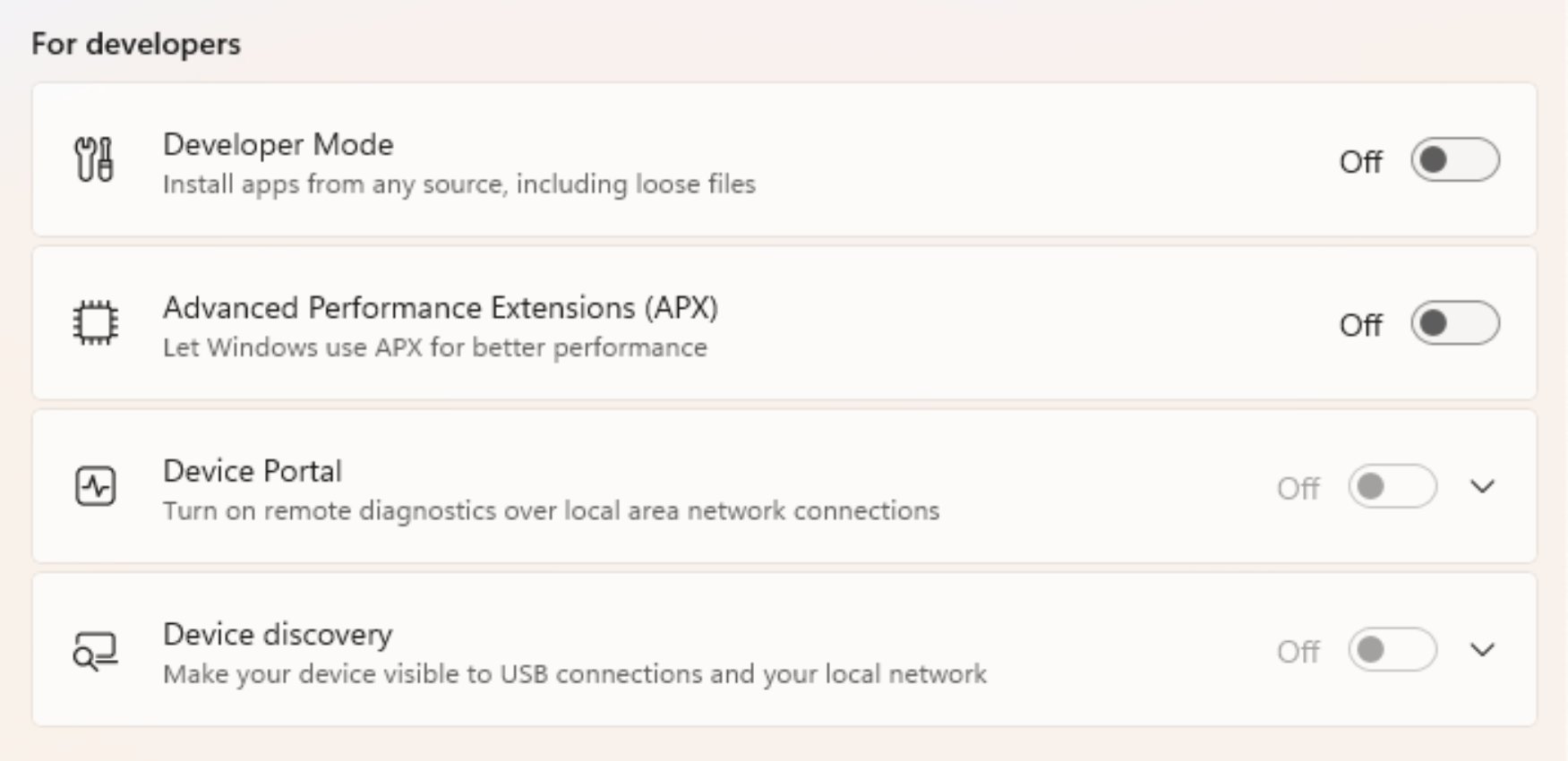
For enterprise IT executives, Chief Information Officers (CIOs), and institutional technology analysts, the arithmetic of hardware lifecycles has long been anchored in predictable depreciation schedules. Typically spanning four to five years, these cycles balance capital expenditure (CapEx) with operational efficiency. However, a silent shift within the Windows 11 operating system architecture has thrown traditional infrastructure planning into disarray. A newly surfaced "better performance" toggle—designed to squeeze maximum throughput, thermal efficiency, and compute velocity from modern hardware—has appeared in recent preview builds. The catch? Hundreds of millions of machines currently running Windows 11 will never be able to activate it.
This development is far more than a minor user-interface quirk or an esoteric enthusiast grievance. It is a defining flashpoint in the modern era of computing, laying bare the hard economic and architectural limits imposed by rapid advancements in silicon design. As software capabilities increasingly outpace physical infrastructure, corporate budgeting, supply chain strategies, and sustainability mandates face a sudden, high-stakes reckoning.
The Anatomy of the Lockout: Silicon-Level Dependencies
Test Our Free AI & Tech Utilities Suite
Calculate LLM API token costs, analyze article dwell-time, or simulate tech DCA returns.
To understand why a simple settings toggle can render a multi-thousand-dollar workstation functionally obsolete regarding this specific capability, one must examine the fundamental evolution of modern cloud compute architecture and local processing units. Historically, operating system performance toggles adjusted power plans, core parking algorithms, and thermal throttle limits based on ACPI (Advanced Configuration and Power Interface) specifications.
The new Windows 11 performance feature, however, operates at a significantly deeper level of abstraction. It relies on hardware-enforced virtualization security features, advanced neural processing units (NPUs), and microarchitectural extensions embedded directly into the silicon of next-generation processors—specifically Intel’s Lunar Lake and Arrow Lake architectures, AMD’s Ryzen AI platforms, and Qualcomm’s Snapdragon X series. These processors incorporate specialized telemetry pipelines and dynamic voltage-frequency scaling (DVFS) controllers that communicate instantaneously with the OS kernel via hardware-level interrupts rather than software polling.
Legacy architectures—even those powerful enough to comfortably pass Microsoft’s initial, highly controversial Windows 11 system requirements—simply lack the physical logic gates and co-processor integrations required to execute these micro-instructions. Consequently, when the operating system detects older silicon, the toggle either remains grayed out or fails to surface entirely. For organizations managing fleets of enterprise laptops purchased as recently as 2022, this creates an unbridgeable architectural chasm within a seemingly homogeneous software environment.
Capital Allocation and Enterprise Infrastructure Realities
The revelation of this hardware-gated feature forces corporate finance departments and IT procurement teams to re-examine their long-term infrastructure scalability and risk mitigation models. In an economic climate characterized by stringent capital discipline and compressed valuation multiples, IT budgets are under intense scrutiny. Upgrading functional hardware solely to unlock a marginal performance optimization toggle is a non-starter for most Chief Financial Officers (CFOs).
Yet, the long-term cost of inaction presents its own set of operational friction points. As enterprise software applications increasingly leverage AI-driven runtimes, local language models, and advanced security protocols that rely on these same underlying silicon features, legacy devices will experience a widening performance deficit. This operational drag translates directly into reduced employee productivity, increased support ticket volumes, and accelerated obsolescence.
Furthermore, corporate sustainability initiatives and environmental, social, and governance (ESG) reporting frameworks are colliding directly with this hardware reality. Prematurely retiring functional enterprise hardware to maintain parity with software capabilities undercuts corporate carbon reduction targets. IT leaders are thus caught between regulatory compliance mandates, environmental stewardship goals, and the relentless march of technological obsolescence.
Comparative Hardware Capabilities & Feature Availability
| Processor Generation / Architecture | Windows 11 Official Support | Advanced "Better Performance" Toggle | Primary Architectural Limiting Factor |
|---|---|---|---|
| Intel 8th Gen / AMD Zen+ (and older) | No (Unsupported) | Incompatible | Missing TPM 2.0, VBS requirements, legacy instruction sets |
| Intel 10th/11th Gen / AMD Zen 2 | Yes | Locked Out | Absence of hardware-level AI/NPU integration & advanced DVFS |
| Intel Core Ultra (Lunar/Arrow Lake) / AMD Ryzen AI | Yes | Fully Supported | None (Native silicon support enabled) |
| Qualcomm Snapdragon X Series (ARM64) | Yes | Fully Supported | None (Optimized heterogeneous compute architecture) |
Industry Ecosystem Dynamics: Winners, Losers, and Market Liquidity
The implementation of hardware-restricted features within Windows 11 reverberates across the broader technology ecosystem, creating distinct winners and losers among hardware manufacturers, semiconductor foundries, and enterprise software vendors.
- Semiconductor Giants: Companies driving NPU integration and heterogeneous computing architectures stand to gain substantial revenue streams. As enterprises recognize that software optimization requires modern silicon, demand for next-generation client processors will see accelerated pull-forward.
- OEM Hardware Vendors: Dell, HP, Lenovo, and other Tier-1 PC makers view this development as a potential catalyst for an enterprise upgrade super-cycle. Following a post-pandemic slump in PC shipments, OEM sales teams are leveraging these software capabilities to encourage clients to accelerate hardware refresh timelines.
- Secondary and Resale Markets: The market liquidity of used and refurbished enterprise PCs faces downward pressure. Corporate asset recovery firms and secondary market buyers must factor in shortened usable lifespans for machines that, while mechanically sound, are locked out of cutting-edge OS optimizations.
- Enterprise IT Departments: Chief Information Officers emerge as the immediate structural losers, absorbing the administrative burden of explaining to executive boards why expensive, multi-year-old laptops cannot utilize native operating system features.
Frequently Asked Questions (People Also Ask)
Why can’t older PCs use the new Windows 11 "better performance" toggle?
The feature relies on hardware-level instruction sets, advanced power management telemetry, and integrated neural processing units (NPUs) built into modern silicon architectures. Older processors lack the physical microarchitecture required to process these low-level commands, making software emulation impossible or highly inefficient.
Does this mean my current Windows 11 PC will stop receiving security updates?
No. Microsoft’s official support lifecycle policies remain unchanged for devices that meet the baseline Windows 11 requirements (such as TPM 2.0 and supported CPU generations). Security patches, bug fixes, and standard feature updates will continue to be delivered; only specific advanced optimization features tied to new silicon will remain restricted.
How can enterprise IT leaders mitigate the impact of hardware fragmentation?
CIOs should conduct comprehensive fleet audits to categorize hardware by microarchitecture generation rather than simple OS compatibility. By aligning future procurement schedules with software dependency roadmaps and extending software-defined virtualization where applicable, organizations can optimize their capital allocation strategies.
Will third-party utilities or registry hacks enable this feature on unsupported hardware?
Because the toggle depends on physical silicon logic and hardware-enforced telemetry pipelines, software workarounds, registry edits, or unofficial modding tools will not be able to replicate the functionality. Attempting to force these routines on legacy hardware would likely result in system instability, kernel panics, or severe thermal throttling.
Future Outlook and Strategic Milestones
As the computing landscape transitions deeper into the age of ambient intelligence and heterogeneous processing, the division between software features and hardware capabilities will only become more pronounced. Microsoft’s handling of the Windows 11 performance toggle serves as a preview of industry-wide trends: operating systems will increasingly act as thin orchestration layers designed to extract maximum performance from specialized, highly integrated silicon.
For corporate leadership, the strategic takeaway is clear. Hardware procurement can no longer be treated as a static, transactional exercise decoupled from software roadmap planning. Moving forward, CIOs and CFOs must maintain a unified perspective on infrastructure scalability, ensuring that capital allocation models account for accelerated silicon depreciation cycles. As market liquidity shifts toward AI-ready and deeply optimized hardware platforms, organizations that fail to anticipate these architectural shifts risk finding their operational capabilities constrained by the silent limits of legacy silicon.