Executive Takeaways
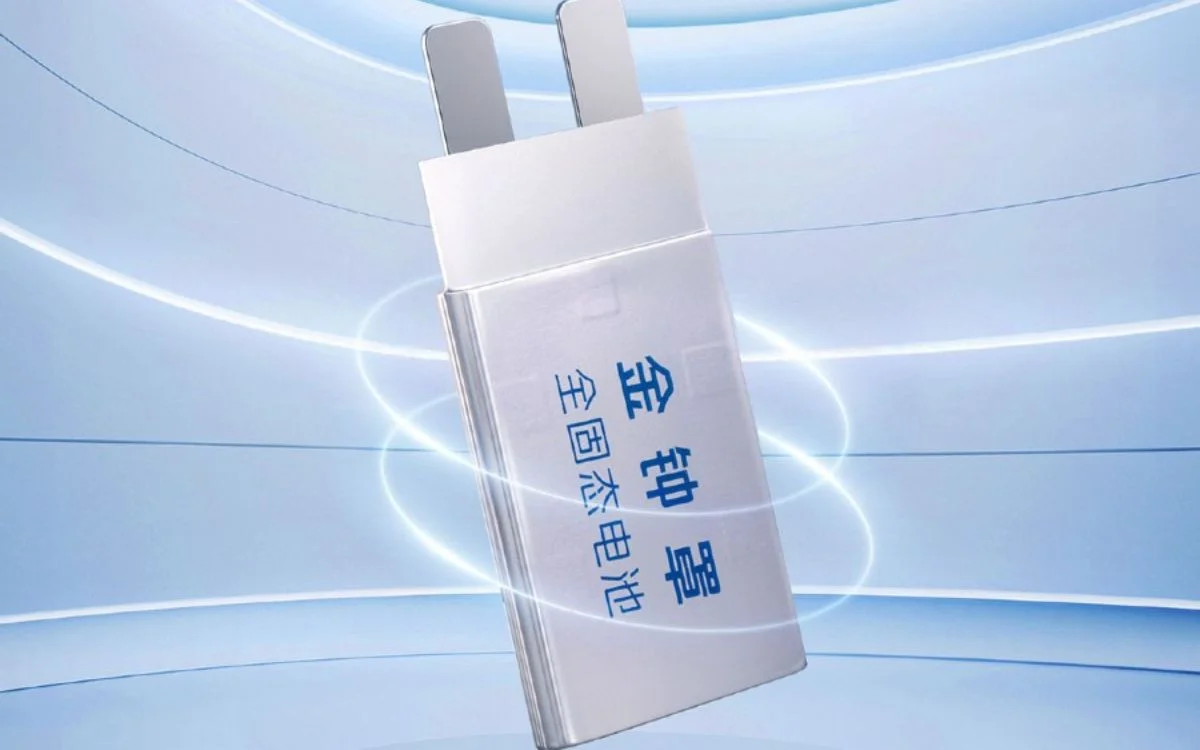
- Industrial Scaling: A leading solid-state battery manufacturer has initiated the rollout of a massive 12 GWh production capacity designed to achieve direct cost parity with traditional liquid electrolyte EV cells.
- Economic Milestone: Breaking the cost barrier below the $100/kWh threshold eliminates the primary historical roadblock to mass-market solid-state commercialization.
- Capital Allocation & Risk Mitigation: Automakers are aggressively restructuring their enterprise R&D budgets to secure early-access offtake agreements, protecting supply chains from geopolitical rare-earth vulnerabilities.
For more than a decade, the Holy Grail of the electric vehicle (EV) revolution has remained maddeningly out of reach. While laboratory breakthroughs involving solid-state lithium-metal batteries routinely promised double the energy density, accelerated charging speeds, and near-zero fire risk, they foundered on a single, unyielding economic reality: manufacturing them at scale was impossibly expensive. Yield rates were low, material processing was excruciatingly complex, and capital expenditure (CapEx) requirements defied rational ROI calculations.
That calculus is now undergoing a seismic shift. In an aggressive move that has sent shockwaves through boardrooms in Detroit, Wolfsburg, Seoul, and Tokyo, a pioneering solid-state battery innovator has commenced the rollout of a landmark 12 GWh manufacturing infrastructure. This deployment is not merely a pilot project or a boutique assembly line; it represents an industrial-scale pivot engineered to achieve structural cost parity with conventional liquid-electrolyte lithium-ion cells. As global markets scrutinize enterprise valuations, capital allocation strategies, and supply chain risk mitigation, this industrial gambit signals that solid-state technology has officially crossed the chasm from theoretical physics to hard-nosed heavy manufacturing.
The Anatomy of the Breakthrough: Defeating the Cost Curve
Test Our Free AI & Tech Utilities Suite
Calculate LLM API token costs, analyze article dwell-time, or simulate tech DCA returns.
To understand the gravity of a 12 GWh solid-state production deployment, one must examine the historical economics of battery manufacturing. Traditional liquid electrolyte cells benefit from decades of iterative engineering, massive economies of scale, and highly optimized supply chains. Liquid cells, whether Lithium Iron Phosphate (LFP) or Nickel Manganese Cobalt (NMC), hover around the critical $100 to $130 per kilowatt-hour (kWh) pack-level cost threshold, which analysts view as the point of internal combustion engine (ICE) cost parity.
Solid-state batteries, by contrast, historically suffered from prohibitive material costs—specifically regarding solid electrolyte separators such as sulfides, oxides, or polymers—and excruciatingly slow web-coating speeds. The newly initiated 12 GWh factory capacity directly confronts these bottlenecks through advanced material synthesis, proprietary dry-coating techniques, and simplified cell architectures that eliminate heavy ancillary cooling systems.
By streamlining the cathode-electrolyte interface and removing volatile organic solvents from the manufacturing process, this production model slashes both direct material expenditures and facility overhead. From an infrastructure scalability perspective, the plant utilizes continuous roll-to-roll processing equipment adapted from traditional lithium-ion gigafactories, drastically reducing the CapEx per gigawatt-hour compared to early-generation bespoke cleanroom facilities.
Capital Allocation, Valuation Multiples, and Market Disruption

The financial markets have been swift to react to the operationalization of this 12 GWh capacity. Institutional investors managing multi-asset portfolios are re-evaluating long-term valuation multiples for legacy tier-one cell suppliers that remain tethered to liquid electrolyte architectures. Companies failing to secure proprietary solid-state pipelines face the looming threat of technological obsolescence.
Furthermore, automotive original equipment manufacturers (OEMs) are fundamentally altering their capital expenditure frameworks. Rather than deploying billions into marginal improvements of liquid-cell chemistry, major automakers are shifting liquid capital toward strategic equity investments and multi-year offtake commitments with advanced solid-state innovators. This trend highlights a broader macroeconomic imperative: corporate risk mitigation against shifting regulatory compliance standards, particularly regarding battery safety mandates, recycling credits, and carbon border adjustments.
| Metric / Parameter | Traditional Liquid Li-ion Cells | Next-Gen Solid-State (12 GWh Rollout) |
|---|---|---|
| Target Cost per kWh | $100 – $130 (Mature scale) | Achieving parity (~$100/kWh benchmark) |
| Energy Density (Volumetric/Gravimetric) | Standard (300-500 Wh/L) | Elevated (Up to 800+ Wh/L potential) |
| Safety Profile (Thermal Runaway Risk) | Moderate-to-high (flammable organic electrolyte) | Near-zero (non-flammable solid electrolyte) |
| Manufacturing Footprint & CapEx | Highly optimized, low dry-room overhead | Transitioning to scalable roll-to-roll machinery |
Industry & Market Implications: Winners and Losers
Every technological paradigm shift creates clear market victors and displaced incumbents. The unfolding 12 GWh solid-state capacity rollout redraws the competitive map across several distinct sectors:
- The Winners — Advanced Materials & Agile OEMs: Pure-play solid-state developers who successfully transition from bench-scale chemistry to high-yield giga-scale production will capture outsized market share. Early-adopting automakers gain an immediate marketing and performance advantage, offering consumers superior range, rapid 10-minute charging capabilities, and absolute thermal safety.
- The Losers — Legacy Commodity Cell Manufacturers: Suppliers heavily reliant on low-margin, commoditized liquid-cell lines face compressed operating margins. Without aggressive vertical integration or R&D pivots, these entities risk severe asset write-downs as OEM clients migrate toward higher-performance solid-state alternatives.
- The Broader Economic Impact: The commercialization of cost-parities solid-state batteries extends well beyond passenger EVs. Aerospace, heavy-duty commercial freight, grid-scale energy storage, and marine electrification stand to benefit from the elimination of bulky liquid-cooling thermal management systems, unlocking unprecedented enterprise ROI across industrial applications.
Frequently Asked Questions (People Also Ask)
What makes achieving cost parity with liquid electrolyte cells so critical for solid-state batteries?
Historically, solid-state batteries offered superior performance metrics—such as higher energy density and enhanced safety—but were economically unviable for mass-market passenger vehicles due to exorbitant manufacturing and material expenses. Reaching cost parity (~$100/kWh) removes the premium price barrier, enabling automakers to sell solid-state equipped EVs at price points directly competitive with internal combustion engine vehicles and standard liquid-cell EVs.
How does a 12 GWh factory capacity impact global supply chain dynamics?
A 12 GWh deployment represents a meaningful commercial footprint capable of supplying roughly 120,000 to 150,000 long-range electric vehicles annually. For the supply chain, this volume validates the scalability of novel equipment sets, drives down raw material procurement costs through bulk purchasing, and provides traditional automotive tier-one suppliers with tangible operational benchmarks for future gigafactory expansions.
Are solid-state batteries completely immune to degradation and safety risks?
While solid-state batteries eliminate the flammable liquid organic solvents responsible for traditional thermal runaway events, engineering challenges remain. Managing interfacial resistance, mitigating lithium dendrite growth over thousands of charge-discharge cycles, and ensuring stable performance across extreme ambient temperature ranges are ongoing focuses of advanced engineering teams within these new production facilities.
Future Outlook: Milestones to Monitor
As construction, tooling, and initial test-batch runs ramp up across this 12 GWh manufacturing footprint, industry analysts and institutional investors will be tracking several critical operational milestones:
- First-Article Yield Rates: Monitoring scrap rates and production efficiency during initial mass-production runs to confirm that theoretical laboratory yields translate into profitable factory economics.
- Real-World Fleet Validation: Independent third-party validation of cycle-life durability, cold-weather performance, and fast-charging degradation curves installed in pilot commercial vehicle fleets.
- Downstream Offtake Announcements: Formalization of multi-year supply contracts between the battery manufacturer and global top-tier automotive conglomerates, signaling broad market acceptance and robust enterprise demand.
The era of speculative solid-state R&D is drawing to a close. With 12 GWh of capacity coming online with an explicit mandate for cost parity, the global energy storage sector is entering a high-stakes, capital-intensive manufacturing race where execution—not just invention—will dictate long-term market dominance.