Executive Takeaways
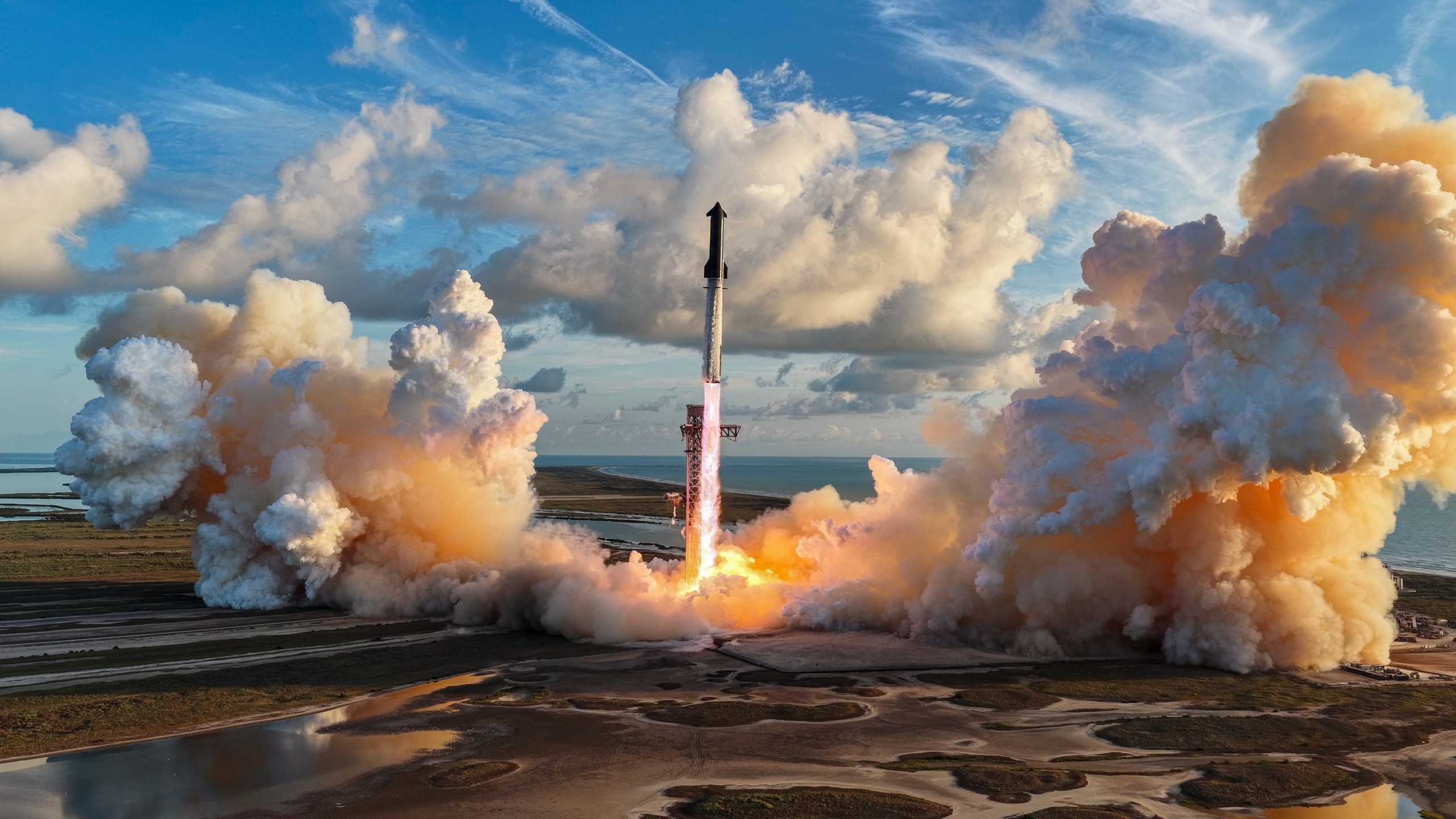
- Unprecedented Cadence: SpaceX officially closed out October by executing its historic 700th Falcon 9 mission, cementing the vehicle's status as the most reliable and frequently flown orbital-class rocket in human history.
- Market Liquidity & Valuation: The unmatched flight rate accelerates enterprise ROI, drastically compresses capital allocation recovery timelines for satellite operators, and solidifies Elon Musk's private enterprise valuation well beyond historic aerospace multiples.
- Infrastructure Scalability: The milestone underscores a robust vertical integration model, driving down cost-per-kilogram metrics to unprecedented lows while choking off traditional launch-service competitors across the globe.
- <Regulatory & Risk Mitigation: Despite mounting launch frequency, SpaceX maintains an immaculate safety record, passing stringent regulatory compliance audits and navigating complex airspace management with minimal operational friction.
WASHINGTON & HAWTHORNE — In an industry historically defined by multi-year development delays, catastrophic cost overruns, and fragile regulatory compliance, Space Exploration Technologies Corp. (SpaceX) has once again rewritten the economic laws of aerospace engineering. By closing out October with its historic 700th Falcon 9 launch, the privately held aerospace titan has achieved a manufacturing and operational velocity that leaves legacy defense contractors and sovereign space agencies scrambling to recalibrate their strategic roadmaps.
This isn't merely a numerical milestone to be marked with commemorative mission patches; it represents a seismic shift in global infrastructure scalability. As institutional investors, sovereign wealth funds, and enterprise telecommunications giants evaluate risk mitigation strategies in low-Earth orbit (LEO), the Falcon 9 has effectively transitioned from an experimental heavy-lift vehicle into the foundational cloud compute architecture of the modern orbital economy. The numbers tell a compelling story of capital efficiency, relentless iteration, and a near-monopolistic grip on the global commercial payload market.
The Catalytic Ascent: From Near-Bankruptcy to Orbital Hegemony
Test Our Free AI & Tech Utilities Suite
Calculate LLM API token costs, analyze article dwell-time, or simulate tech DCA returns.
To fully grasp the magnitude of the 700th launch, one must contextualize the harrowing trajectory of SpaceX’s formative years. In 2008, following three consecutive failures of the smaller Falcon 1 rocket, the company was within hours of permanent insolvency before a successful fourth launch secured a life-saving NASA Commercial Resupply Services (CRS) contract. That narrow escape catalyzed the development of the Falcon 9, a two-stage medium-to-heavy lift launch vehicle designed from the ground up for reusability.
The catalytic turning point arrived in December 2015, when SpaceX successfully landed an orbital-class booster back at Cape Canaveral for the first time. That single engineering breakthrough fundamentally altered the valuation multiples of the entire launch services sector. While traditional aerospace incumbents relied on expendable architecture—passing multi-million-dollar hardware manufacturing costs directly onto commercial and government clients—SpaceX unlocked unprecedented gross margins by amortizing first-stage booster production costs across dozens of subsequent flights.
By the time October concluded, the Falcon 9 fleet had achieved an astounding consecutive-success streak, routinely turning around flight-proven boosters in under 21 days. This rapid hardware recycling has transformed rocket manufacturing from a bespoke artisan craft into an assembly-line paradigm reminiscent of the automotive sector. For enterprise CFOs and institutional investors monitoring capital allocation, the ability to rapidly deploy assets to LEO has compressed payback periods on satellite constellations from decades to mere months.
Verified Data & Metrics Breakdown: Falcon 9 Operational Evolution

| Operational Metric | Early Era (2010–2018) | Scaling Era (2019–2023) | Current Benchmark (2024–Present) |
|---|---|---|---|
| Total Cumulative Launches | ~60 Missions | ~280 Missions | 700+ Missions |
| Average Booster Turnaround | 120+ Days | 35–50 Days | Under 21 Days |
| Maximum Booster Reuse Record | 2 Times | 15 Times | 23+ Times (And Counting) |
| Cost per Kilogram to LEO | ~$4,500 | ~$2,500 | Sub-$1,500 (Estimated) |
Industry & Market Implications: Winners, Losers, and Economic Realities
The crossing of the 700-flight threshold reverberates far beyond the launch pads of Kennedy Space Center and Vandenberg Space Force Base. It triggers profound economic adjustments across global telecommunications, defense procurement, and capital markets.
The Winners: Vertical Integration and Starlink Synergy
The primary beneficiary of this launch cadence is, paradoxically, SpaceX’s own internal consumer product: Starlink. By maintaining an in-house launch monopoly, SpaceX deploys its next-generation direct-to-cell and high-speed broadband satellites at marginal internal cost. This eliminates third-party launch markups, insulating the broadband venture from industry-wide price volatility. Furthermore, commercial enterprise customers—ranging from foreign ministries of defense to major global telecom operators—find themselves with virtually no viable alternative when seeking guaranteed orbital placement schedules, solidifying SpaceX’s pricing power.
The Losers: Legacy Aerospace and State-Sponsored Programs
Conversely, traditional aerospace primes in Europe, the United States, and Asia face a daunting competitive chasm. Programs such as Europe’s Ariane 6 and various legacy United Launch Alliance (ULA) configurations have suffered from prolonged development cycles and non-competitive cost structures. Without a mature, flight-proven reusability paradigm, these programs are economically disadvantaged. Sovereign space agencies—particularly the European Space Agency (ESA) and Roscosmos—now find their commercial launch market share severely eroded, forcing state interventions and emergency subsidies to keep domestic industrial bases afloat.
From a macroeconomic perspective, the concentration of launch capabilities in a single private entity has introduced novel risk vectors for international regulators. Concerns regarding orbital congestion, radiofrequency interference, and maritime exclusion zones during launches have prompted heightened scrutiny from the Federal Aviation Administration (FAA) and the Federal Communications Commission (FCC), though regulatory friction has done little to slow the company's operational momentum.
Frequently Asked Questions (People Also Ask)
What makes the Falcon 9 rocket uniquely dominant in the global launch market?
The Falcon 9's dominance stems from its pioneering first-stage reusability, which dramatically reduces manufacturing costs and allows for an unmatched flight cadence. By successfully landing and reflating boosters—frequently flying individual boosters more than 20 times—SpaceX achieves economies of scale that traditional expendable rocket manufacturers cannot match.
How does reaching 700 launches impact SpaceX’s valuation and financial standing?
Achieving 700 successful flights serves as powerful validation of operational reliability and enterprise scalability. For private equity investors and institutional stakeholders, this proven track record de-risks future capital allocations, supporting a private valuation that regularly commands multi-hundred-billion-dollar figures and generating substantial free cash flow largely driven by the Starlink constellation.
What are the primary regulatory and logistical challenges facing SpaceX as launch frequencies increase?
As SpaceX pushes past weekly launch cadences, the company faces mounting scrutiny regarding airspace management, maritime safety zones, environmental impact statements around launch sites, and long-term orbital debris mitigation. Navigating these regulatory compliance frameworks requires continuous coordination with the FAA, U.S. Space Force, and international maritime authorities.
How does Falcon 9 reusability affect enterprise ROI for commercial satellite operators?
Reusability has drastically lowered the cost-per-kilogram to orbit. For commercial operators deploying proprietary satellite constellations, lower launch overhead compresses capital expenditure recovery timelines, driving higher enterprise ROI and accelerating the commercialization of low-Earth orbit applications.
Future Outlook: Navigating Beyond the 700th Milestone
Even as the champagne corks settle from the 700th Falcon 9 mission, SpaceX’s leadership engineering team is already pivoting toward the next operational horizon. While the Falcon 9 and Falcon Heavy will continue to shoulder the bulk of commercial and institutional payload delivery for the immediate future, the strategic epicenter of the company is rapidly transitioning to Starship—its fully reusable, stainless-steel super heavy-lift vehicle designed to carry upwards of 150 metric tons to orbit.
For financial analysts and industry observers, the transition phase between Falcon and Starship represents a fascinating clinical study in corporate capital allocation. Capital generated from Falcon 9’s high-margin cash cow operations is being aggressively reinvested into Starship development and Starlink network expansion. If Starship achieves even a fraction of the operational reusability and flight cadence currently demonstrated by the Falcon fleet, the economic paradigms of deep-space exploration, orbital manufacturing, and global telecommunications will experience yet another profound disruption.
As the year draws to a close, October 2024 will be recorded in economic and aerospace annals not merely as the month a milestone number was reached, but as the moment private enterprise definitively established total hegemony over humanity's access to the stars.