Executive Takeaways
- Capital Allocation & State Backing: India's multi-billion dollar production-linked incentives (PLI) and fiscal subsidies are aggressively accelerating enterprise infrastructure scalability for domestic chip fabrication.
- Ecosystem Maturation: SEMICON India 2026 marked a pivotal pivot from policy rhetoric to tangible silicon tape-outs, featuring customized chip design breakthroughs by domestic giants like TCS for automotive and industrial workloads.
- Global Risk Mitigation: Multinational semiconductor foundries and fabless enterprises are leveraging India as a critical hedge against East Asian geopolitical choke points and supply chain vulnerabilities.
- Valuation Multiples & ROI: While early-stage capital expenditure (CapEx) involves massive front-loaded cash burns, long-term enterprise ROI hinges on workforce upskilling and ancillary chemical supply chain localization.
NEW DELHI — Against the backdrop of escalating technological decoupling between major superpowers and persistent fragility in traditional microelectronics corridors, SEMICON India 2026 arrived not merely as an industry convention, but as a high-stakes geopolitical crucible. Convened in New Delhi exactly one month ago by the Rediff Money Desk, the conference laid bare the sweeping ambitions, structural bottlenecks, and capital deployment strategies defining India’s ascent in the global semiconductor hierarchy.
For institutional investors, venture capitalists, and enterprise technology leaders, the unfolding narrative in the subcontinent represents a complex calculus of immense market liquidity, state-backed financial engineering, and long-term infrastructure scalability. As global capital allocation pivots toward resilient, diversified semiconductor ecosystems, India’s strategic positioning demands rigorous analytical scrutiny.
The Catalytic Shift: Moving from Assembly to Advanced Silicon
Test Our Free AI & Tech Utilities Suite
Calculate LLM API token costs, analyze article dwell-time, or simulate tech DCA returns.
For decades, India’s participation in the semiconductor value chain was largely restricted to upstream electronic system design and downstream assembly, testing, marking, and packaging (ATMP). However, the policy architecture showcased at SEMICON India 2026 signals an aggressive, deliberate vertical integration strategy. Driven by the India Semiconductor Mission (ISM), the central government has funneled unprecedented financial resources into lowering barriers to entry for fabrication (fab) units and compound semiconductor facilities.
The catalytic momentum was underscored by major domestic and international announcements during the summit. Notably, Tata Consultancy Services (TCS) unveiled its bespoke custom chip design framework tailored specifically for automotive electronic control units (ECUs) and high-density industrial semiconductor workloads. This development illustrates a vital structural shift: Indian enterprises are no longer passive consumers of imported silicon; they are actively dictating microarchitecture specifications to optimize cloud compute architecture, edge AI processing, and automotive efficiency.
Furthermore, regulatory compliance frameworks and fast-tracked environmental clearances have been streamlined to protect foreign direct investment (FDI) inflows. Risk mitigation remains a central pillar for international stakeholders. By establishing collaborative joint ventures between domestic industrial houses and legacy silicon titans from the United States, Europe, and Taiwan, India is attempting to insulate its nascent manufacturing base from exogenous shocks and trade embargoes.
Verified Data & Metrics Breakdown
To contextualize the scale of capital deployment and technological progression witnessed at SEMICON India 2026, the following metrics outline the current baseline of the subcontinent's semiconductor trajectory:
| Metric / Parameter | Current Status (2026) | Strategic Implication |
|---|---|---|
| Total Government Outlay (ISM) | ~$10 Billion+ (Direct Subsidies & PLI) | Drastically lowers front-loaded CapEx hurdles for international foundries. |
| Primary Focus Nodes | 28nm to 65nm mature nodes, transitioning to advanced packaging | Directly targets high-demand automotive, IoT, and power electronics sectors. |
| Domestic Design Talent Pool | ~20% of global VLSI design engineers | Provides an immediate intellectual property (IP) and R&D acceleration advantage. |
| Key Industrial Milestones | TCS Custom Chip Design Launch (Auto/Semi) | Bridges software prowess with proprietary hardware custom silicon creation. |
Industry & Market Implications: Winners, Losers, and Economic Realities
The structural evolution highlighted at SEMICON India 2026 creates distinct market winners and losers across the global financial landscape. Understanding these dynamics is essential for portfolio managers evaluating emerging market tech exposure.
The Winners
- Specialized EDA & IP Providers: Electronic Design Automation firms are seeing surging demand as Indian enterprises ramp up indigenous chip design labs.
- Domestic IT & Engineering Giants: Corporations like TCS, Infosys, and HCLTech are successfully pivoting from pure-play software services to high-margin embedded systems and silicon design integration.
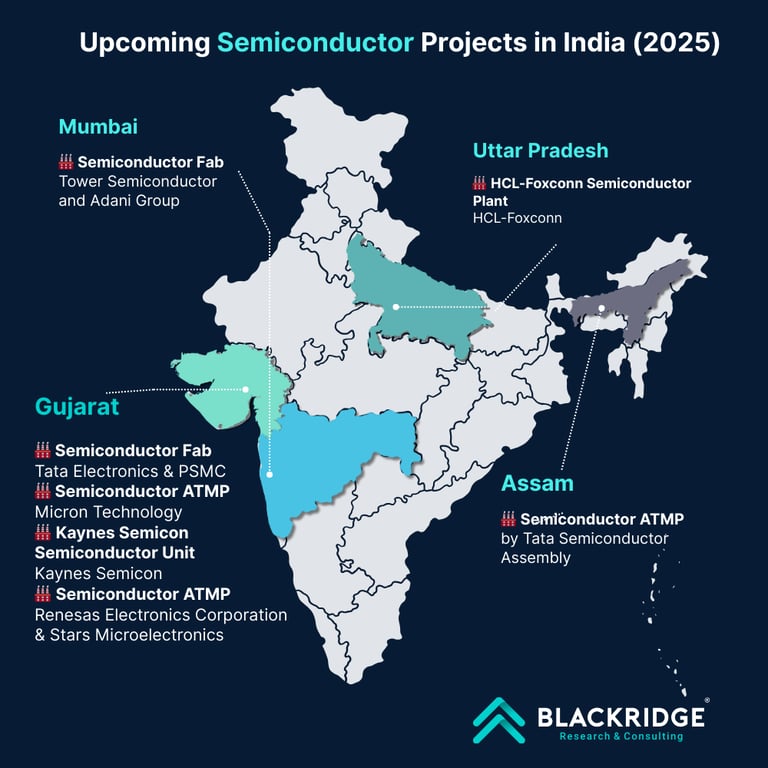
- Global Equipment Manufacturers (WFE): Lithography, etching, and deposition toolmakers enjoy a captive, state-funded market as greenfield fabrication plants break ground across Gujarat and neighboring states.
The Vulnerabilities and Challenges
- Capital Intensity & Cash Burn: Semiconductor fabrication is notoriously unforgiving. The long-term ROI remains unproven for domestic conglomerates unaccustomed to the multi-year gestation periods required for fab profitability.
- Upstream Chemical & Material Bottlenecks: While design and assembly are scaling, India’s domestic supply chain for electronic-grade ultra-pure gases, silicon wafers, and specialty chemicals remains critically underdeveloped, leaving operations vulnerable to import dependencies.
Frequently Asked Questions (People Also Ask)
What is the primary objective of SEMICON India 2026?
SEMICON India 2026 serves as the premier convening platform for the India Semiconductor Mission (ISM), designed to attract global semiconductor manufacturing investments, foster domestic chip design capabilities, and establish India as a trusted, resilient node in the international electronics supply chain.
How are Indian companies participating in chip manufacturing if fabs take years to build?
While physical silicon fabrication plants require extensive construction and validation timelines, Indian tech giants like TCS are immediately capturing value through custom chip design, intellectual property creation, and specialized software integration for automotive and industrial semiconductor architectures.
What financial incentives are driving foreign investments in Indian semiconductors?
The Indian government has committed over $10 billion through production-linked incentive (PLI) schemes and fiscal subsidies, covering up to 50% of capital expenditure for semiconductor fabrication units, display fabs, and compound semiconductor packaging facilities.
What are the primary risk factors for institutional investors looking at India's semiconductor sector?
Key risk factors include prolonged capital gestation periods, a shortage of specialized cleanroom operational talent, heavy reliance on imported upstream raw materials (such as electronic-grade chemicals), and intense competition from entrenched manufacturing hubs in Taiwan, South Korea, and Southeast Asia.
Future Outlook: Milestones to Watch
As the dust settles on the dialogues held in New Delhi, the focus shifts entirely to execution. Over the next 12 to 36 months, financial analysts will monitor three critical milestones: the successful first commercial tape-outs from newly funded domestic assembly and test facilities, the mitigation of raw material supply chain bottlenecks through localized chemical partnerships, and the ability of Indian engineering firms to scale custom silicon production without margin compression.
For global capital allocators, India’s semiconductor journey is no longer a speculative peripheral bet; it is rapidly solidifying into a structural pillar of diversified technology portfolios. Those who correctly time their exposure to this ecosystem stand to capture outsized valuation multiples as the world's most populous nation permanently rewires the geography of silicon.