SpaceX Launch Triggers Rare ‘Space Jellyfish’ Phenomenon Over Grand Isle and the American Southeast

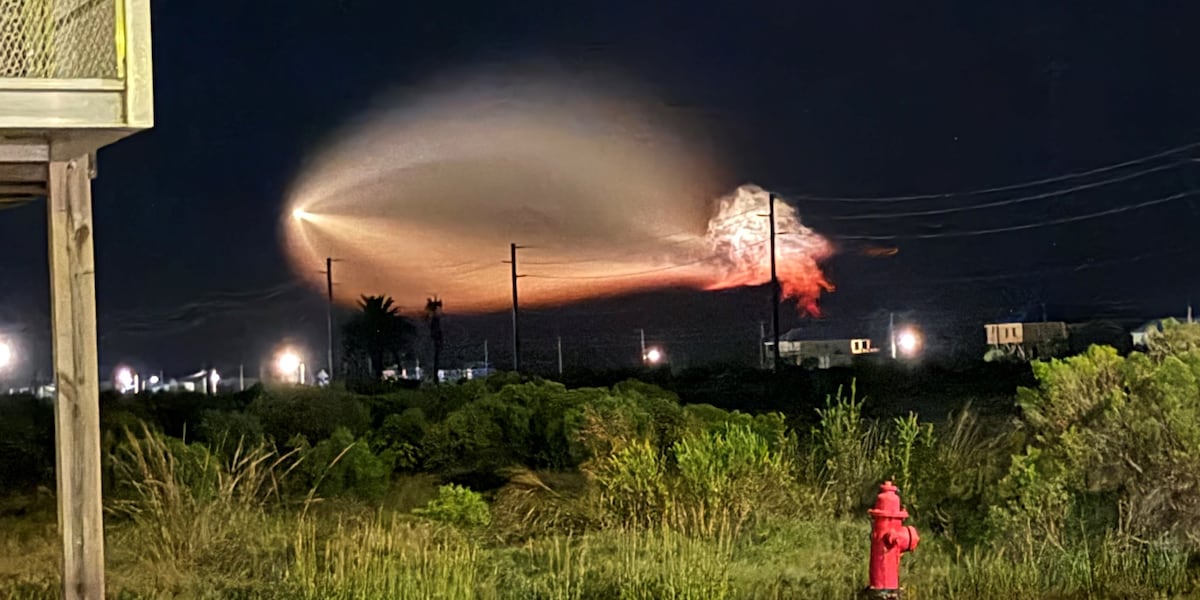
WASHINGTON & GRAND ISLE, La. — In the early morning hours, residents across Louisiana, Mississippi, and the broader Gulf Coast were greeted by a celestial spectacle rarely witnessed outside of specialized aerospace photography: a massive, glowing, bioluminescent-like plume known colloquially as a "space jellyfish." The ethereal phenomenon, triggered by a high-altitude SpaceX rocket launch, lit up the dark skies over Grand Isle, capturing the attention of millions, dominating Google Trends, and providing a stark reminder of the rapidly accelerating intersection between commercial space infrastructure and everyday terrestrial visibility.
As commercial launch cadences accelerate—driven by multi-billion-dollar government contracts, global broadband constellations, and aggressive corporate capital allocation strategies—the visual byproducts of heavy orbital rocketry are increasingly transforming from rare anomalies into routine fixtures of the night sky. For institutional investors, aerospace analysts, and regional municipalities, the event serves as a vivid case study in infrastructure scalability, public engagement, and the evolving regulatory framework governing the commercialization of near-Earth orbit.
Executive Takeaways
- Atmospheric Catalyst: The "space jellyfish" visual is created when sunlight illuminates exhaust gases expanding in the near-vacuum of the upper atmosphere following a rocket’s second-stage engine burn.
- Regional Visibility: Optimal atmospheric conditions and pre-dawn launch trajectories allowed spectators from Grand Isle, Louisiana, across the Southeast, to view the phenomenon with naked-eye clarity.
- Commercial Acceleration: The event underscores SpaceX’s relentless launch cadence, highlighting broader trends in enterprise-scale space infrastructure and private-sector valuation multiples.
- Market & Regulatory Impact: As launch frequencies multiply, aerospace stakeholders face increasing scrutiny regarding airspace management, environmental compliance, and regional risk mitigation.
The Physics of the Plume: Deconstructing the ‘Space Jellyfish’
To the untrained observer, the apparition over Grand Isle resembled a giant, glowing marine organism drifting through the stars. In reality, the "jellyfish" is an optical illusion engineered by physics, thermodynamics, and orbital mechanics. When a rocket like SpaceX’s Falcon 9 clears the dense lower layers of the troposphere and enters the stratosphere and mesosphere, the ambient atmospheric pressure drops precipitously.
At altitudes exceeding 50 miles, the exhaust gases exiting the rocket’s second-stage Merlin vacuum engine expand rapidly—often to many times their original volume. Because the rocket is ascending into a region where the sun has already risen relative to the shadowed ground observers below, the high-altitude exhaust plume catches direct sunlight against a dark background sky. The resulting phenomenon comprises two distinct visual components:
- The "Bell": Formed by the expanding plume of exhaust gasses escaping the rocket nozzle, which catches the sun's rays and glows in shades of vibrant blue, orange, and magenta.
- The "Tentacles": Composed of glowing vapor trails and unburned propellant streaming from the exhaust as the vehicle maneuvers along its precise trajectory toward orbital insertion.
This optical interplay requires a precise combination of factors: a twilight or pre-dawn launch window, clear atmospheric visibility, and a specific trajectory that carries the vehicle through a corridor visible from populated regions. For the American Southeast, particularly coastal areas like Grand Isle, these parameters occasionally align, turning routine commercial payloads into viral public spectacles.
Commercial Infrastructure and Market Implications
While casual observers capture breathtaking imagery for social media, institutional stakeholders view events like the Grand Isle launch through the lens of enterprise ROI, capital expenditure, and operational velocity. SpaceX’s ability to execute routine, high-cadence launches relies on a deeply optimized supply chain, reusable rocket architecture, and sophisticated cloud compute monitoring systems that govern flight telemetry.
The financial ramifications of this operational model are profound. Traditional aerospace manufacturing relied on bespoke, single-use hardware, resulting in extended capital deployment cycles and volatile valuation multiples. SpaceX’s vertically integrated manufacturing model and rapid turnaround of reusable first-stage boosters have fundamentally compressed cost-per-pound-to-orbit metrics. This has created massive market liquidity for commercial payloads, Earth-observation satellites, and global telecommunications constellations.
However, this rapid scaling introduces complex operational challenges:
- Risk Mitigation and Insurance: As launch frequencies scale into the hundreds annually, underwriters must re-evaluate risk profiles for coastal infrastructure, maritime lanes, and commercial aviation corridors.
- Regulatory Compliance: Federal Aviation Administration (FAA) and Federal Communications Commission (FCC) oversight is increasingly scrutinized as local communities balance the economic boost of aerospace tourism against environmental and airspace constraints.
- Supply Chain Resilience: Maintaining a relentless launch schedule requires uninterrupted access to high-grade aerospace alloys, advanced avionics, and specialized propellants, testing the limits of domestic manufacturing capacity.
Verified Data and Launch Metrics Comparison
To contextualize the scale of modern commercial launch operations compared to historical aerospace standards, the following table outlines key operational metrics governing high-cadence low-Earth orbit (LEO) deployment.
| Metric / Parameter | Legacy Aerospace Era (Space Shuttle / Early EELV) | Modern Commercial Era (SpaceX Falcon 9 / Starship Pipeline) |
|---|---|---|
| Average Turnaround Time | Months to Years | Days to Weeks (Booster Reuse) |
| Cost Per Kilogram to LEO | $20,000 to $54,000+ | Estimated under $2,500 |
| Annual Launch Frequency | 5 to 15 missions globally | 100+ missions annually (Single Operator) |
| Atmospheric Visual Byproducts | Infrequent, localized vapor trails | Routine "space jellyfish" and twilight plumes |
| Primary Capital Structure | Government-subsidized cost-plus contracts | Venture capital, private equity, and commercial revenue |
Industry Stakeholders: Winners and Losers
The normalisation of high-cadence commercial launches creates a dynamic shift across the broader industrial ecosystem. Identifying who benefits and who absorbs friction is essential for strategic asset allocation:
The Winners
- Commercial Satellite Operators: Constellation builders gain unprecedented access to orbital slots, accelerating revenue realization for global broadband and remote-sensing networks.
- Regional Aerospace Hubs: Coastal regions near major launch and tracking sites benefit from aerospace tourism, engineering talent migration, and increased infrastructural investment.
- Advanced Materials Manufacturers: Suppliers specializing in heat-resistant tiles, carbon-composite structures, and specialized valves experience sustained, high-margin enterprise demand.
The Vulnerabilities
- Traditional Defense Primes: Legacy aerospace contractors face immense margin pressure as commercial disruptors undercut traditional cost-plus pricing structures.
- Airlines and Maritime Operators: Commercial carriers face persistent scheduling adjustments, temporary airspace closures, and routing inefficiencies as launch corridors expand.
- Astronomical Observatories: Ground-based astronomy continues to navigate the increasing optical interference caused by satellite constellations and reflective upper-stage exhaust plumes.
Frequently Asked Questions (People Also Ask)
What causes a 'space jellyfish' to appear in the sky?
A "space jellyfish" is formed when exhaust gases from a rocket’s upper-stage engine expand rapidly in the near-vacuum of the upper atmosphere (stratosphere and mesosphere). Because the rocket is at a high altitude while observers on the ground are still in darkness, the expanding plume catches direct sunlight, illuminating the exhaust gases in vibrant colors and distinct shapes.
Are space jellyfish plumes dangerous to people on the ground?
No. The phenomenon occurs dozens of miles above the Earth’s surface. The gases involved—primarily water vapor and carbon dioxide resulting from the combustion of refined propellants—dissipate harmlessly into the upper atmosphere and pose no chemical or physical threat to populations below.
Why are these visual events becoming more common over the American Southeast?
The increase in visible upper-atmospheric plumes is a direct result of a rising commercial launch cadence. With private aerospace companies conducting over a hundred orbital missions per year from various domestic and coastal launch sites, favorable twilight alignments occur more frequently, turning routine commercial payloads into visible public events.
How do twilight launches impact commercial aviation and maritime traffic?
Prior to any orbital launch, regulatory bodies such as the Federal Aviation Administration (FAA) coordinate closely with aerospace operators to establish temporary flight restriction (TFR) zones and maritime hazard areas. While this ensures absolute safety, it requires commercial airlines and cargo vessels to execute tactical rerouting, introducing minor operational delays.
Future Outlook: What Comes Next
As commercial enterprise pushes deeper into the cis-lunar economy, the intersection of aerospace operations and public visibility will only intensify. Upcoming milestones include the operational scaling of next-generation heavy-lift vehicles, increased deployment of mega-constellations, and enhanced integration between air traffic management and space traffic management frameworks.
For financial markets and regulatory bodies, the challenge moving forward will be balancing the relentless pursuit of infrastructure scalability with comprehensive risk mitigation, environmental sustainability, and public transparency. Until then, celestial phenomena like the Grand Isle "space jellyfish" will continue to serve as brilliant, public-facing reminders of the multi-billion-dollar industrial engine operating quietly just beyond our atmosphere.