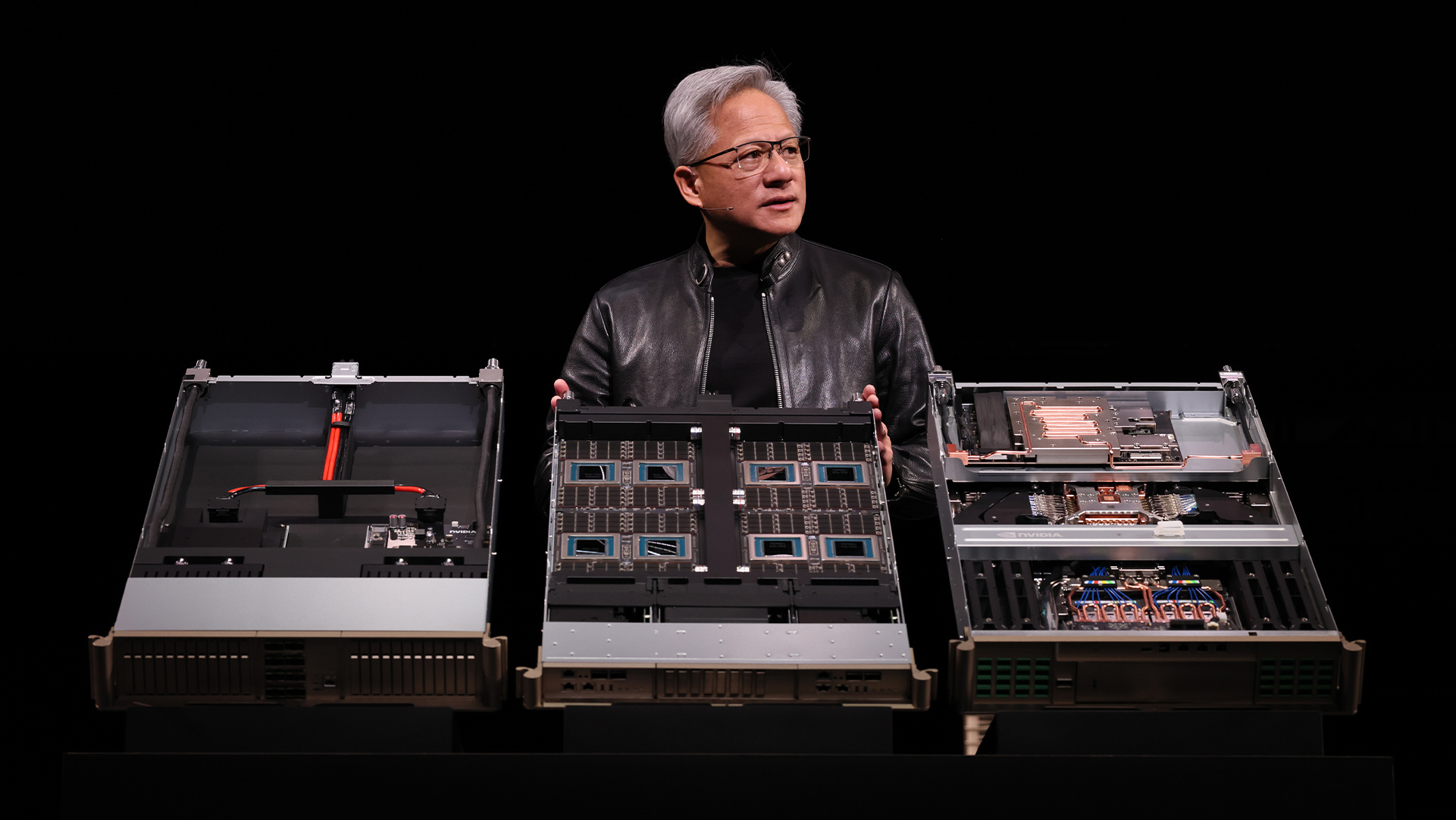
SAN JOSE, Calif. — Standing before a packed arena at the McEnery Convention Center, Nvidia Chief Executive Officer Jensen Huang delivered a keynote address that marked a definitive transition in the semiconductor and enterprise software landscape. Nvidia is no longer competing merely as a fabless designer of high-performance silicon. Through a suite of announcements spanning the next-generation Vera Rubin architecture, the release of Nvidia DSX Air, and deep enterprise integrations with global healthcare giant Roche, Nvidia has formally re-engineered its business model into an unassailable infrastructure layer for global computing.
As hyperscalers prepare to spend in excess of $200 billion on AI capital expenditures in 2026, Nvidia’s annual GPU Technology Conference (GTC) highlighted how the company intends to lock in enterprise compute budgets for the next decade. By embedding proprietary software stacks directly into system topology, network fabrics, and thermal simulation layers, Nvidia is rendering the silicon-only hardware comparisons of competitors obsolete.
Executive Takeaways
Test Our Free AI & Tech Utilities Suite
Calculate LLM API token costs, analyze article dwell-time, or simulate tech DCA returns.
- Architectural Transition: Jensen Huang detailed the roadmap from the Blackwell architecture toward the Vera Rubin platform, introducing unprecedented NVLink throughput, advanced optical interconnect integration, and enhanced memory bandwidth designed to solve the critical "memory wall" in frontier model training.
- Systemic Infrastructure Lock-In: The launch of NVIDIA DSX Air provides accelerated simulation for gigawatt-scale AI factories, slashing time-to-token latency and optimizing multi-nodal energy efficiency across massive compute clusters.
- Enterprise Enterprise Scalability: Global healthcare leader Roche demonstrated enterprise ROI by scaling Nvidia’s integrated software and hardware stack to reduce molecular dynamics simulation times from months to hours, setting a benchmark for enterprise adoption.
- Financial Imperatives: Nvidia’s expansion into full-stack infrastructure shifts its valuation multiples from cyclical hardware metrics to durable software-and-systems enterprise multiples, altering hyperscaler capital allocation strategies across AWS, Microsoft Azure, and Google Cloud Platform.
The San Jose Manifesto: Moving Beyond Discrete Silicon

For the past three years, the narrative surrounding Nvidia centered on raw floating-point operations per second (FLOPs) and supply constraints surrounding Taiwan Semiconductor Manufacturing Company’s (TSMC) Chip-on-Wafer-on-Substrate (CoWoS) packaging. At GTC 2026, Huang fundamentally rewritten that narrative. The core bottleneck in enterprise AI is no longer single-chip matrix multiplication; it is multi-datacenter network orchestration, thermal dissipation, memory bandwidth degradation, and operational time-to-token metrics.
"The unit of compute is no longer a chip, nor is it a server," Huang declared during his keynote. "The unit of compute is an entire enterprise data center, orchestrated as a single, coherent accelerated system."
This strategic pivot directly addresses the growing threat posed by custom Application-Specific Integrated Circuits (ASICs) developed by major cloud service providers (CSPs) like Google (TPUs), Amazon Web Services (Trainium/Inferentia), and Meta (MTIA). While cloud giants can design hyper-specialized silicon for specific inference workloads, Nvidia is insulating its margins by offering a complete, vertically integrated system architecture that cloud providers cannot easily replicate without massive structural investments.
By embedding its CUDA, NIM (Nvidia Inference Microservices), and NeMo software frameworks into the physical hardware layer—stretching from the GPU die up through switches, optical transceivers, and liquid-cooling distribution units—Nvidia creates a self-reinforcing flywheel. Dislodging an Nvidia chip now requires dislodging the entire cloud compute architecture, networking protocols, and operational management systems of the enterprise enterprise stack.
Architectural Deep Dive: Vera Rubin, DSX Air, and Time-to-Token Acceleration
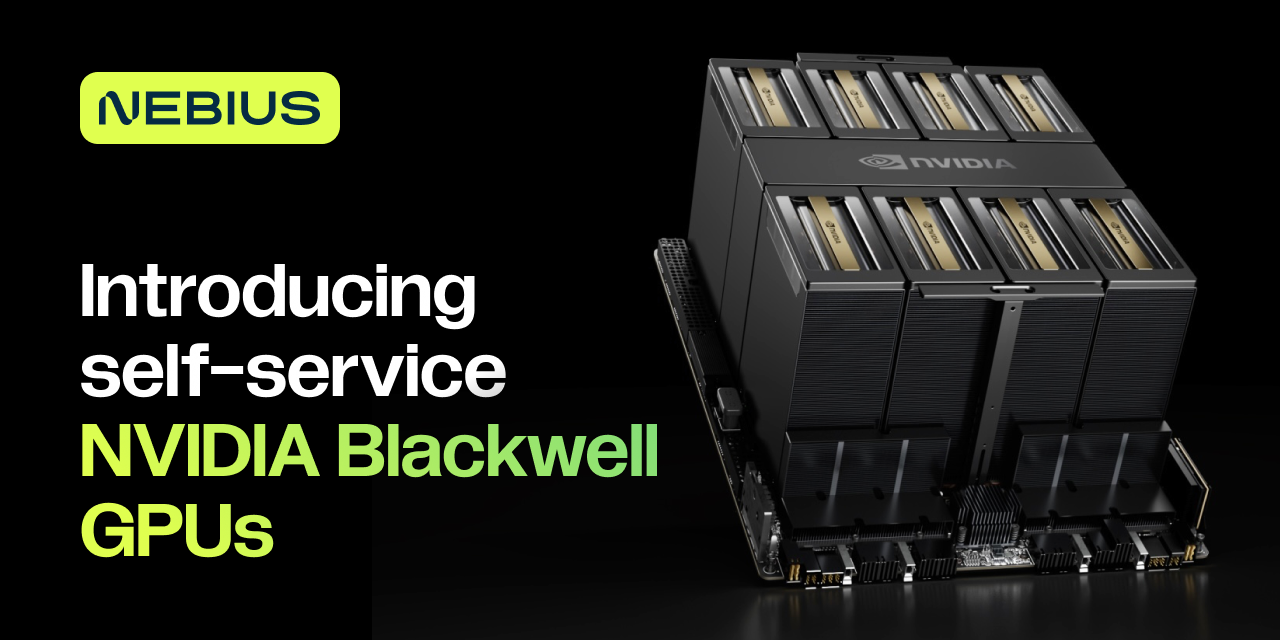
While full commercial deployment of the Blackwell ultra-scale architecture continues across global cloud regions, Huang offered a comprehensive technical preview of the upcoming Vera Rubin platform. Named after the pioneering astronomer who confirmed the existence of dark matter, the Rubin platform represents a structural departure from traditional monolithic board designs.
The Vera Rubin architecture incorporates next-generation High Bandwidth Memory (HBM4), tied to an updated custom ARM-based "Vera" CPU paired with the "Rubin" GPU. The platform leverages advanced co-packaged optics (CPO) to bypass copper limits in high-density rack systems, dramatically reducing power consumption across cluster interconnects. Initial engineering specifications suggest a 3.5x boost in memory bandwidth density compared to the Blackwell B200, targeting massive context-window retrieval and multi-modal reasoning models that stall under conventional architectures.
To maximize the throughput of these multi-gigawatt installations, Nvidia introduced NVIDIA DSX Air, a physics-informed AI simulation platform built specifically to design, model, and operate AI factories. AI datacenters require real-time physical orchestration: air flow optimization, micro-fluidic liquid cooling dynamics, power surge smoothing, and spatial workload distribution. DSX Air simulates the physical and thermodynamic properties of a data center in real time, leveraging digital twins to predict hot spots and dynamic component degradation before hardware failures occur.
Crucially, DSX Air feeds directly into Nvidia’s cluster management software to optimize Time-to-Token (TTT) performance. In real-world enterprise deployments, latency bottlenecks do not stem solely from mathematical calculation times; they occur during KV-cache transfer and inter-node data serialization. By simulating and dynamically adjusting data routing based on real-time hardware telemetry, DSX Air accelerates overall system-level time-to-token metrics by up to 40% in dense cluster environments, yielding direct operational expenditure reductions for enterprise operators.
Verified Technical Specifications & Architecture Comparison
The following performance matrix illustrates the architectural evolution from Nvidia's legacy platforms to the systems unveiled and previewed at GTC 2026:
| Architecture Metric | Hopper (H100/H200) | Blackwell (B200/GB200) | Vera Rubin Platform (Preview) |
|---|---|---|---|
| Manufacturing Node | TSMC 4N Custom | TSMC 4NP Custom (Dual Die) | TSMC 3nm / Advanced Chiplet Stack |
| Memory Architecture | HBM3 / HBM3e (Up to 141GB) | HBM3e (Up to 192GB) | HBM4 (Next-Gen High-Density Stack) |
| Interconnect Technology | NVLink 4 (900 GB/s) | NVLink 5 (1.8 TB/s) | NVLink 6 with Co-Packaged Optics (CPO) |
| Target Optimization Metric | Peak FP8 Training FLOPS | FP4 Inference & Multi-Die Scaling | Systemic Time-to-Token & Gigawatt Density |
| Thermal / Facility Management | Air & Optional Direct-to-Chip Liquid | Standard Direct-to-Chip Liquid Cooling | DSX Air Driven Dynamic Physics Orchestration |
| Enterprise Case Study Focus | Base Model Pre-training | Generative Fine-Tuning & Multi-Modal | Autonomous Sovereign AI & AI Factories |
Enterprise Scaling in Action: The Roche Benchmark
To demonstrate the real-world impact of its integrated enterprise platform, Nvidia highlighted its partnership with global healthcare enterprise Roche. Pharmaceutical research represents one of the most compute-intensive, high-value verticals in modern industry, where computational acceleration directly correlates to shortened drug discovery pipelines and massive capital savings.
Roche has integrated Nvidia’s full accelerated stack—utilizing Nvidia BioNeMo microservices embedded within high-density Nvidia infrastructure—to scale its proprietary generative biophysics and genomic AI models. By leveraging Nvidia’s platform, Roche converted high-throughput molecular dynamics simulations that historically took four months on traditional CPU and heterogenous GPU clusters into operations executed in under 18 hours.
"We are no longer just buying graphics processing hardware from Nvidia," stated executives from Roche during a panel breakout session at the event. "We are deploying an integrated biological compute foundation. The hardware, optimized algorithms, and infrastructure-layer management function as a single operational environment. This platform allows us to explore chemical spaces that were previously mathematically intractable."
The Roche deployment serves as a strategic blueprint for broader Fortune 500 adoption. By establishing high-ROI benchmarks in life sciences, financial modeling, structural engineering, and autonomous logistics, Nvidia is cultivating an enterprise client base that measures compute acquisition costs against revenue acceleration rather than silicon-level price-per-watt metrics.
Industry & Financial Implications: Winners, Losers, and Capex Strategy
Nvidia’s relentless drive toward total infrastructure control creates clear strategic divisions across the technology, semiconductor, and enterprise landscape.
The Winners
- Nvidia (NASDAQ: NVDA): By shifting the competitive battleground from individual chips to complete AI data center architecture, Nvidia protects its gross margins (currently hovering near 75%) and enhances ecosystem stickiness. The software subscription model via Nvidia AI Enterprise provides recurring, high-margin revenue streams that smooth out hardware refresh cycles.
- Advanced Datacenter Infrastructure Vendors: Companies specializing in high-density liquid cooling, specialized rack orchestration, and optical interconnect technology (such as Vertiv, Eaton, and specialized optic suppliers) gain sustained tailwinds as datacenters migrate to gigawatt-scale designs supported by DSX Air.
- Sovereign AI Initiatives: Nation-states seeking to build localized, sovereign AI capacity (including Saudi Arabia, the UAE, Japan, and European consortiums) benefit from Nvidia's turnkey "AI Factory" blueprints, allowing them to deploy functional infrastructure rapidly without custom software engineering pipelines.
The Losers
- Silicon-Only Semiconductor Challengers: Second-tier GPU vendors and boutique AI chip startups focusing purely on matrix multiplication benchmarks face severe margin erosion. Without an accompanying networking, simulation, and software runtime stack, raw chip performance fails to translate into enterprise operational throughput.
- Cloud Providers Relying on Generic Commodity Hardware: Tier-2 cloud hosting providers that lack the capital required to purchase complete, high-density Nvidia system architectures risk becoming commoditized compute providers, forced to compete on low-margin batch processing.
Financial Multiples & Capital Allocation
From an equity analyst perspective, Nvidia’s GTC 2026 announcements provide strong justification for premium valuation multiples. Traditionally, hardware suppliers trade at low price-to-earnings (P/E) multiples due to supply-demand cyclicality and inventory risk. By embedding its software into the core compute fabric, Nvidia is building an enterprise platform business akin to hyperscale cloud providers or legacy software monopolies.
Wall Street capital allocation models are adjusting accordingly. Institutional investors are monitoring hyperscaler capital expenditure shifts, watching whether cloud majors attempt to build competing systems or acquiesce to Nvidia’s rack-level dominance. As long as Nvidia delivers demonstrably superior Time-to-Token improvements and lower Total Cost of Ownership (TCO) at the datacenter level, corporate treasury allocation will continue flowing toward Nvidia-based system architectures.
Frequently Asked Questions (People Also Ask)
How does Nvidia’s Vera Rubin platform differ from the Blackwell architecture?
While the Blackwell architecture focused on dual-die packaging, FP4 precision inference, and massive raw compute scaling, the Vera Rubin platform shifts emphasis toward bandwidth optimization and system-level connectivity. Rubin introduces HBM4 memory, an updated ARM-based "Vera" CPU, NVLink 6 switches, and integrated co-packaged optics (CPO) to overcome memory wall limits and copper wiring signal attenuation in extreme-scale AI deployments.
What is Nvidia DSX Air and how does it accelerate time-to-token in AI factories?
Nvidia DSX Air is a physics-informed digital twin simulation framework designed to model, monitor, and optimize the physical dynamics of gigawatt-scale datacenters. It models fluid dynamics, thermal profiles, power draws, and operational node behavior in real time. By pre-emptively managing system thermal conditions and optimizing inter-node data transfers, DSX Air minimizes latency bottlenecks during model inference, thereby accelerating system-level Time-to-Token (TTT) latency.
Why is Nvidia moving from selling standalone chips to full infrastructure stacks?
Selling standalone silicon exposes Nvidia to commoditization and margin compression from custom ASIC chips designed by hyperscalers (like Google TPUs or AWS Trainium). By integrating proprietary software (CUDA, NIM, NeMo), custom interconnects (NVLink), and data center design frameworks (DSX Air) into full physical systems, Nvidia builds high switching costs. Customers cannot easily replace an Nvidia GPU without altering their entire computational, networking, and operational infrastructure layer.
What real-world evidence shows enterprise ROI from Nvidia’s enterprise AI platform?
At GTC 2026, healthcare giant Roche showcased how deploying Nvidia’s integrated software and hardware systems reduced complex biophysics and genomic simulation times from four months to under 18 hours. This dramatic speedup allows enterprises to drastically accelerate time-to-market for complex scientific applications, demonstrating clear financial return on investment beyond basic LLM query hosting.
Future Outlook: Strategic Milestones & Risk Factors
As Nvidia executes its systemic expansion, three strategic milestones will dictate its long-term financial trajectory through 2027 and beyond:
- Optical Interconnect Commercialization: The transition from copper to co-packaged optics in the Rubin generation represents a critical engineering hurdle. Manufacturing yields for integrated optical engines will determine how rapidly high-density rack configurations can be globally deployed.
- Power Grid and Geopolitical Constraints: The ultimate ceiling on AI expansion is shifting from silicon fabrication capacity to utility-scale electricity availability. Nvidia's ability to minimize energy consumption per token via DSX Air optimization will be crucial as data center operators face regulatory and geographic grid constraints in North America, Europe, and Asia.
- Regulatory & Antitrust Scrutiny: As Nvidia consolidates its grip across computing, networking, physical data center simulation, and runtime software, global competition regulators in the EU, US, and China are scrutinizing the company's ecosystem lock-in strategies. Preventing antitrust actions that enforce modular hardware separation remains a primary policy challenge for Nvidia leadership.
Nvidia’s GTC 2026 keynote confirmed that the company is no longer an engine manufacturer in the AI gold rush; it has constructed the entire railroad. For investors, enterprise customers, and global technology competitors, the message from San Jose is unmistakable: the future of computing belongs to those who control the full physical, architectural, and operational infrastructure stack.