Executive Takeaways
- Fiscal Impulse Transition: Federal fiscal policy actions transitioned from an unprecedented liquidity catalyst to a roughly neutral posture for aggregate GDP growth by 2023, shifting the primary engine of macroeconomic expansion back toward private domestic final purchases.
- Monetary-Fiscal Divergence: Modest real growth in federal purchases during 2023 was countered by rolling off legacy pandemic transfer programs and elevated sovereign debt interest costs, complicating the Federal Reserve's monetary policy transmission mechanism.
- Enterprise Capital Reallocation: The double squeeze of high benchmark policy rates and elevated risk-free yields forced corporate CFOs to prioritize capital preservation, driving a structural pivot toward higher-margin cloud compute architecture, automated workflows, and aggressive risk mitigation strategies.
- Bifurcated Market Liquidity: Large-cap enterprise borrowers with long-duration fixed debt successfully shielded net interest margins (NIM), whereas floating-rate middle-market firms faced acute debt service burdens and elevated refinancing friction across private credit markets.
The Architecture of Fiscal Neutrality: From Emergency Injection to Structural Stabilization
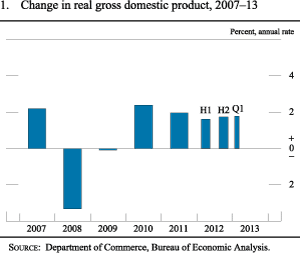
The trajectory of U.S. macroeconomic policy over the past multi-year cycle represents one of the most drastic policy pivots in modern economic history. When the Federal Reserve published its foundational June 12, 2020 Monetary Policy Report, the central bank laid bare an emergency framework dominated by massive asset purchases, zero-lower-bound interest rates, and unprecedented direct fiscal transfers. However, as the economic recovery matured through 2023, the macroeconomic baseline underwent a radical structural recalibration: federal fiscal policy actions shifted to a roughly neutral stance regarding overall real Gross Domestic Product (GDP) growth.
This neutral stance did not imply an absence of government spending; rather, it signaled that the net change in federal purchases, taxes, and transfer payments no longer provided an expanding net fiscal impulse to top-line GDP growth. While real federal consumption expenditures and gross investment grew modestly in 2023—driven in part by legislative spending outlays under targeted industrial policy and defense appropriations—this expansion was largely counterbalanced by the expiration of emergency household transfers, higher tax receipts relative to peak stimulus periods, and rising federal net interest expenses.
As direct fiscal tailwinds dissipated, the burden of sustaining economic expansion fell entirely upon private domestic final purchases. This transition occurred precisely as the Federal Reserve engaged in its most aggressive monetary tightening campaign in four decades, driving the Federal Funds target range upward and initiating steady Quantitative Tightening (QT) to run off its multi-trillion-dollar balance sheet. Consequently, the interaction between a neutral fiscal impulse and a highly restrictive monetary stance altered the price of capital across every layer of the global financial system.
Monetary Transmission, the Sovereign Yield Curve, and Credit Availability
The withdrawal of direct fiscal support fundamentally altered how monetary policy transmitted across financial markets. During the 2020–2021 liquidity expansion, federal fiscal stimulus directly boosted private cash balances, blunting the immediate need for private debt issuance. By contrast, as fiscal policy normalized to neutral in 2023, corporate balance sheets were forced to absorb the full impact of elevated risk-free benchmark yields, inverted sovereign yield curves, and tightening bank credit conditions.
According to Federal Reserve senior loan officer opinion surveys, commercial banks systematically tightened lending standards for commercial and industrial (C&I) loans to middle-market and large enterprises alike. This credit contraction was exacerbated by structural asset-liability management (ALM) stresses across regional banking institutions, which suffered unhedged duration losses on fixed-income holdings amidst rising interest rates. As traditional bank intermediation slowed, corporate borrowers were compelled to seek liquidity in private credit markets, where yields soared into double-digit territory, driving up the cost of capital and compressing debt service coverage ratios.
Furthermore, the fiscal trajectory imposed severe structural demands on the U.S. Treasury market. With the federal budget deficit remaining elevated despite a neutral fiscal growth impulse, Treasury issuance expanded significantly across intermediate and long-dated maturities. This surge in sovereign debt supply coincided with the Fed's reduced footprint as a price-insensitive buyer, generating supply-demand imbalances that drove structural volatility into long-term term premiums and heightened sovereign risk considerations for global institutional allocators.
Private Domestic Demand and Corporate Capital Allocation
In response to elevated capital costs and neutral fiscal tailwinds, corporate boardrooms executed a dramatic pivot in capital allocation strategies. The paradigm of growth-at-any-cost—sustained by zero-interest-rate policy (ZIRP)—was replaced by a rigorous focus on enterprise Return on Investment (ROI), immediate cash-flow generation, and operational efficiency.
Enterprise expenditure on traditional physical capex slowed, while investment in high-yielding technological infrastructure accelerated. Chief Technology Officers and Chief Information Officers increasingly channeled capital toward cloud compute architecture, process automation, and enterprise software designed to lower marginal operating costs. By prioritizing scalable infrastructure technology over headcount expansion, corporations built operational resilience against sticky core labor costs and high input prices.
Simultaneously, corporate treasury divisions shifted from dynamic liability management to defensive risk mitigation. Companies possessing substantial cash reserves optimized yield by deploying capital into short-dated Treasury bills and high-quality commercial paper, converting their liquidity buffers into meaningful non-operating income streams. Conversely, highly leveraged corporations lacking near-term cash generation were forced to execute equity-dilutive debt restructurings or secure expensive mezzanine financing to bridge their capital needs ahead of incoming debt maturity walls.
Verified Data & Macroeconomic Metrics Breakdown
The statistical matrix below details the shift in core economic indicators, comparing the emergency baseline environment against the fiscal neutrality and monetary tightening environment that re-anchored macro conditions.
| Macroeconomic Metric / Financial Indicator | Monetary Baseline (Mid-2020 Fed Wire Anchor) | Fiscal Neutrality Transition (2023 Realized) | Primary Macro Impact & Structural Implication |
|---|---|---|---|
| Federal Fiscal Impulse to GDP | Highly Positive (+5.0% to +8.0% GDP contribution) | Roughly Neutral (~0.0% net GDP contribution) | Growth responsibility transferred entirely to private domestic demand. |
| Real Federal Purchases Growth | Contraction/Reallocation (-1.5% structural shift) | Modest Growth (+1.2% to +2.5% annualized) | Targeted outlays in defense & infrastructure offset by declining transfer payments. |
| Effective Federal Funds Rate | 0.00% – 0.25% (Zero Lower Bound) | 5.25% – 5.50% (40-Year High Tightening) | Dramatic increase in hurdle rates for enterprise capital projects and capex. |
| 10-Year U.S. Treasury Yield | 0.60% – 0.90% (Historical Depths) | 3.80% – 5.00% (Surging Term Premium) | Higher discount rates applied to equity valuations; elevated corporate cost of capital. |
| Core PCE Inflation (YoY) | 0.9% – 1.4% (Sub-Target Deflationary Risk) | 3.2% – 4.7% (Persistent Sticky Inflation) | Forced monetary policy to remain restrictive despite fiscal stabilization. |
| Commercial & Industrial Loan Growth | Expanded via Fed Emergency Liquidity Facilities | Sharp Contraction / Negative YoY Growth | Tightened commercial bank lending standards driven by regional bank ALM stress. |
Industry & Market Implications: Strategic Winners and Losers
The macroeconomic transition to fiscal neutrality and elevated capital costs created clear operational bifurcation across corporate sectors. Strategic positioning, capital structure maturity, and tech stack integration determined financial performance.
The Structural Winners
- Enterprise Software & Cloud Compute Providers: Tech platforms delivering immediate software-driven efficiency, infrastructure scalability, and automated resource management experienced resilient demand. Organizations prioritized digital transformation projects with clear payback periods over long-term discretionary physical projects.
- Mega-Cap Balance Sheet Fortress Enterprises: Cash-rich tech giants and cash-generative industrial conglomerates leveraged massive liquidity reserves to earn 5%+ risk-free yields on corporate cash. Their long-dated, low-coupon fixed debt insulated them from rising interest expenses, allowing them to capture market share from capital-starved competitors.
- Defense & Infrastructure Contractors: Because federal purchases grew modestly in real terms via multi-year statutory funding, prime defense contractors and civil engineering firms maintained long-term order backlogs insulated from immediate cyclical downturns.
The Vulnerable & Disrupted Sectors
- Commercial Real Estate (CRE) & Floating-Rate Debt Borrowers: Highly leveraged CRE assets—particularly suburban office assets and regional retail centers—faced a severe dual crisis: structural demand shifts alongside refinancing costs doubling at loan maturity.
- Regional & Middle-Market Financial Institutions: Banks heavily reliant on short-term deposit funding faced severe Net Interest Margin (NIM) compression as depositors migrated to high-yielding Money Market Funds. Unhedged paper losses on held-to-maturity (HTM) securities constrained their regulatory capital ratios.
- Speculative, Non-Profitable Enterprises: Early-stage software and highly leveraged middle-market businesses without clear paths to GAAP profitability saw valuation multiples collapse. The elevated discount rate severely penalized long-duration growth cash flows.
Frequently Asked Questions (People Also Ask)
How did federal fiscal policy transition from direct economic stimulus to a neutral impact on GDP growth by 2023?
Following the massive direct transfers, expanded unemployment insurance, and liquidity grants enacted during the 2020–2021 period, statutory fiscal programs expired or rolled off. By 2023, while government baseline expenditures and direct federal purchases grew modestly in nominal terms, the overall drag from reduced net transfer payments and higher revenue collection offset outlays. As a result, the net fiscal impulse—defined as the change in the government’s direct contribution to aggregate demand—hovered around zero, rendering fiscal policy broadly neutral for top-line GDP growth.
What impact does a fiscal neutral stance have on Federal Reserve monetary policy decisions?
A neutral fiscal posture removes the dynamic where fiscal policy actively pushes aggregate demand above potential output. This allows the Federal Reserve's monetary policy tools—primarily interest rate adjustments and Quantitative Tightening—to operate with greater precision. However, because overall government deficits remained elevated due to structural spending and surging debt-service costs, the Fed was forced to keep policy rates restrictive to prevent secondary inflation spikes, balancing a neutral fiscal impulse against high structural federal debt issuance.
How are enterprise CFOs adjusting capital allocation strategies in an era of fiscal neutrality and high risk-free rates?
Chief Financial Officers have aggressively re-prioritized capital discipline. Key adjustments include elevating hurdle rates for corporate investment, favoring high-ROI cloud compute architecture and automation over speculative expansion, shortening duration on corporate debt portfolios, and maximizing interest income on cash balances via short-duration sovereign instruments. Dividend protection and debt paydowns have taken precedence over debt-financed share buybacks.
Why did corporate debt maturity walls become a central risk factor for middle-market companies?
During the zero-interest rate period following mid-2020, many corporations issued short-to-medium term debt at historically low rates. As these loans and corporate bonds mature, issuers are forced to refinance at prevailing market yields that are 400 to 600 basis points higher. While mega-cap firms issued long-dated 30-year paper at sub-3% coupons, middle-market firms relying on 3-to-5 year floating-rate facilities face immediate refinancing friction, leading to compressed cash flows and heightened credit default swap (CDS) spreads.
Future Outlook: Structural Friction and the Refinancing Horizon
Looking ahead, the macroeconomic narrative will be dictated by the interplay between a structurally constrained fiscal baseline and the lingering tail of monetary tightening. With federal fiscal policy remaining constrained by high net interest burdens and political division, the era of discretionary fiscal interventions to soft-land economic decelerations has drawn to a close. Private domestic investment must carry the entire burden of productivity growth.
The primary macro catalyst to monitor over the next 12 to 24 months is the corporate debt refinancing wall. Hundreds of billions in low-coupon floating- and fixed-rate corporate debt will require refinancing in an environment where capital costs remain well above post-2008 averages. Enterprise leaders who proactive recalibrate capital structures, invest in core technological scalability, and optimize liquidity management will navigate this transition smoothly, while over-leveraged entities face structural margin degradation and accelerated insolvency risks.